
Sarah Mills: Alberta's referendum is Canada's wake-up call
Sarah Mills says Canada needs better collaboration between Ottawa and the provinces. She says what's good for Quebec sho...
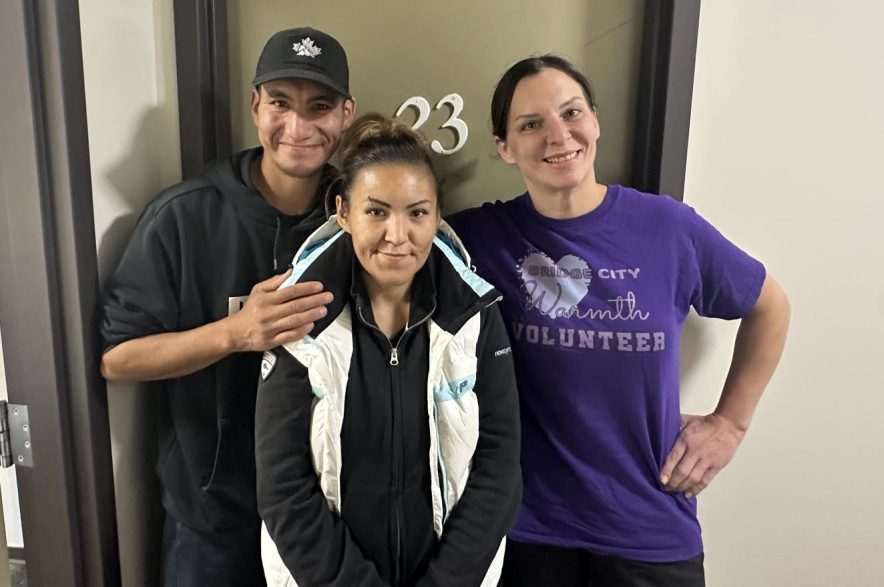
To the people Melissa Zimmer has helped find a new home, she’s an angel.
Since Saskatoon’s Avenue K encampment was shuttered on Oct. 8, Zimmer said her organization, Bridge City Warmth, has found housing for 10 people, couples and one family.
Read more:
“We are working on 11 to 17 right now,” Zimmer shared, “so we’re just working with different people that reach out to us and seeing what we can do with them.”
There’s no explicit criteria Bridge City Warmth requires for someone to be eligible for long-term housing — just a desire to be housed and a willingness on the part of the person to work with the organization towards that goal. Most of the people Bridge City Warmth is presently helping have come from the Avenue K encampment.
Zimmer said their organization is focusing on finding long-term housing options for people seeking homes. Five of the people they’ve helped have been put into transitional or supportive housing, with apartments or bachelor suites secured for others.
A GoFundMe organized by Bridge City Warmth also assisted with covering Fineday’s damage deposit and first two months of rent. In less than two hours, the online fundraiser had garnered $2,000 in donations, Zimmer reported.
“It feels great,” Zimmer said, reflecting on her organization’s successes over the past few weeks.
“We haven’t found it that difficult. The people that come to us really want to work with us and get off the streets and get their own place.”
Zimmer explained that the organization will walk through various steps with people to help find them a place where they will have the most success in staying housed. That includes an interview and sometimes a visit to social services to better understand a person’s situation and what they can afford.
“It does take a little bit of time, but it’s coming very easy to us, so we’re going to continue,” Zimmer said.
Despite their success, Zimmer noted that they’ve had to look “high and dry to find affordable housing.”
“It’s extremely hard,” she stated. Recently, the organization found a family of three a three-bedroom apartment within their budget of $1,200 monthly, but Zimmer said the majority of housing options they considered were out of budget.
“You really have to be watching ads. We have some connections with landlords that we go through, connections with supportive housing that we go through,” Zimmer explained. “So, we’re lucky to have made those partnerships in the community, so that we can do that with people.”
Zimmer said an individual person might be able to afford something between $600 and $1,100 monthly, while couples can usually make something work between $1,200-1,600.
“It varies, just what kind of money they’re coming in with every month,” Zimmer noted.
“There’s lots of different avenues that we know of that can help them, it’s just putting all the pieces together,” Zimmer said.
While some people express concerns about their ability to afford expenses like rent and groceries, Zimmer said she works through those roadblocks and barriers with people to show them what they can afford and how to live within their means.
“We want to set up everybody for success,” she said.
“We don’t want people to fail. We’re here to help them, to guide them, to coach them, to advocate for them and do whatever we can to get them back on their feet again.”
Read more: