

Sarah Mills: B.C. election campaign goes from bad to worse for David Eby
Sarah Mills says the revelation that David Eby's family is receiving $10-a-day daycare when it isn't yet offered to ever...
Centralized encampments are unsafe and are not reasonable places for people to live.
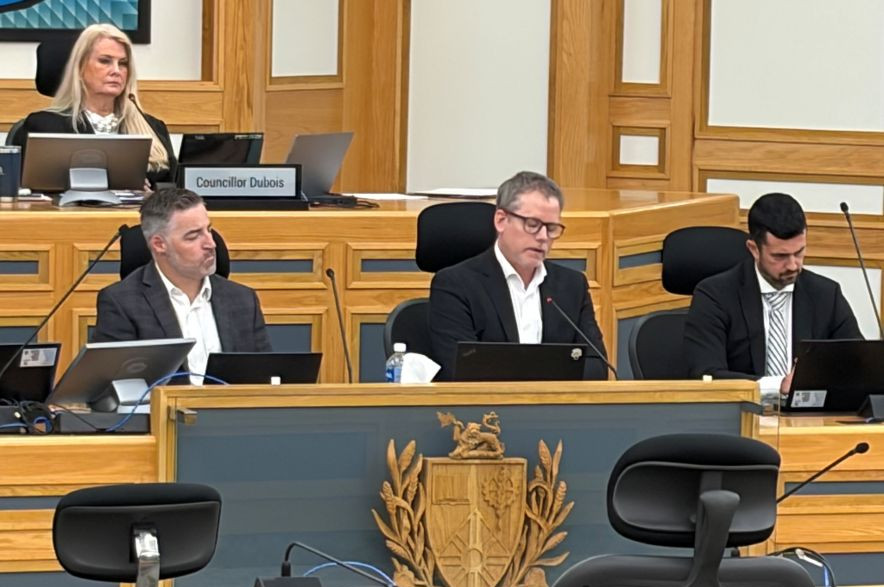
That was the message from Jeff Jorgenson, Saskatoon’s city manager, in response to about half a dozen presentations and a large contingent of activists and community members at Wednesday’s Governance and Priorities Committee meeting.
Read more:
The meeting, held in part to debate and discuss future funding options for the city’s outdoor washroom project during this year’s budget deliberations, passed unanimously. However, that wasn’t what those presenting to city council wanted to talk about.
Alexa Velkenberg, a social and community support worker, said she has filled out hundreds of social housing applications, with very few applicants actually finding housing through those channels.
“Saskatoon has too many slumlords. Property management companies are some of the worst slumlords in the city. It is inhumane, the number of homes I have been in that are in deplorable conditions,” she said, citing bug infestations, a lack of heat and, in some cases, no running water.
Velkenberg accused the Ministry of Social Services of creating “impossible hoops” for applicants to navigate before obtaining housing.
Valerie Senyk, a retired professor, told city councillors that dismantling the encampment on Avenue K South just after the National Day for Truth and Reconciliation was a “great injustice.”
“I ask, why could council not find more creative ways for them (encampment residents) to stay? For example, meet with two or three elders in the encampment and with them, establish guidelines for the coming winter. Bring in porta-potties, a water source, an electrical source. Have a police patrol at night,” she suggested.
However, Jorgenson said the city’s approach to dismantling encampments was focused on safety.
“Safety for unhoused people, and safety of first responders; the police, fire and ambulance first responders that are regularly called throughout the city, but in particular to centralized encampments,” he said.
“Compassion and offering of services is always the city’s focus,” he added.
Jorgenson said that, of the 120 people living in the encampment, there was space in local shelters for all of them.
Yvonne Raymer, Saskatoon’s deputy fire chief, also responded to the presentations, describing some of the items found at the large encampment on 20th Street. These included propane tanks used for heat, discarded needles and biohazard boxes, two bullets, at least two bladed weapons, bike parts, rotting food, human waste and used condoms.
“I have the hard challenge of balancing the needs of community and residents, and the schools, as well as those who are unhoused.
“We used to be very successful at getting individuals to take support. As of late, I would say this year, it’s been more of a challenge and it’s actually slowed us down as we continue to go back, offer more notice, offer more supports until the day of the actual cleanup,” she continued.
Activist David Fineday, who lived in the encampment for several weeks, was arrested and charged with mischief on Oct. 8, the day the camp was dismantled. He disagreed with the city’s account and left the meeting.
“I don’t know where they got their stories from. A lot of people came there, and they were surprised how safe it was,” he said.
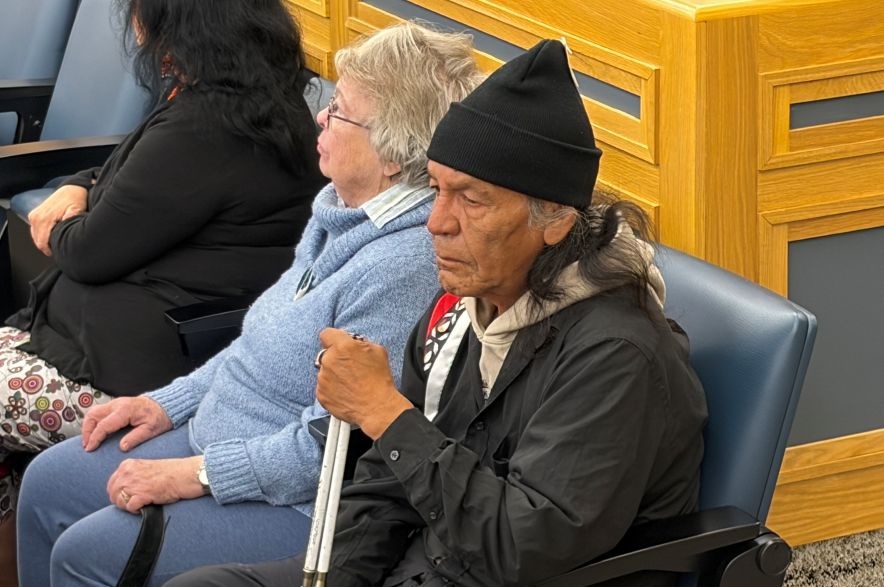
Activist David Fineday said he had to leave the council committee meeting after hearing the city’s reasons for dismantling the homeless camp at 20th Street West and Avenue K South. (Lara Fominoff/650 CKOM)
Fineday’s supporter and fellow activist Fran Forsberg told reporters she was “disgusted” with city council.
“It was lies. We were there. I was at the encampment every day. I never saw one of those fire people there,” she said.
Asked for her thoughts on the presentations and what she took away from them, Saskatoon Mayor Cynthia Block said many people were tired of the city “chasing the crisis.”
“We are using the tools that we have as a municipality, knowing that those tools are insufficient to move to the level that we need to start to see change in our community,” she said.
Block said council was working urgently with mayors across the province, the provincial government and Indigenous leaders to find a way forward.