

Murray Wood: It's a Monday Melange
From the B.C. NDP being DOA to the Riders, Trump and Murray Wood campaigning for a spot at the trough.
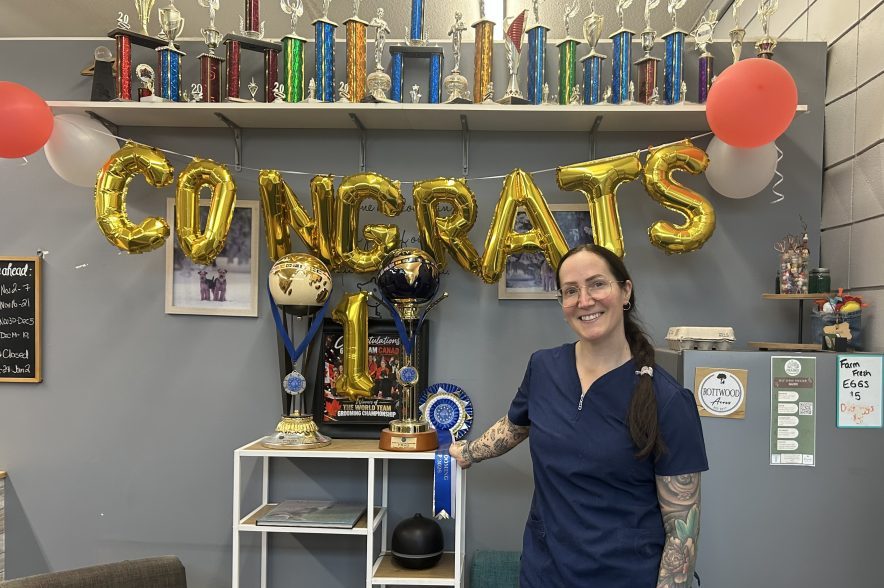
There are easier ways to spend a Saturday than standing over a dog with a pair of scissors, worrying about whether its haircut is balanced enough to impress an international panel of judges.
There are also considerably less smelly ways to make a living.
But Jovi Wagner has never been particularly interested in easier.
The Saskatoon dog groomer has built her career around an occupation that most people associate with muddy paws, tangled fur and the occasional unfortunate encounter with a skunk.
For Wagner, who owns Churchill Dog Groomers, the job is a highly technical craft, a physically demanding activity and a competitive sport that has taken her across North America and around the world.
And this year, it took her to Belgium, where she captained Groom Team Canada to a gold medal at Groomania’s World Grooming Championships.
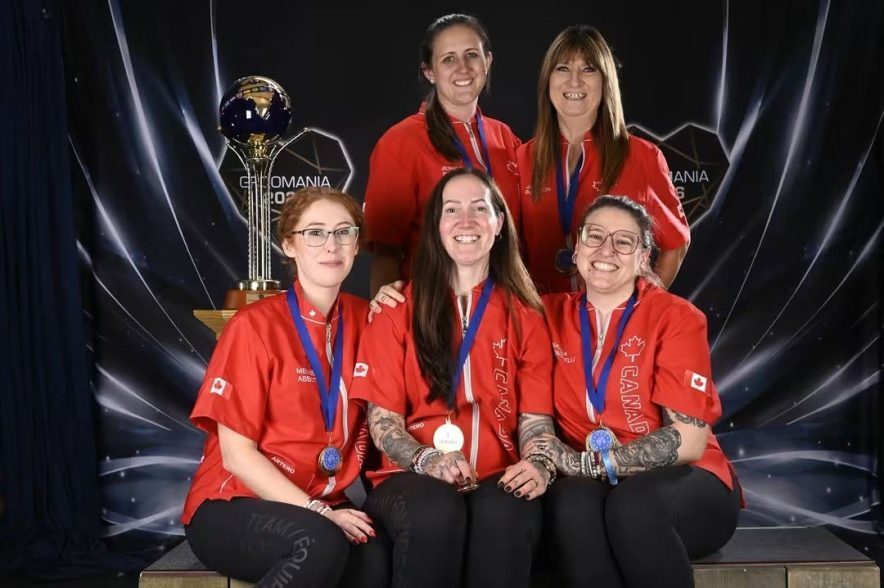
Team Canada’s recent first-place win was more than three decades in the making. It had been over 35 years since Canada last brought home gold. (Groom Team Canada/Facebook)
For Wagner, it was a moment she will never forget.
“It was one of the most amazing moments of my life,” she said.
Not bad for a job that, on an ordinary day, involves a room full of wet dogs.
If you’ve never given much thought to professional dog grooming, you can be forgiven for assuming there isn’t much to it.
A bath. A trim. Perhaps a little bow in the hair if the occasion calls for it.
Then you meet someone like Wagner, who can explain why a poodle’s elaborate haircut has roots in its working history, why a terrier’s coat needs to be handled differently from a poodle’s, and why the internet’s favourite perfectly squared-off dog head might be a terrible idea for your particular pet.
“There was a fad for a while where everybody wanted their dog to have a square head,” she said with a laugh, recalling the influence of a photograph that circulated online.
The problem? Not every dog has the coat to pull it off.
“Just like with humans,” Wagner explained, “we can’t make your dog’s head square. I’m sorry.”
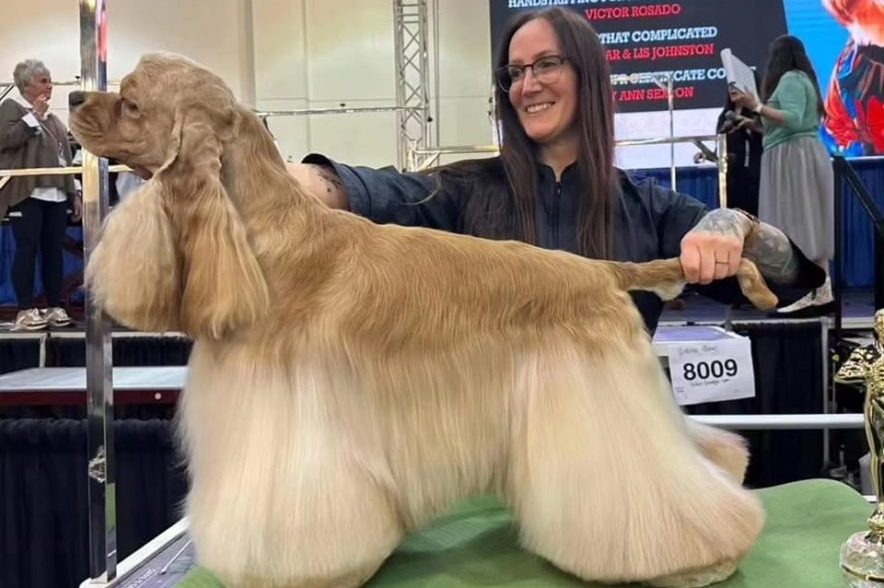
“I’m nose blind,” Jovi Wagner said when asked about the scents associated with her profession. “I don’t smell it as much as I used to.” (Groom Team Canada/Facebook)
Wagner started grooming dogs at just 17 years old. She eventually bought Churchill Dog Groomers from her mother, becoming a second-generation groomer herself before entering the world of competitive grooming.
In the grooming ring, competitors are judged on technique, their execution of a breed’s standard trim, the balance of the finished cut and how effectively they have shaped the coat.
There’s also the important matter of the dog itself.
A competition dog needs to present well, hold its composure and command the judges’ attention.
This isn’t simply a matter of showing up with a cute, fluffy dog and hoping for the best. It’s closer to preparing an athlete for competition, except the athlete has four legs, a coat that needs maintaining and absolutely no interest in reading the rulebook.
This wasn’t Wagner’s first trip to the international stage. Belgium marked her fourth time representing Canada and her third as team captain.
She has competed across North America and in other parts of the world. In her experience, the competition is particularly fierce in Europe.
“Like any competitive activity, it requires an extreme amount of dedication, sacrifice, and a whole lot of crazy,” she said.
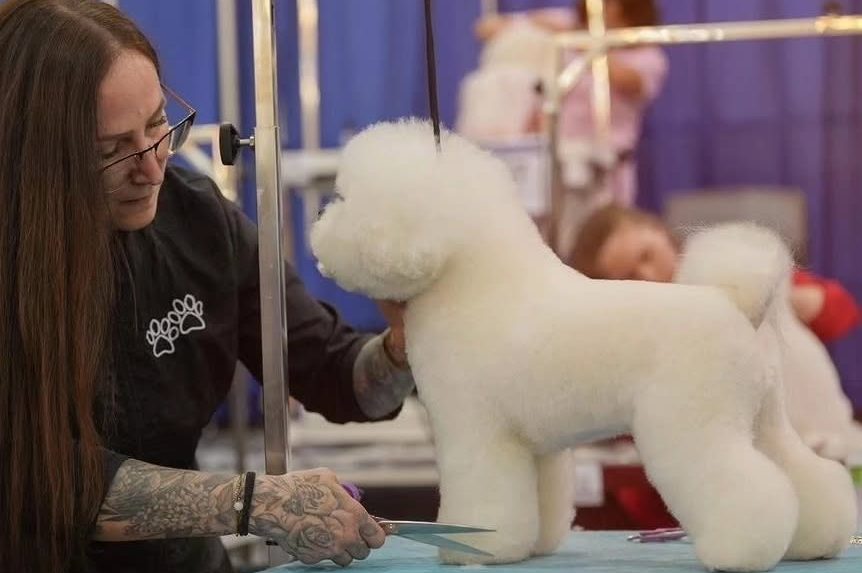
Jovi Wagner said there are a number of criteria that competitive dog groomers are judged on. “It’s about your technique, how well you execute a breed standard trim, how much hair you had before versus after, the overall balance of the trim, making sure the trim is according to the breed standard,” she explained. “And also it comes down to the dog. You have to have a dog that knows how to show itself off.” (Groom Team Canada/Facebook)
While the finished haircut might look effortless, the process is anything but.
Competitors work against a clock. They must follow rules about which tools can be used for particular breeds, and the grooming must stop when time is called. Wagner has heard stories of competitors bending the rules, including continuing to groom after the deadline.
Canada, fortunately, had something more useful than dirty tricks: a strong team.
“We walked in there going, ‘This is ours! We got it,’” Wagner said. And they did. The team handily took home gold.
The result was more than a personal achievement. It was a landmark moment for Canadian competitive grooming, ending a 35-year wait for a world championship victory.
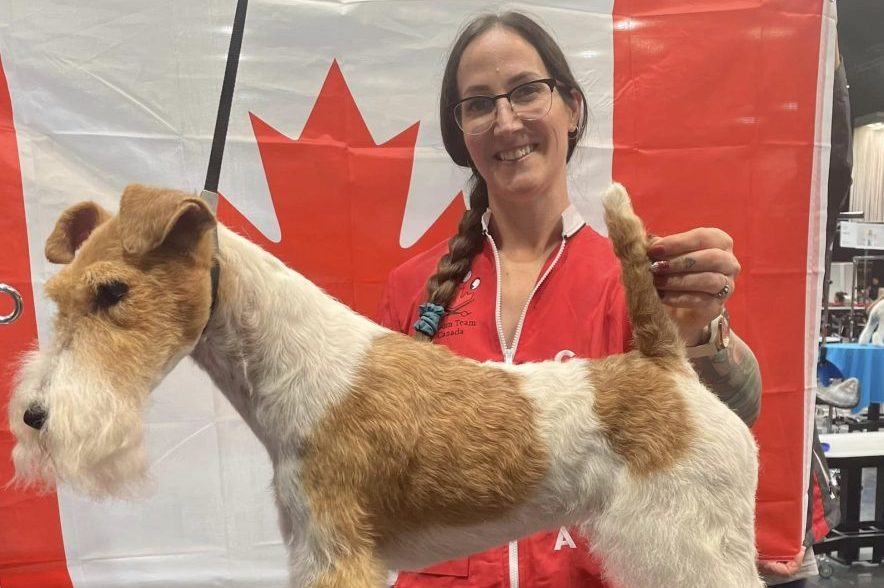
Jovi Wagner has represented Canada on the world stage four times, three as team captain. (Groom Team Canada/Facebook)
Back home in Saskatoon, the competitive grooming world seems a long way from the daily rhythm at Churchill Dog Groomers.
But the same attention to detail applies, even when the stakes are less “international glory” and more “getting a nervous dog through a haircut without either of you losing your mind.”
On a typical day, with five groomers working alongside a bather/dryer, the salon can handle about 30 dogs. That’s a lot of paws, a lot of fur and, inevitably, a lot of personalities.
Some dogs arrive ready for the full experience. Others would rather be doing literally anything else.
Wagner understands that not every dog considers grooming a luxurious afternoon of pampering.
“We love them, but they may not love us so much,” she laughed.
The salon accommodates those dogs by breaking the grooming process into stages. A dog might have its nails trimmed and receive an initial clip before taking a break, then return for a bath and drying, another break and the final touches.
The goal is to avoid pushing an animal through a long, stressful session. Grooming requires technical skill, but it also requires patience, observation and a willingness to work with the animal in front of you.
And sometimes, it requires a strong stomach.
Dogs roll in things they shouldn’t. Nervous pups have accidents. Occasionally, a dog arrives carrying the unmistakable evidence of an encounter with a skunk.
For those emergency calls, Wagner has a tried-and-true remedy, although she makes no promises about how pleasant the process will be.
“It’s baking soda, peroxide and dish soap, and you have to let it sit on them for, like, 10 minutes,” she explained.
“It’s the only thing that gets rid of the smell of skunk because it actually breaks down the actual scent and dissolves it.”
After years in the business, she’s also developed something of a tolerance for the everyday aromas of the salon.
“I’m nose blind,” she laughed. “I don’t smell it as much as I used to.”
Wagner might be a world champion, but there are no velvet ropes separating her from the less-than-fragrant realities of the job.
For Wagner, grooming is also an opportunity to explain how much thought goes into the appearance of different breeds.
Take the standard poodle, whose elaborate continental trim might look like the canine equivalent of an extravagant fashion statement.
It turns out the style actually has practical roots.
“Poodles are water dogs, and they had all that hair on the top of the dog and on the front end of the dog to protect their organs while they’re swimming,” Wagner explained. “The hair on the tail acts as a rudder.”
The style has evolved, but its origins are tied to what these dogs were bred to do.
Terriers offer another lesson in function over fashion.
“The reason why they have such a hard, wiry coat is because they have a really thick skin, which is actually called a hide on a terrier,” she noted.
“Because they are bred to kill vermin, they need to have thick skin so that they get bit by rats or badgers, it protects them.”
She says understanding those differences matters in the grooming ring, where a competitor isn’t simply trying to create the prettiest haircut possible. The job is to produce a trim that suits the breed.
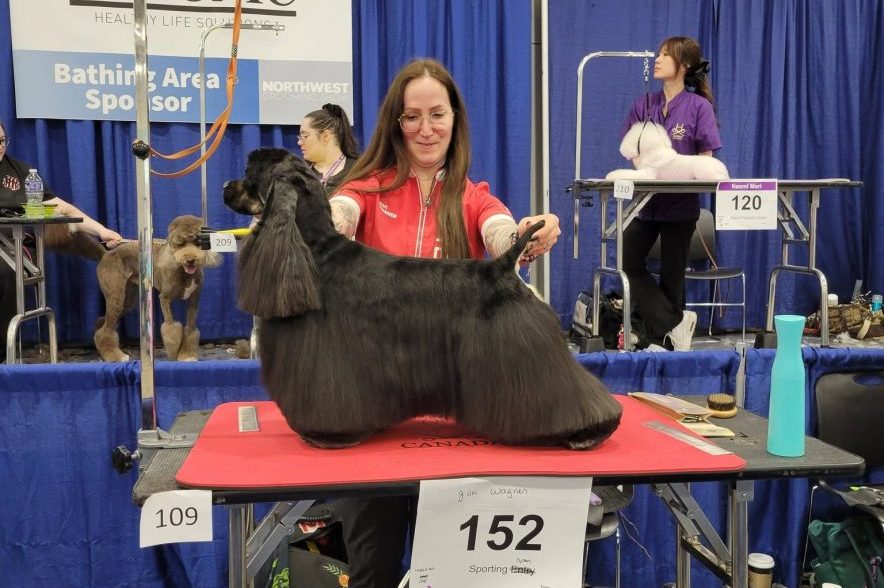
Jovi Wagner said competitive dog grooming can be fairly cutthroat. There have been instances of both cheating and sabatoge at competitions. (Groom Team Canada/Facebook)
For owners who want their dogs to keep that wonderfully fluffy look between appointments, Wagner has a simple message: the work doesn’t end when the dog leaves the salon.
“Brushing and combing is the biggest thing,” she insisted.
“If you want your dog to be fluffy, you have to brush and comb it at home. And that’s not like once every two weeks.”
Depending on the coat, maintaining that fluffiness may require daily attention. Even 10 minutes can make a difference, but it has to become part of the routine.
The same goes for getting dogs comfortable with having their feet, faces and bodies handled.
Wagner encourages owners to teach their dogs basic commands and to make brushing and handling a normal part of life. Crate training can help, too, by teaching a dog that a crate is a safe place to rest when visiting a groomer or veterinarian.
She says a little preparation at home can make a big difference in a dog’s experience.
For all the laughs, the technical challenges and the satisfaction of a beautifully finished trim, there’s another side to Wagner’s work.
It’s the part that comes with seeing the same dogs and the same families year after year.
She has cared for dogs from their first appointments as puppies through their senior years, watching them age across more than a decade.
“I’ve literally been doing this since I was 17 here,” she reflected. “I’ve seen them from like 12 weeks of age to 14 years, 16 years.”
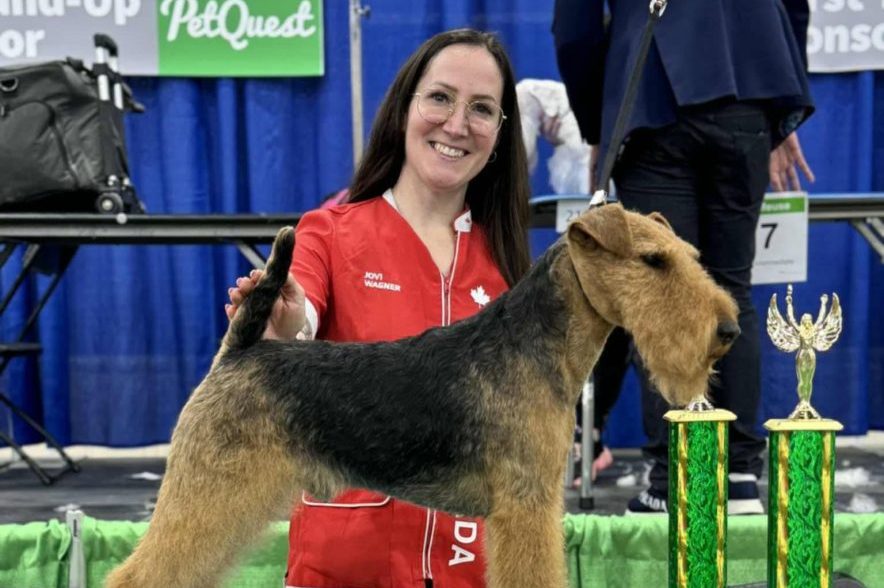
Jovi Wagner started grooming dogs when she was just 17 years old. (Groom Team Canada/Facebook)
The relationships are part of what makes the work meaningful. They also make the difficult days even harder.
“It’s hard on your heart when you get a senior dog coming in that they get to a point where we have to tell the owner that they can’t handle it anymore,” Wagner said.
She said she has cried at the salon more times than she can count.
These aren’t simply appointments on a schedule. For a groomer who might see the same dog every four weeks, the animals become family.
It’s a different kind of investment than the one required to win a gold medal, but it demands something of Wagner all the same: commitment, care and the willingness to show up for the less glamorous moments.
And still, she loves it.
The World Grooming Championships in Belgium were a chance for Wagner and her teammates to show what years of dedication could accomplish.
It was a remarkable achievement for a team working in a profession that many people rarely think about beyond the moment they pick up their freshly groomed pet.
There’s a world championship medal to show for her dedication now.
But tomorrow, there will still be 30 dogs, endless tangles to work through and the possibility that someone will arrive smelling like a skunk.
Gold medal or not, those dogs aren’t going to groom themselves.
Jovi Wagner has spent a lifetime making dogs look their best. Now, the Churchill Dog Groomers owner has helped lead Canada to a historic gold medal on the world stage. (Brittany Caffet/650 CKOM)