Murray Wood: All hail the placekicker! Except when he misses
Alex Hale was supposed to make us forget about Brett Lauther, but how can we? Murray Wood says Hale has struggled, while...
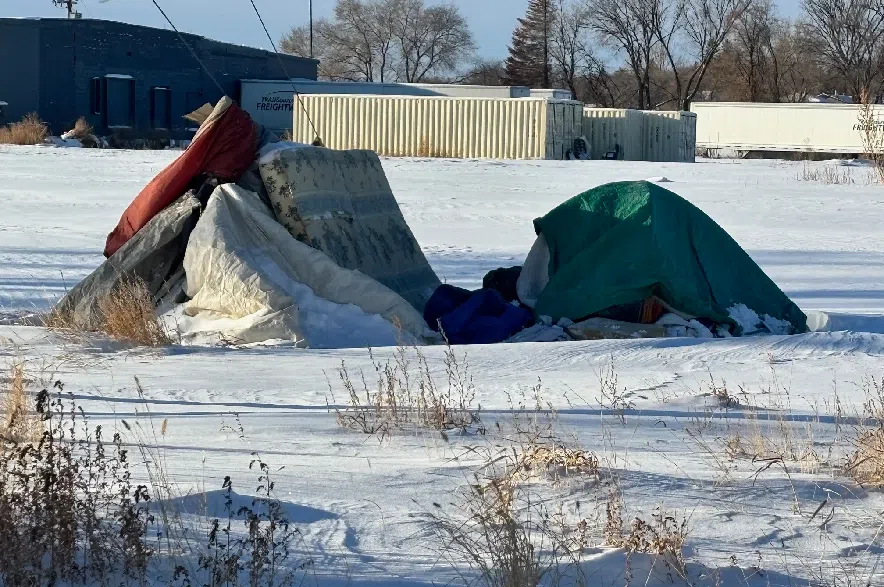
During an extreme cold snap on Friday morning, a person wearing a black winter jacket poked his head out of a green tent on the frozen ground along Avenue N South.
The tent, surrounded by a sleeping bag, tarps and dirty mattresses propped up against a telephone pole, didn’t appear to offer much relief from the stinging wind in the open field.
Read more:
The occupant quickly popped back inside the tent, shivering as they zipped up the front flap. The temperature at the time was -29 C with a wind chill of -41 C.
Nearby, in a vacant lot on Avenue L South were a number of temporary structures, including tents covered with snow and blankets with fresh footprints beside them.
Ryan Bradley, a Saskatoon fire marshal, said the fire department gets reports about people outside in dangerous conditions every day, even during periods of extreme cold.
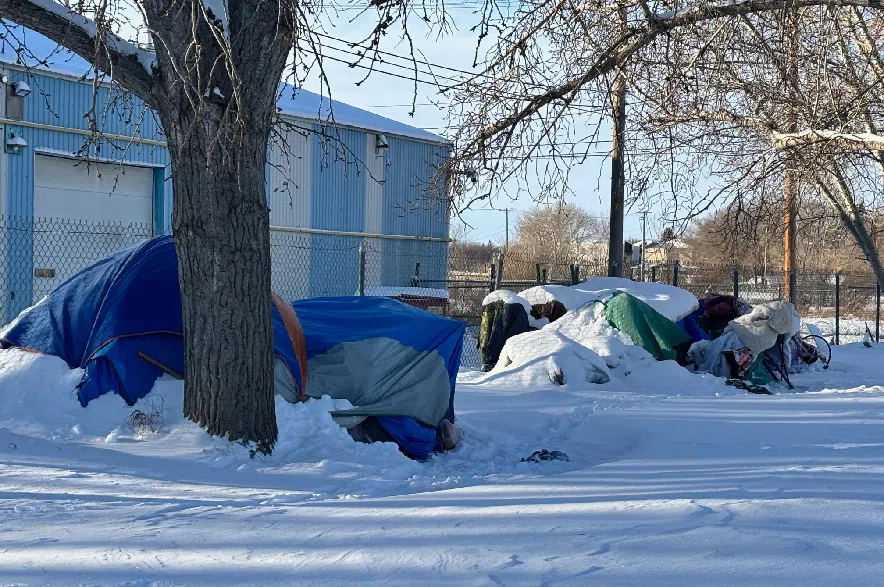
An encampment along Avenue L South, just off 20th Street West, in front of a local business. Fresh footprints were visible on the ground in front of the tents. (Lara Fominoff/650 CKOM)
“We still are getting a number of calls,” he said.
“I would say we are down to five per day now.”
He said the fire department is working closely with a variety of community organizations, including Sawēyihtotān Mobile Services, as well as the operators of shelters and warming spaces, to try and keep people safe from the weather.
“There’s a lot of daily and hourly communication with other partners about what their capacities are, who can help, who can offer what support and when they can offer it,” Bradley explained.
Saskatoon has activated its Winter Emergency Response Plan, which means a variety of warming sites are open to help people get out of the frigid temperatures.
Bradley said when the fire department is called out to an encampment, what they find ranges from minor cases of frostbite to people who have died out in the elements.
“These individuals, some of them may be out there by choice, some of them may not be,” he added.
“(They’ve been) through a multitude of life experiences – trauma, tough times to substance use – you name it… We have to work through it as best we can.”
He said anyone who comes across an encampment can contact the city’s customer care centre, but if the situation appears dangerous, he said they should call 9-1-1 immediately.
Editor’s Note: 650 CKOM contacted Sawēyihtotān Mobile Services to request outreach services at the encampments noted above.