Sarah Mills: A respectful way to highlight a life well lived
Sarah Mills says funerals often now include video montages of the person's life. These are heartfelt ways to acknowledge...
There’s a tour happening somewhere nearby.
We can hear voices through the walls, but we’re not following the crowd.
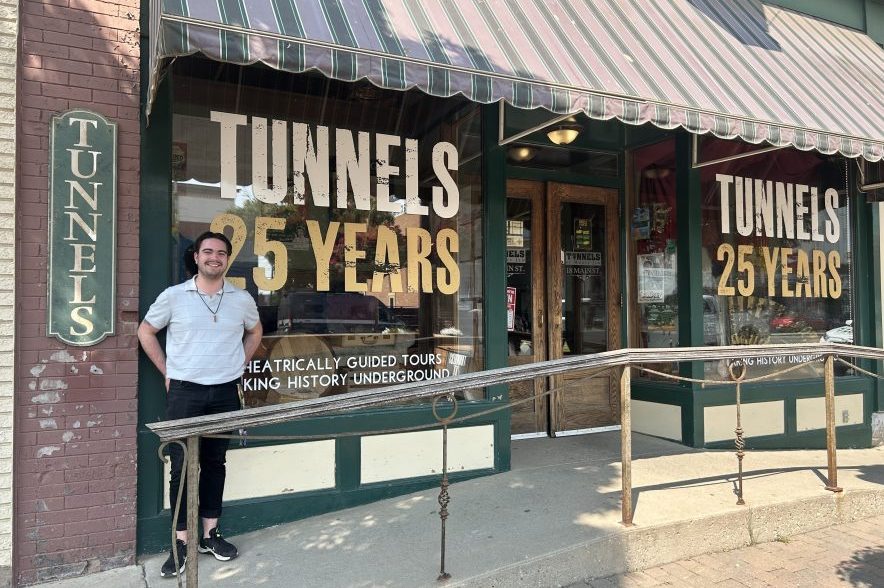
Reid Martin has a ring of keys in his hand, and we’re slipping through concealed doorways and halls into parts of the Moose Jaw Tunnels most visitors never see.
We stop when we hear footsteps, pause and wait for the noise to fade.
It feels a little like we’re getting away with something.
And maybe that’s the perfect way to explore a place whose history is built on secrets.
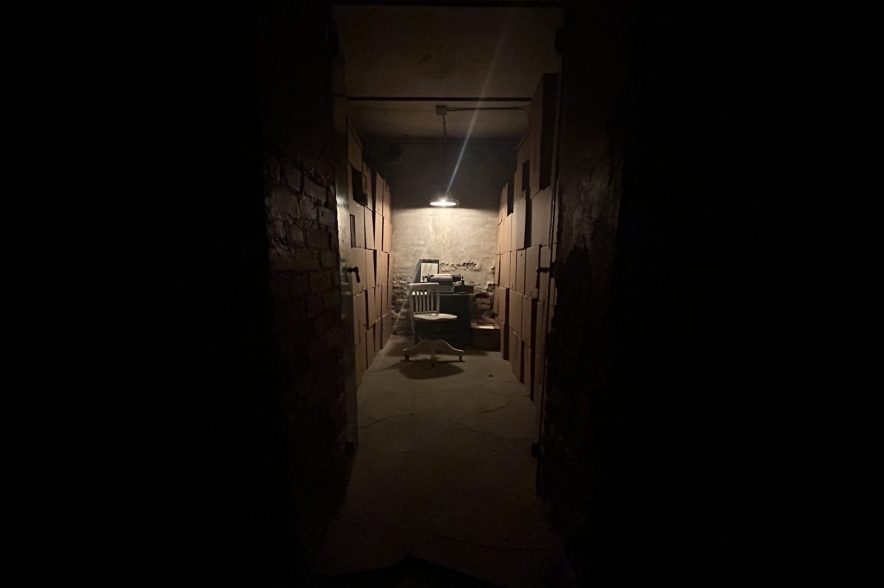
The Tunnels of Moose Jaw offers three tours: The Chicago Connection about Prohibition and Al Capone, Bunker 24 about the Cold War, and Passage to Fortune about Chinese immigration and history in Canada. (Brittany Caffet/650 CKOM)
Martin is the marketing and promotions manager for the Tunnels of Moose Jaw, and today he’s taking us through some of the old entrances and forgotten corners that don’t make it onto the regular tours.
But here’s the thing about these tunnels:
They weren’t built for bootleggers or tourists.
They were built to make someone’s job a little easier.
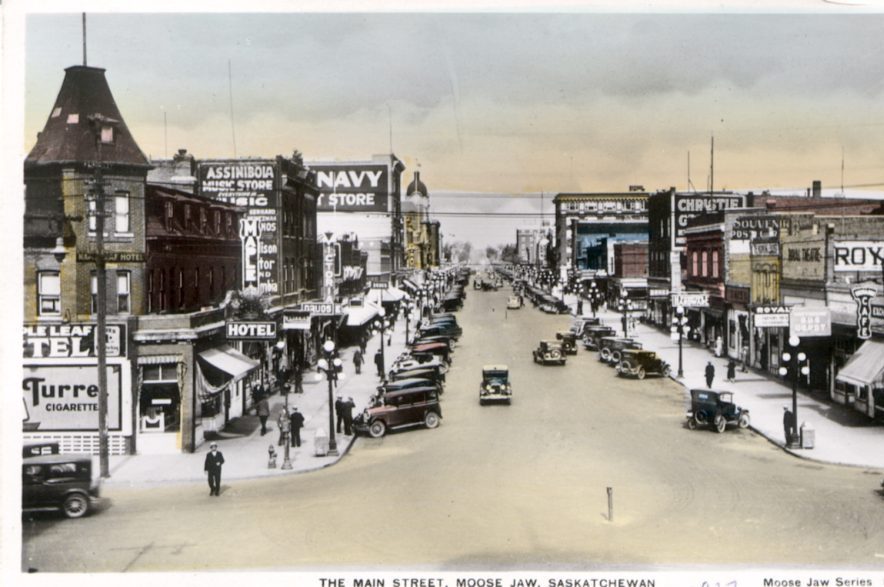
The tunnels were originally built in the early 1900s and became part of Moose Jaw’s fascinating history. (Submitted)
“They were built in the late 1800s and early 1900s as a way for steam engineers to easily access boilers between businesses,” Martin explained.
“The entirety of historic downtown Moose Jaw was steam heated, and a lot of these boilers were shared between businesses.”
The tunnels were practical. Nothing mysterious about them.
Engineers simply needed a way to get from one basement to another without constantly going above ground.
“So they dug tunnels between basements.”
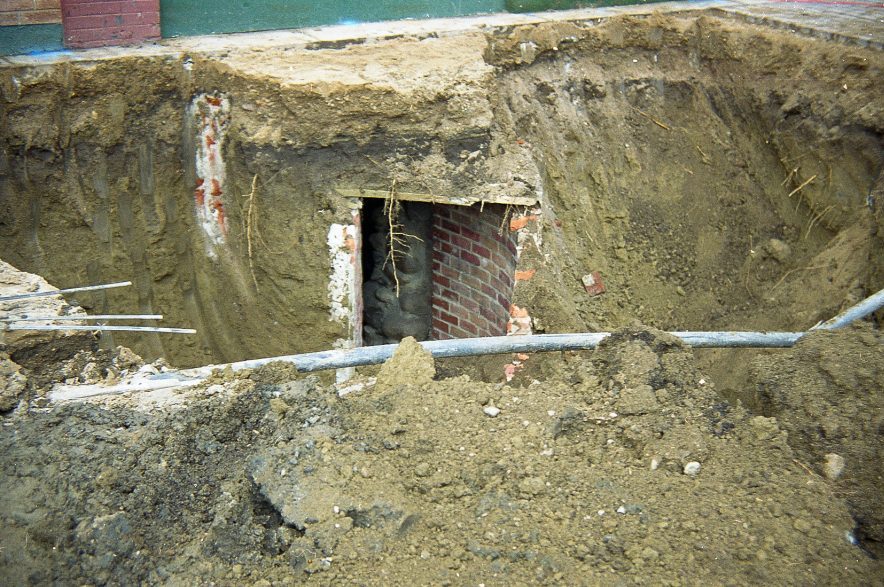
Workers uncovered hidden tunnels beneath downtown Moose Jaw in the 1980s, bringing a forgotten part of the city’s history back to light. (Submitted)
The original network ran from near the train station at the end of Main Street, north through downtown, with branches extending off in different directions.
As heating methods evolved, the tunnels lost their purpose. The boilers were no longer being serviced, so the engineers stopped making their rounds and the passageways were simply left behind.
Most of the tunnels eventually collapsed, never really intended to survive for generations.
“They weren’t built to last,” Martin explained. “They were built with rocks, wood, maybe some brick.”
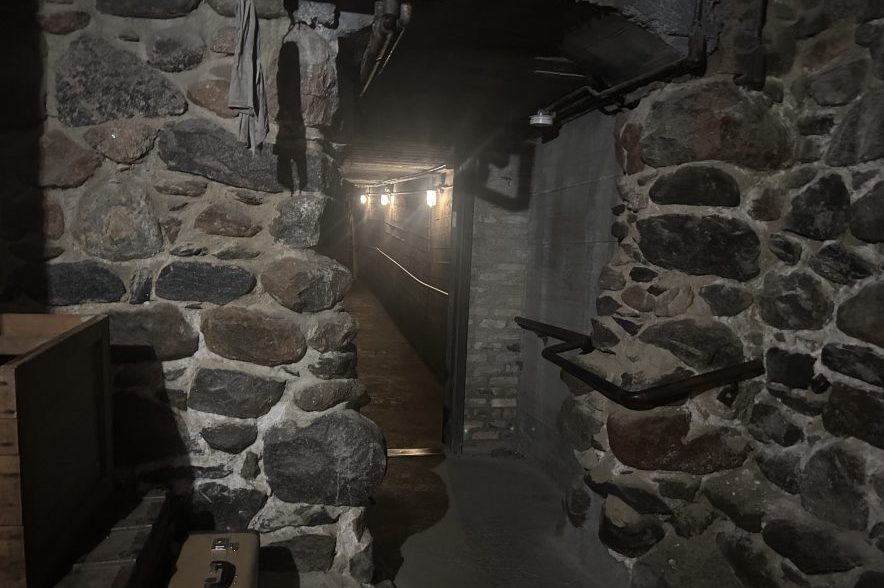
Walking through the tunnels can feel like stepping back into Moose Jaw’s past. (Brittany Caffet/650 CKOM)
At one point, people even denied they existed.
Then, in the 1980s, the ground gave everyone a rather dramatic reminder of what was underneath.
“A truck actually fell through the street,” Martin said. “It was a tunnel that caved in.”
The city had literally forgotten what was underneath it.
And above ground, Moose Jaw was struggling to hold on to what was left.
“Buildings were going for sale for $1,” Martin noted. “Buildings were being knocked down. We have a surprising amount of fires in our history. That’s a lot of the old buildings, especially along River Street.”
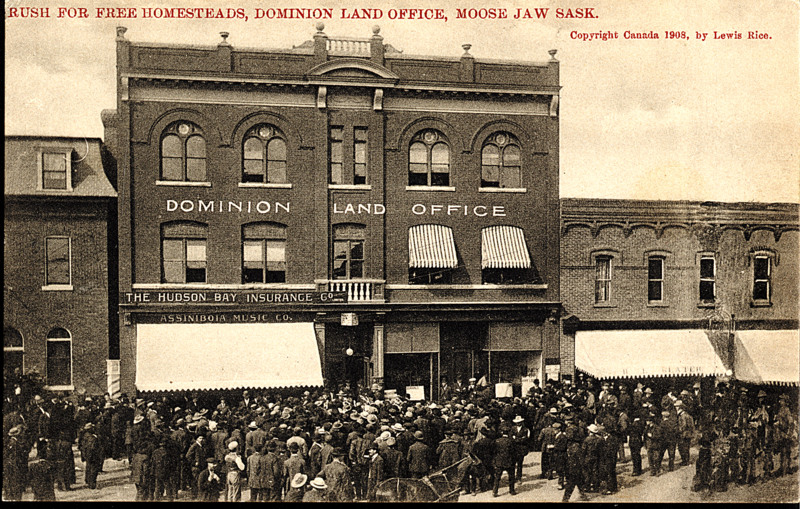
Stories of secret businesses and hidden activities helped give the tunnels their legendary reputation. (Submitted)
The city was trying to figure out how to bring people back.
The answer, in part, was to turn what had been forgotten into something worth coming to see.
In 2000, the Tunnels of Moose Jaw opened as a way to bring the city’s history to life in three different tours.
There’s Passage to Fortune, Bunker 24 and Chicago Connection, the tour that explores Moose Jaw’s prohibition-era underworld.
That’s where Martin is taking us now.
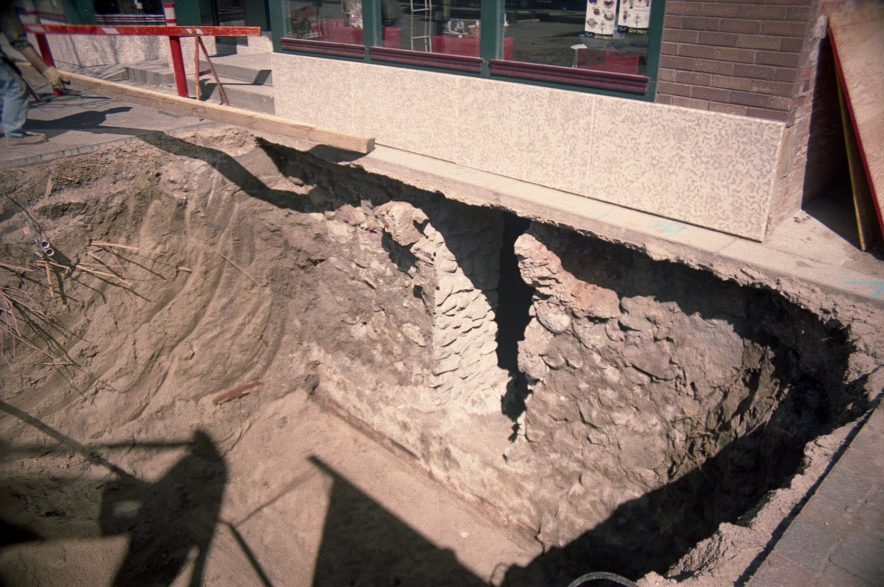
What began as an unexpected discovery underground eventually led to the opening of the Tunnels of Moose Jaw in 1996, later rebranded in 2000. (Sumbitted)
We duck through another doorway and follow him deeper underground. The ceiling drops. The walls close in. The air is cool and still.
Once you’re down here, it’s not hard to understand why these passageways became part of Saskatchewan’s bootlegging lore.
Moose Jaw, sitting on a major railway route, was in a pretty convenient spot for moving liquor during prohibition.
“There was heavy evidence of bootlegging heading through these tunnels,” Martin said.
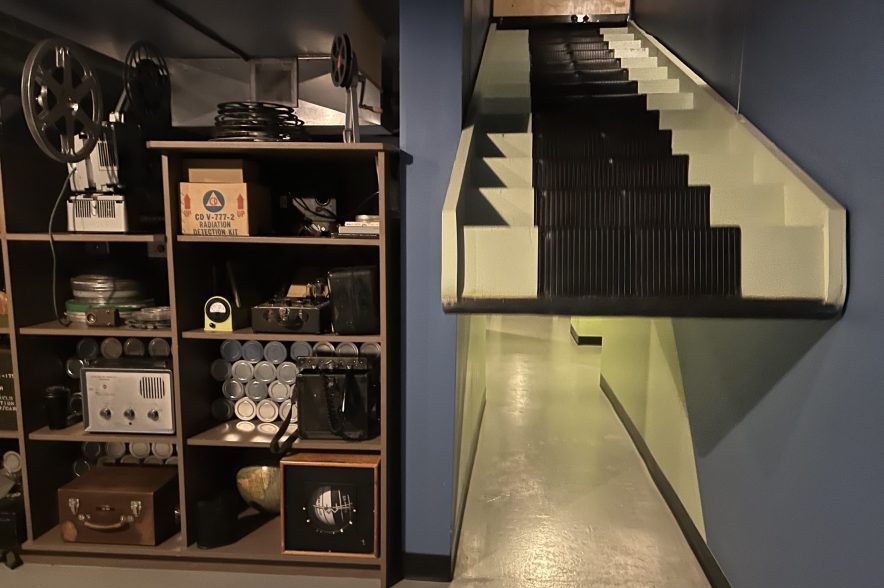
A stairway to nowhere. The Tunnels of Moose Jaw are full of hidden doorways, adding to the mysterious tunnel allure. (Brittany Caffet/650 CKOM)
You could move something underground, keep it out of sight, then get it onto a train and out of town.
And apparently, there was no shortage of creativity when it came to hiding the evidence.
“False walls, baby carriages, chest flasks, all these things were used to conceal it.”
Even maple syrup containers could be used to disguise booze.
“We were right on the Soo Line,” Martin explained. “That is our train station right on the end of Main Street North. That would have taken it right down to Chicago.”
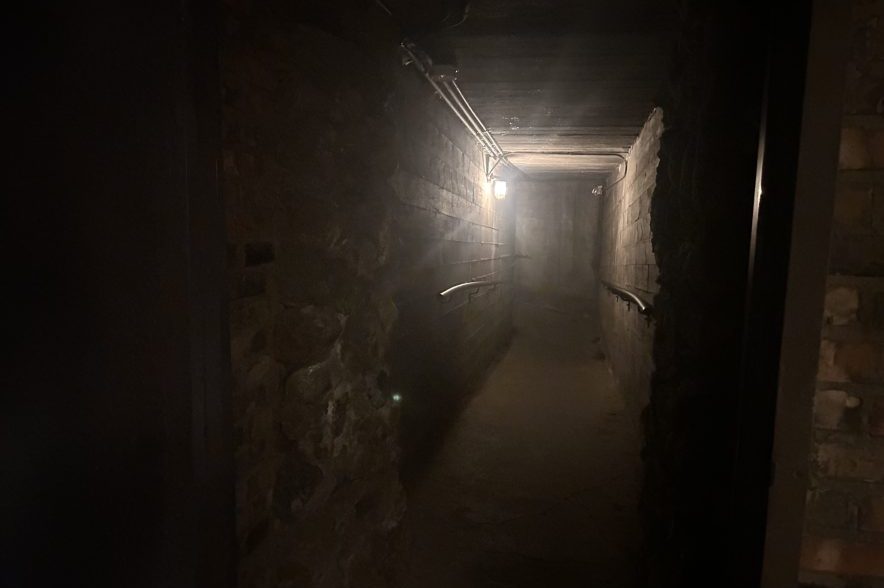
The dark, narrow passageways create a mysterious atmosphere that helps visitors feel like they are stepping into history. (Brittany Caffet/650 CKOM)
Standing in these tunnels listening to him tell share the lore, you can almost imagine the footsteps. Someone coming around the corner. A crate being dragged through the dark.
And then we get to the most famous part of the story —Al Capone.
The Chicago mobster has been part of Moose Jaw’s mythology for generations.
But was he actually here?
That’s where things get murky.
“It has been a hotly debated topic through the years,” Martin laughed. “There’s always been that kind of local legend of Al Capone being here, and we do find there is a surprising amount of evidence, even if it’s not the most obvious evidence. Because, of course, none of this would have been documented.”
Apparently, the mob wasn’t particularly good at keeping receipts.
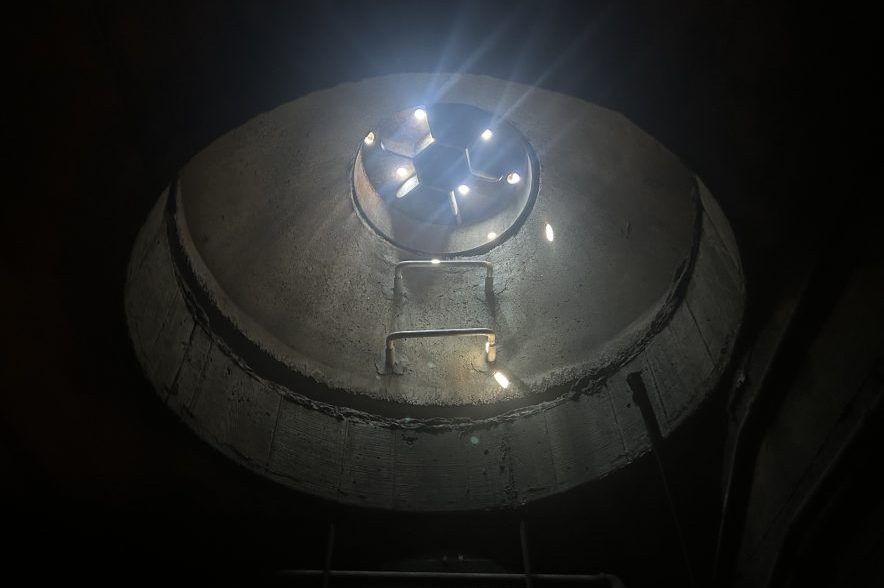
The Tunnels of Moose Jaw are located beneath the historic streets of downtown Moose Jaw, Saskatchewan. Literally. Many of the tunnels run direction under roadways. (Brittany Caffet/650 CKOM)
So we may never know exactly how much of the Capone story is fact.
But standing down here, in a tunnel where people really did move things they didn’t want found, it’s pretty easy to let your imagination wander.
And maybe that’s the magic of this place.
The Tunnels of Moose Jaw aren’t just telling us history. They’re letting us step inside it.
Martin is pretty open about that.
“We fictionalize the story, but the history is real.”
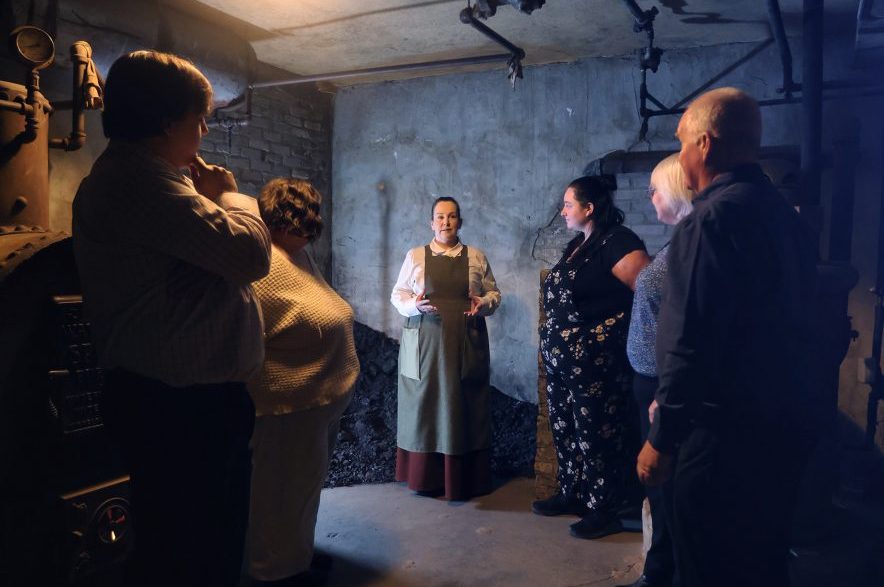
Actors and realistic sets help recreate the sights, sounds, and atmosphere of the past. (Submitted)
Instead of being handed a list of dates and names, we’re handed a character, a setting and a reason to care.
Suddenly, we’re not just learning about the past. We’re sneaking through it.
And while the tunnels may be underground, the stories have a way of getting out.
“People come here, they fall in love with it,” Martin said with a smile. “They just tell more people to keep coming.”
And maybe that’s why, even after all these years, people still want to venture into the tunnels.
Moose Jaw didn’t just preserve its history. It gave people a way to walk through it.
In this Saskatchewan Story, we slip through hidden doors and forgotten corners of the Tunnels of Moose Jaw with Reid Martin, uncovering the real history — and the legends — buried beneath the city. (Brittany Caffet/650 CKOM)