

Murray Wood: No collector plate for you!
Murray Wood is puzzled and annoyed by all of the "collector" licence plates on vehicles that will never be def...
ST. WALBURG, SASK. — “You know, when we were younger, we hated this place.”
Bert Imhoff said it almost casually. It’s a startling admission, considering where he is standing.
Around him are canvases painted by his grandfather, Count Berthold von Imhoff, a remarkable artist whose work can still be found on the walls of churches across Saskatchewan and North America.
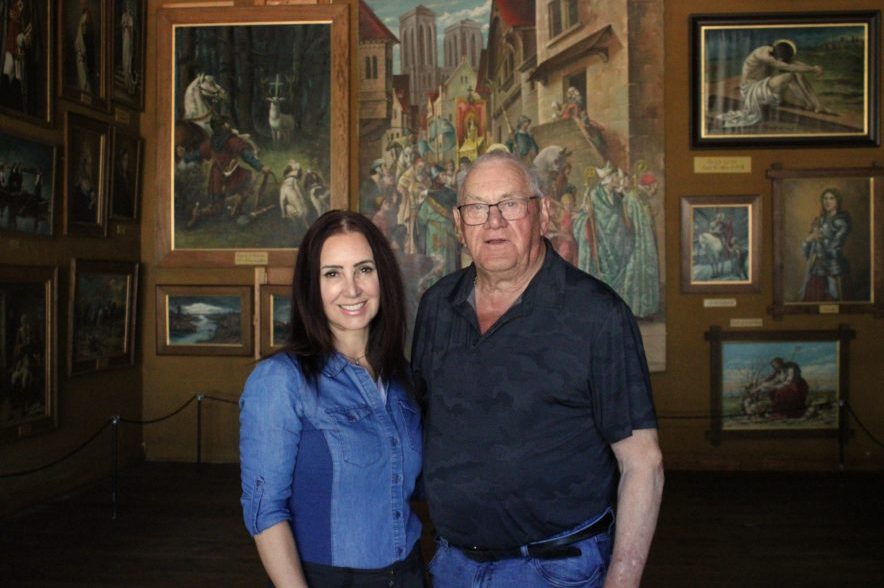
Bert Imhoff and Sharlene Rutherford welcome visitors to the Imhoff Museum & Art Gallery in the months of July and August, Thursday through Sunday. (Brittany Caffet/650 CKOM)
Ornate liturgical paintings fill the building, some on a scale that makes visitors stop in their tracks.
This is the very studio where Imhoff worked. A place Bert grew up knowing was special.
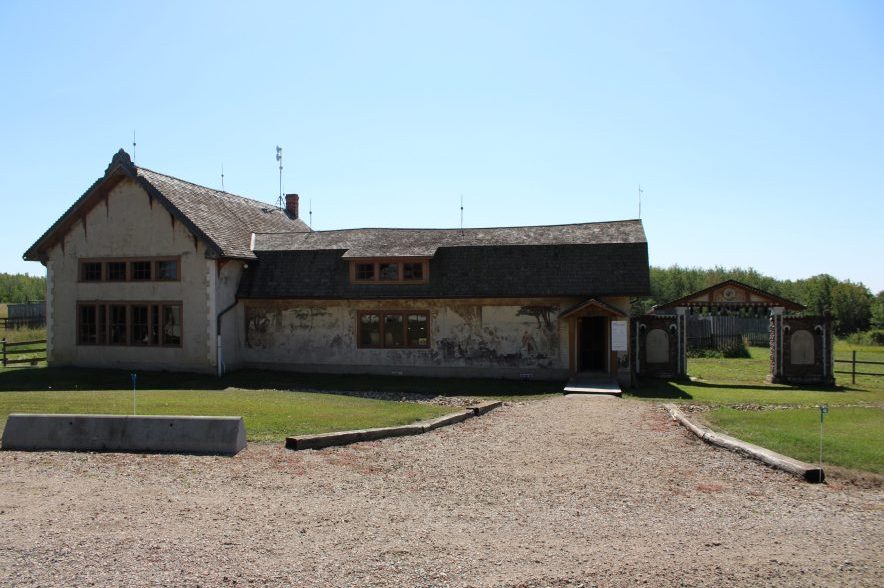
The exterior of the studio was once ornately painted. While it has faded, the paintings that remain inside are vibrant as ever. (Brittany Caffet/650 CKOM)
But knowing something is special doesn’t necessarily make you appreciate it when you’re a kid.
“We could never go anywhere,” he reflected. “We never went on holidays like other people, because we had to stay here and look after the art gallery.”
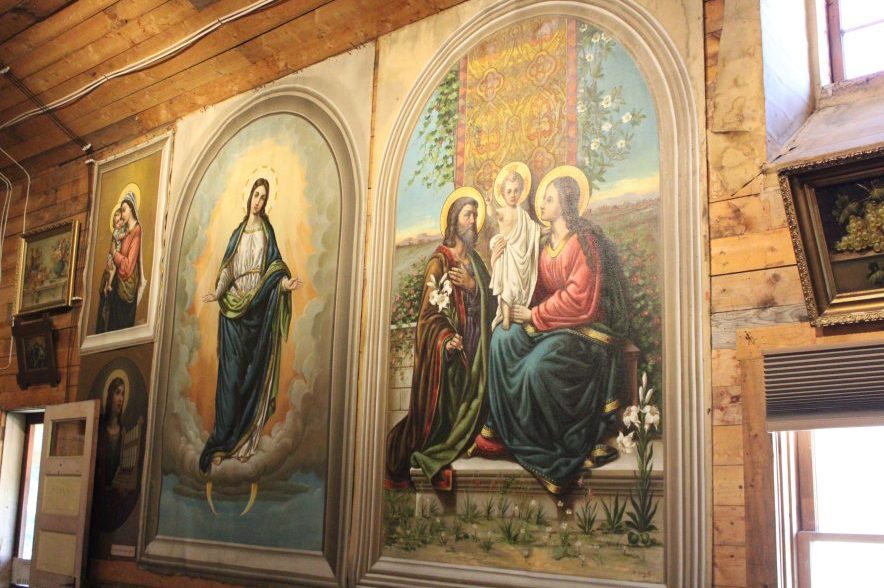
“The artist painted mostly liturgical work, and you can see from the large canvases in here that that was a big part of what he did,” Sharlene Rutherford explained. “But it’s not only what he did; he also did wildlife scenes, still life scenes, British monarchy, European historical figures, and when he came to Saskatchewan, portraits of Indigenous leaders. Those are all represented in here. So you see a really broad scope and scale of his work.” (Brittany Caffet/650 CKOM)
The children were allowed inside, but they knew the rules.
“We watched. We couldn’t go running around or anything in here either. But we knew this place had to be looked after.”
So Bert and his siblings behaved. As they grew older, they began helping with tours, meeting the people who came through the doors and slowly discovering what their family had been entrusted with.
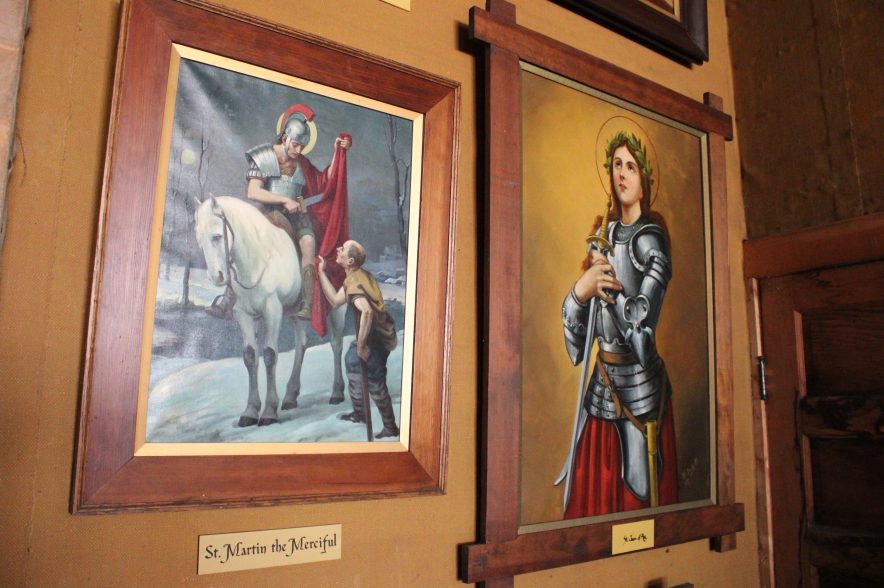
Many of Imhoff’s paintings depict saints and other religious figures. (Brittany Caffet/650 CKOM)
To this day, visitors arrive from across Saskatchewan and far beyond. The family offers tours to the public in the months of July and August, Thursday through Sunday.
People walk through the doors and look around, eyes wide.
“They don’t believe what they’re seeing,” Bert said.
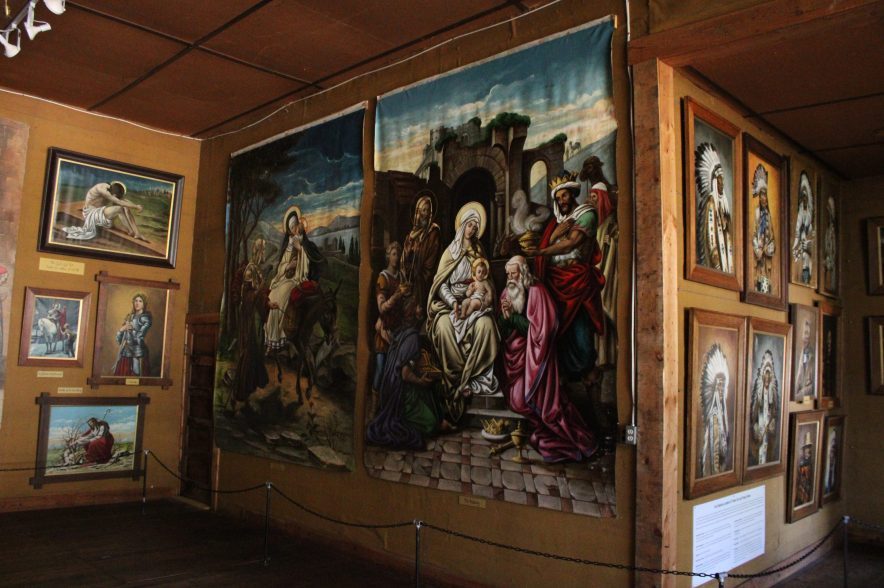
“The conditions in the studio are very good for the paintings,” Sharlene Rutherford said. “The building isn’t heated, so it is cool in here. And it’s a little darker in here, right?” (Brittany Caffet/650 CKOM)
Then comes the question he has heard countless times.
“Why is this here?”
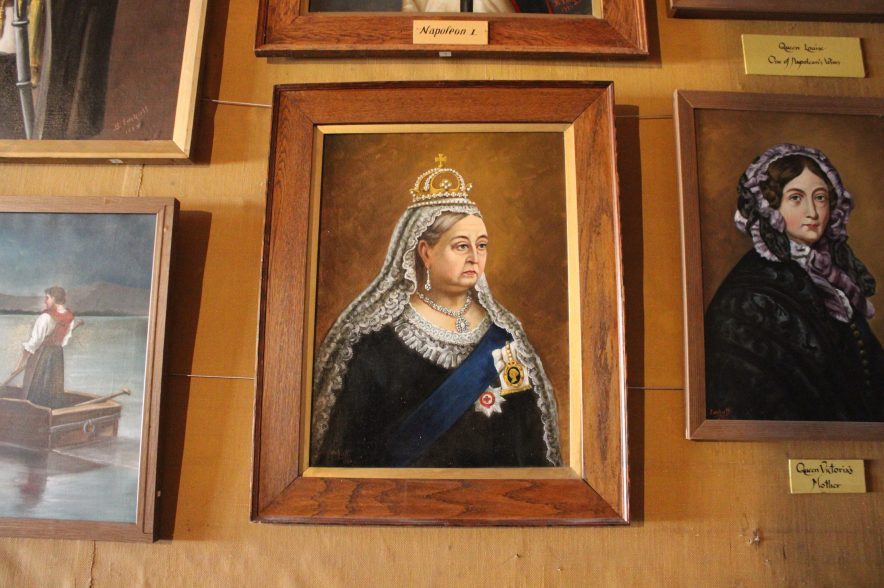
Sharlene said Imhoff had a photographic memory. He could see someone in person or in a photo just one time, and perfectly recreate their face on a canvas. (Brittany Caffet/650 CKOM)
The answer is almost second nature now, a line Bert has been saying since he was a boy.
“They were all painted right in this building.”
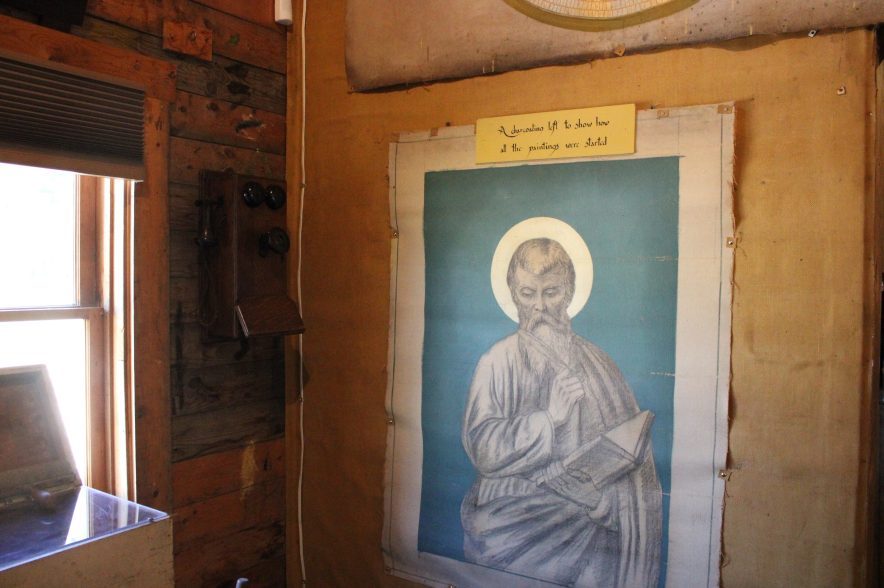
“Every painting is started in charcoal,” Sharlene Rutherford explained. “And once the charcoal was in place on the canvas, he would put a wood shellac-based alcohol over the top to preserve the canvas, tighten it up, and keep the charcoal in place. And then there would be three coats of oils put on. After the three coats of oils, there would be a final varnish, and the painting would be finished.” (Brittany Caffet/650 CKOM)
That fact is where Sharlene Rutherford usually begins her conversations with visitors.
Bert’s daughter and Imhoff’s great-granddaughter know the story by heart. She can guide people through the studio almost as naturally as someone might walk through their own home.
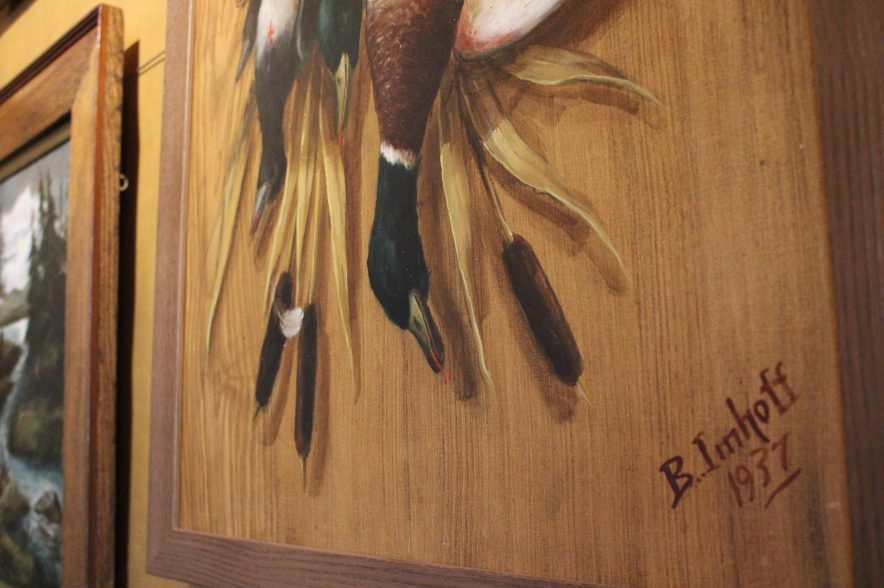
This may look like real wood grain, but it’s painted on plain canvas. Imhoff would use combs with the tines bent in different directions to create the illusion. (Brittany Caffet/650 CKOM)
“Berthold John von Imhoff was born near Mannheim, Germany, in 1868,” she said.
Imhoff was born into German nobility, which is where the title ‘Count’ that is often associated with his name comes from. When he came to Saskatchewan, he left that title behind and stopped using it.
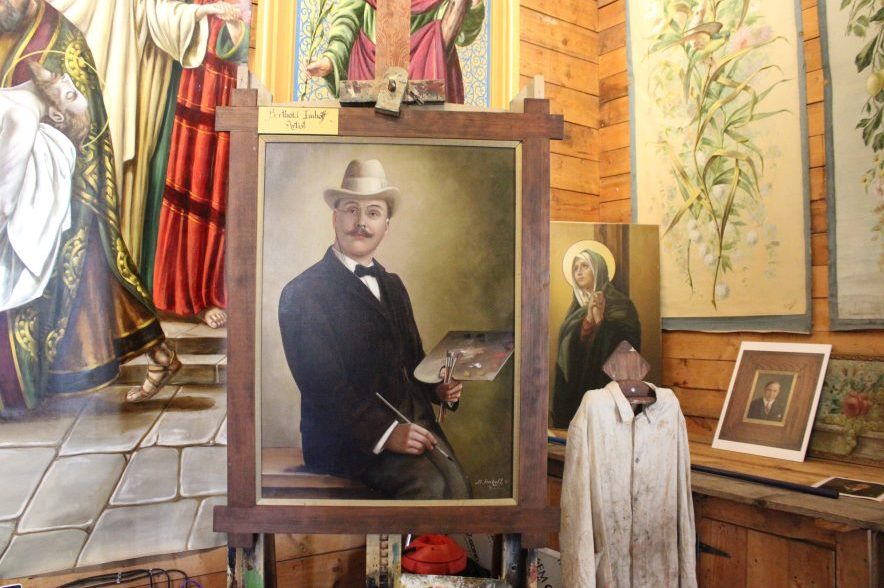
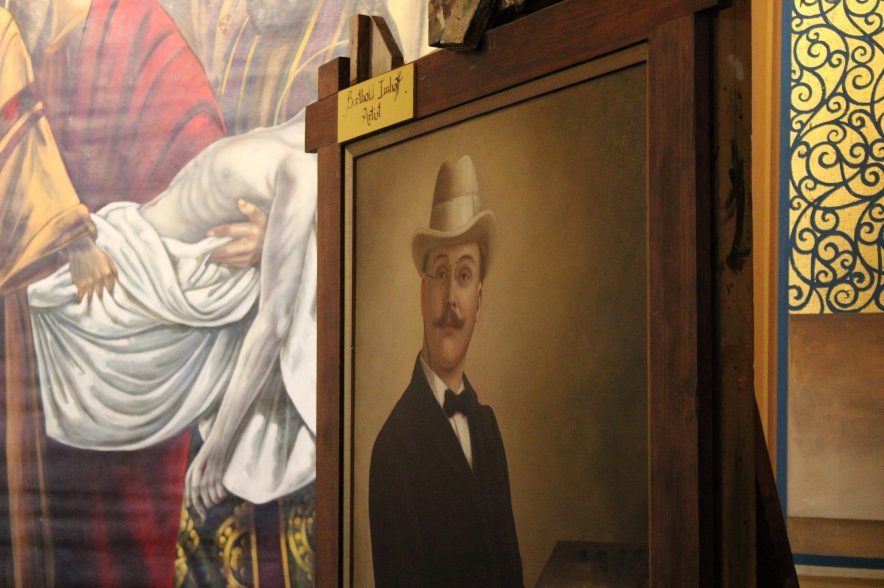
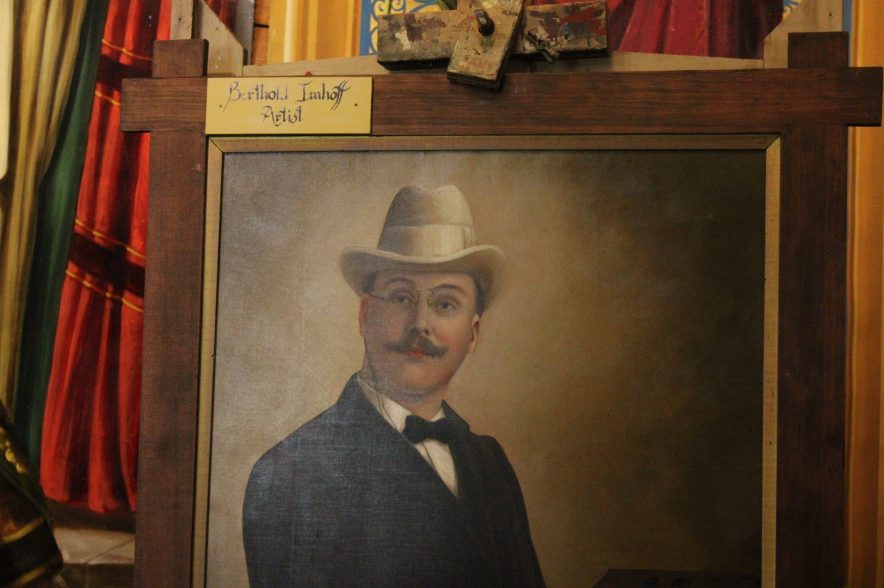
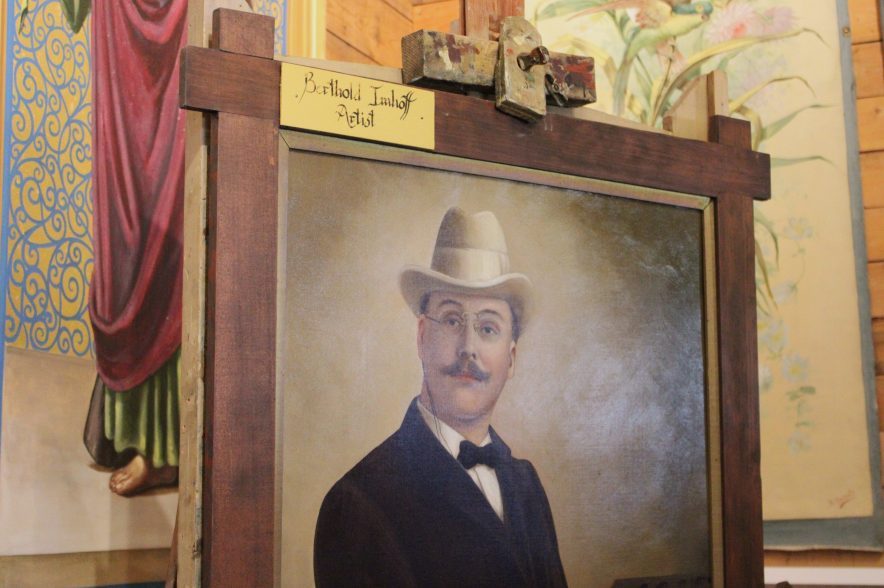
Sharlene said Imhoff was often dressed quite formally, even while working alone in his studio. (Brittany Caffet/650 CKOM)
From a young age, he was considered a prodigy. He was enrolled in prestigious art schools to receive formal training.
When he was just 16, one of his paintings won the Art Academy Award of Berlin. At an age when most of us were still being reminded to clean our rooms, Imhoff was already earning recognition from one of Europe’s most respected art institutions.
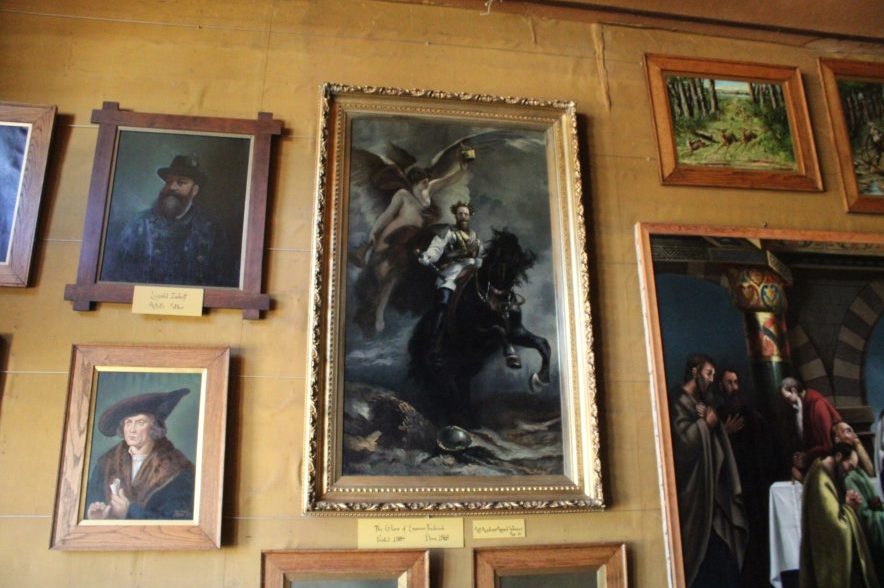
Imhoff won the Art Academy Award of Berlin with this painting when he was just 16 years old. It is the oldest painting in the family’s collection. (Brittany Caffet/650 CKOM)
And that was only the beginning.
As a young man, Imhoff made his way to Reading, Pennsylvania, where he began building a life in the United States.
“He was an artist, a decorator, a frescoer,” Sharlene said. “He decorated more than 100 churches there.”
“Every painting is started in charcoal,” Sharlene Rutherford explained. “And once the charcoal was in place on the canvas, he would put a wood shellac-based alcohol over the top to preserve the canvas, tighten it up, and keep the charcoal in place. And then there would be three coats of oils put on. After the three coats of oils, there would be a final varnish, and the painting would be finished.” (Brittany Caffet/650 CKOM)
For a while, Pennsylvania was home. Imhoff built a career, established himself as an artist and started a family.
Then came a hunting trip to Saskatchewan.
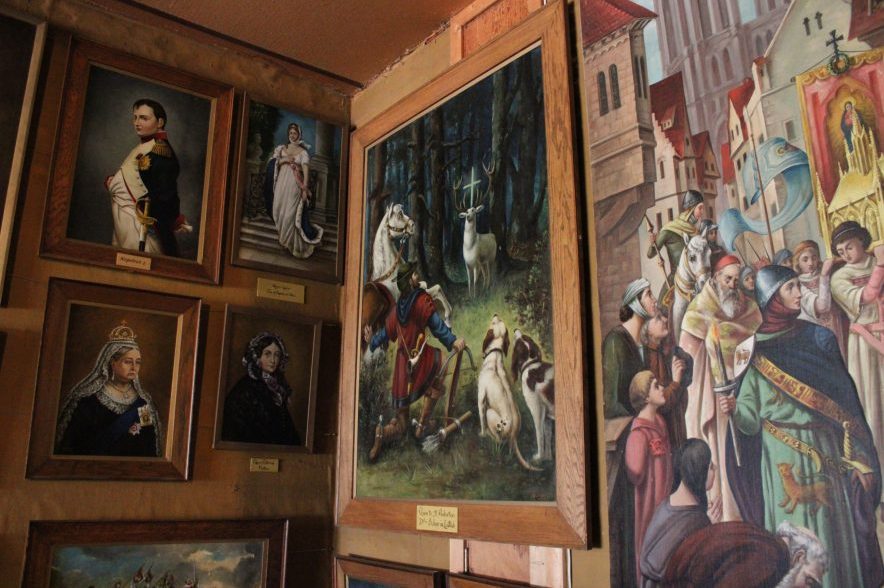
“This painting here, the Vision of Saint Hubertus, tells the story of a nobleman, who was out hunting on a religious feast day,” Sharlene Rutherford said. “While he was out hunting, he saw a vision of a white stag with a cross between its antlers. He had a moment of conversion. He was eventually he was ordained as a bishop in the Catholic Church.” (Brittany Caffet/650 CKOM)
Imhoff came west for adventure and fell in love with the landscape. What began as a visit became something much more permanent.
In 1916, he built his home near St. Walburg. A few years later, he built the studio that still stands today.
“This is where he spent all his time,” Sharlene explained, describing the place not simply as a room where paintings were made, but as the heart of her great-grandfather’s life.
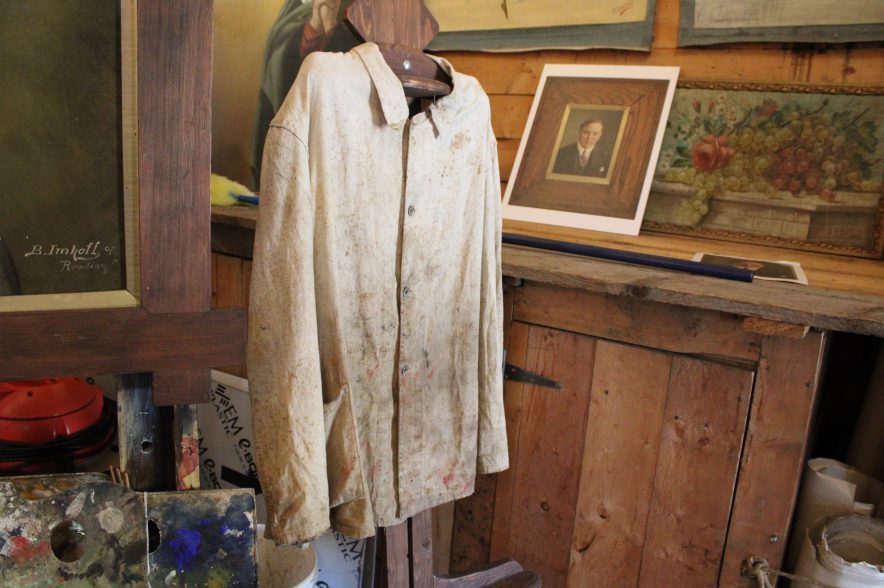
This is one of the smocks Imhoff would wear while working on his paintings inside the studio. (Brittany Caffet/650 CKOM)
The entire studio was built to Imhoff’s specifications, right down to the windows, which all face north.
“He believed that the light from the north was the true light,” she said, “the light from which he would mix all his colours on his palette, and how he would apply them to the canvas from sunup to sundown.”
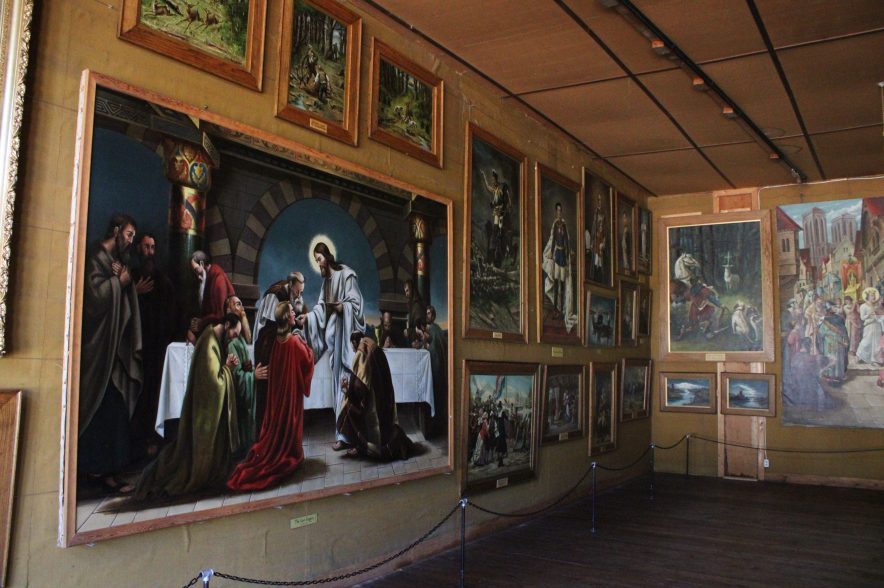
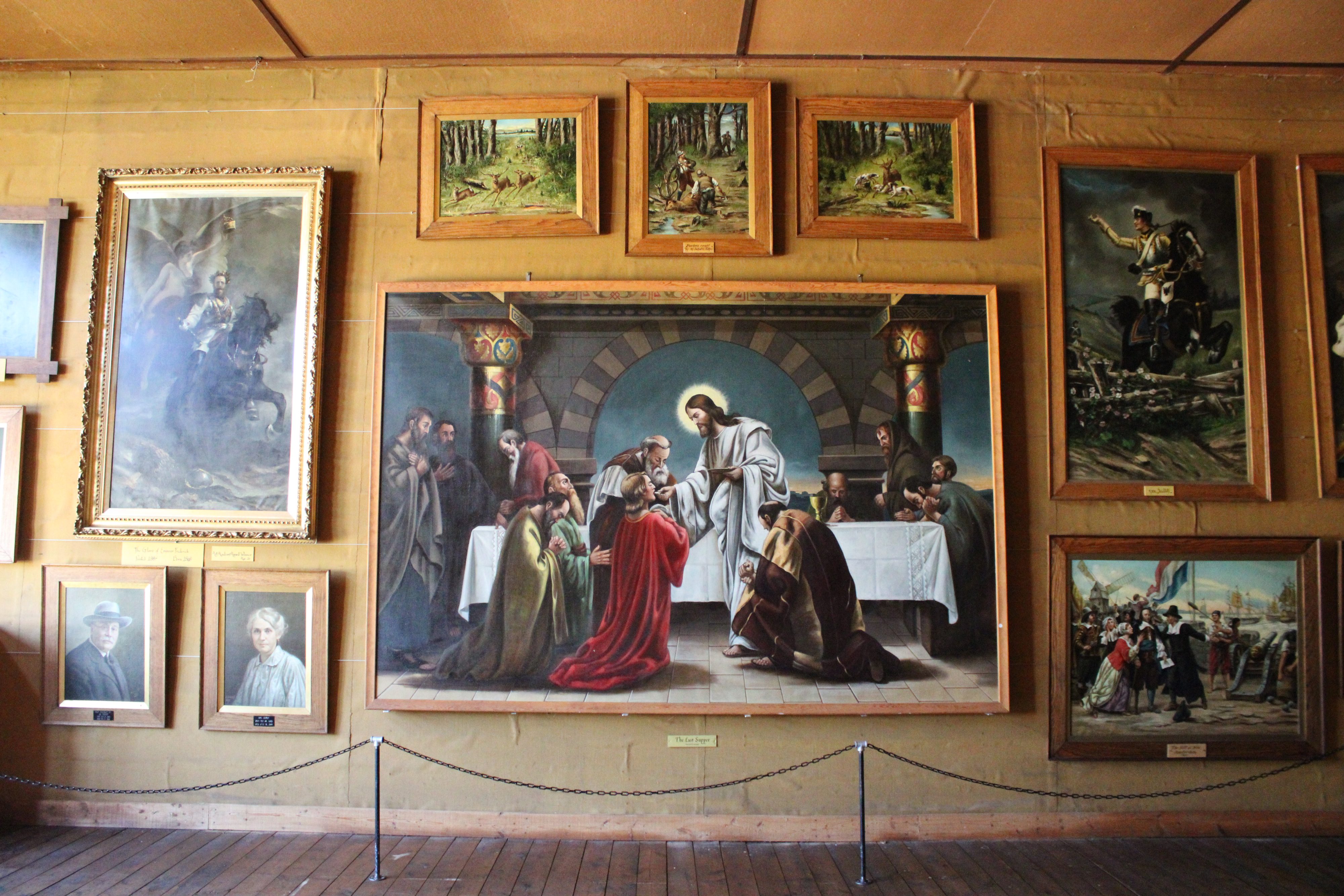
“This is the artist version of the Last Supper,” Sharlene Rutherford said. “One of the things we like to point out, and it’s really fun, especially when we have kids in here, is when they look at this painting and they see the tiled floor that Jesus and the apostles are standing on, and we ask them to walk. They look at it at the painting from the north side of the building here, and we ask them to walk to the south side and keep their eyes on the tile. So when you do that, I’d be interested to see what you observe? So watch the tiles on the floor. They’re running in your direction the entire time.” (Brittany Caffet/650 CKOM)
The same northern light that mattered so much to Imhoff still comes through these windows today. The studio remains cool and naturally lit, much as it would have been when he stood here with a brush in his hand.
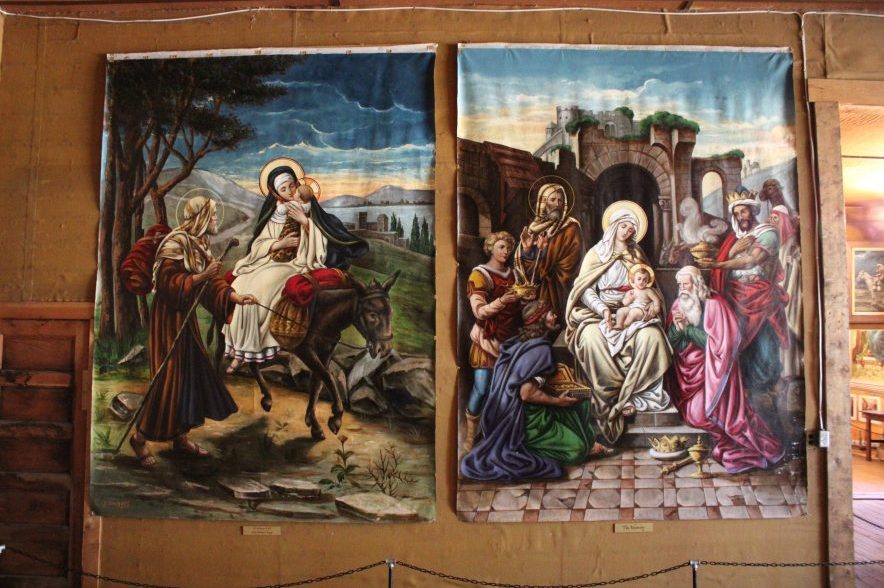
“There could be dozens of paintings in a single church,” Sharlene Rutherford said. “This is his life’s work, and you’re only seeing part of it in here.” (Brittany Caffet/650 CKOM)
And somewhere in all that northern light, surrounded by the canvases he was creating, Imhoff was building the legacy that his family would one day inherit.
“He painted mostly liturgical work,” Sharlene said.
That makes sense when you look around the studio. The religious paintings are hard to miss. Some are huge, the kind of paintings that make you stop and take a few steps back just to take them in.
Imhoff painted an incredible number of churches during his lifetime, including many small Saskatchewan parishes.
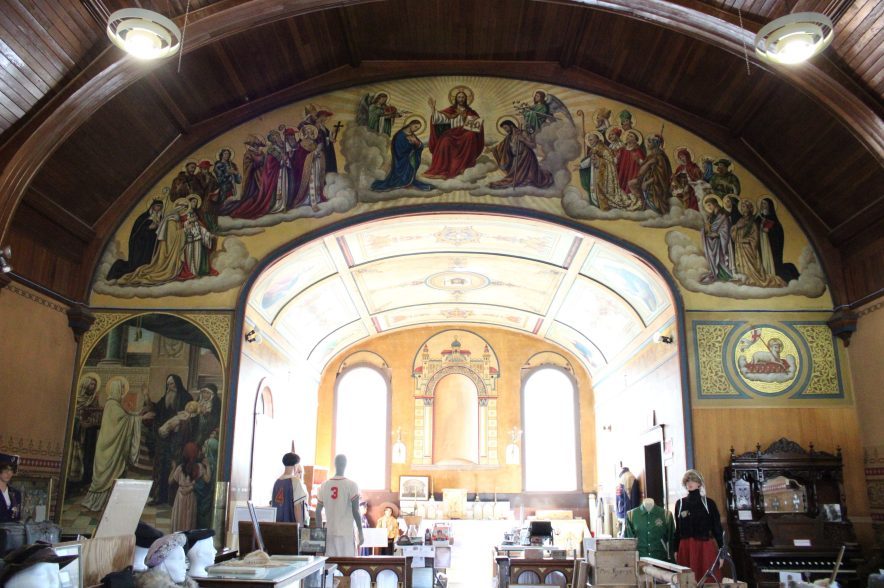
“The Catholic Church in Saint Walburg, that church is now a museum, so you can go there at any time and and take a look,” Sharlene Rutherford said. “The church in Paradise Hill is also beautiful. It’s great because even though the church is locked during the day, there’s numbers on the door, and if you call one of those numbers, someone will come and open up the church for you. They’re really great about that.” (Brittany Caffet/650 CKOM)
But here’s the part that says something about the man behind the paintings:
Some of those churches couldn’t afford him. He helped anyway.
“A lot of the smaller parishes that he did in the province couldn’t pay the fee that he would have normally charged,” Sharlene explained. “So he did that work for little or no charge at all, donating both his time and his materials.”
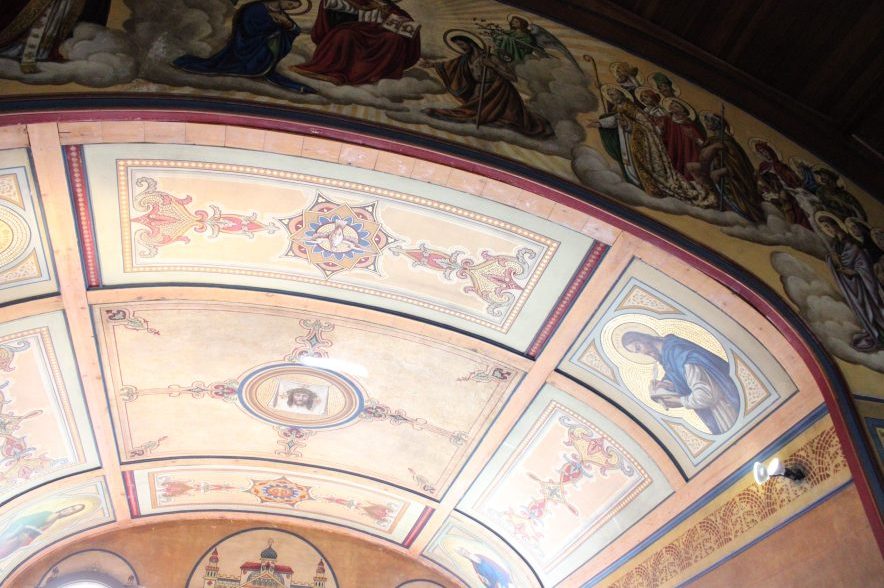
Imhoff painted each piece of canvas at his home studio. He would then pack them up, transport them and paste them in place at their intended destination. “According to my grandpa Carl, who worked with him sometimes,” Sharlene Rutherford said, “he would say that as he was installing the paintings, if there was a bubble in the in the canvas, he would just take out his blade, slice it and get the air out, and then he would touch it up with his brushwork after.” (Brittany Caffet/650 CKOM)
He wasn’t just making paintings. He was giving something to the communities around him. And that generosity was noticed.
In 1937, he was knighted by Pope Pius XI, awarded the Knighthood of Saint Gregory the Great for his charitable work for the Catholic Church.
But the church paintings are only part of what you’ll find here.
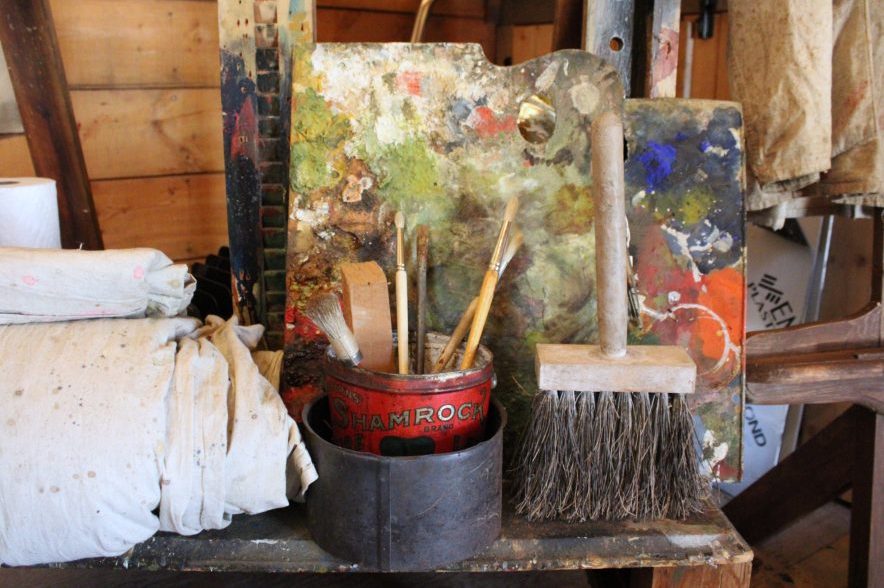
Imhoff’s palette and brushes sit in a place of honour near the door to the studio. They offer a gentle reminder that each and every work of art you’ll see was created right here. (Brittany Caffet/650 CKOM)
Imhoff painted whatever caught his eye or held his interest — wildlife, still lifes, European historical figures, the British monarchy. Here in Saskatchewan, he also painted Indigenous leaders.
Those portraits stop you in a different way.
Sharlene talks about the faces.
“The portraits on the faces of these leaders are really compelling. They’re really deep.”
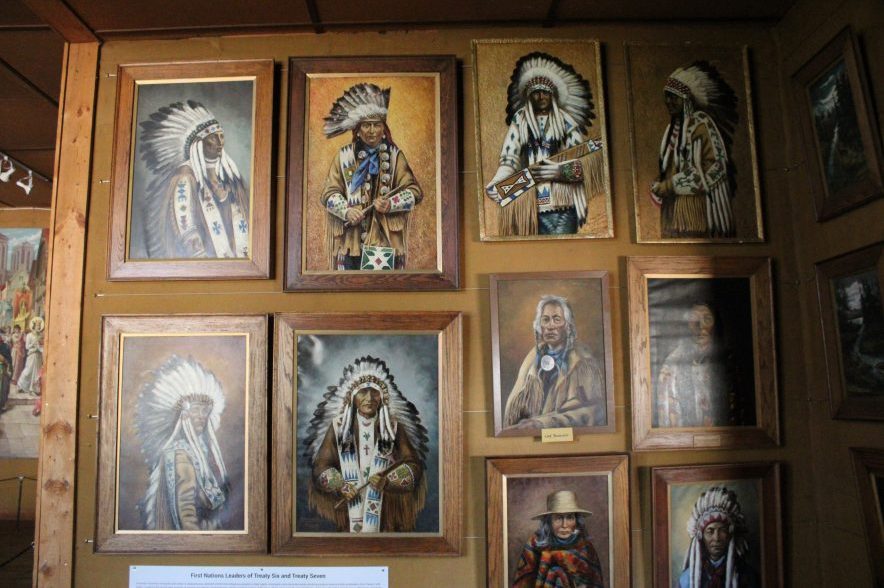
Imhoff painted portaits of many Indigenous leaders after moving to Saskatchewan in 1914. (Brittany Caffet/650 CKOM)
She notices the things you might not immediately think to look for: the crow’s feet, the lines across the forehead, the jowls.
“Everything is remarkably human.”
These aren’t stiff, formal faces that feel trapped in the past. They feel like people.
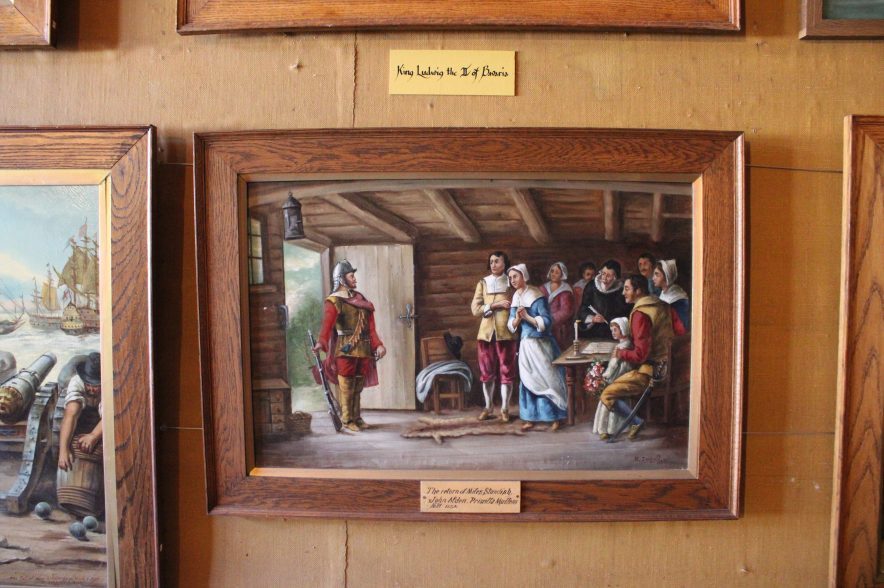
This painting by Berthold von Imhoff brings the story of ‘The Courtship of Miles Standish’ to life. It’s one of the many pieces that gives a glimpse into the stories and inspiration behind Imhoff’s work. (Brittany Caffet/650 CKOM)
Then she shows you the eyes.
This is one of those things you have to see for yourself. Stand in front of certain paintings and the eyes seem to follow you. Take a few steps to the side and they’re still looking at you.
Move again.
Still watching.
It’s a small trick, but it changes the feeling in the room. You find yourself smiling, then looking a little closer at the brushwork, wondering how Imhoff managed to pull it off.
And his work isn’t only here.
You can still find it in communities around Saskatchewan.
There are Imhoff paintings on church walls in St. Walburg, Paradise Hill, Reward, St. Benedict and Muenster, among other places. In some cases, the churches themselves have become part of the journey for people who visit the studio.
“A lot of people, when they come here to see the studio, the first thing they want to do is they want to see a church,” Sharlene said.
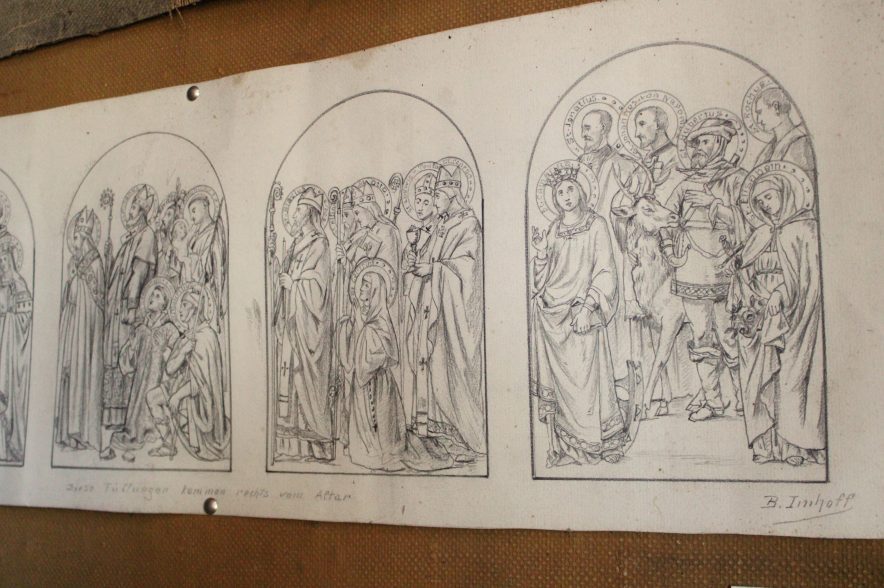
These are the original sketches Imhoff created for his paintings in St. Peter’s Parish in Muenster. (Brittany Caffet/650 CKOM)
So they go to St. Walburg or Paradise Hill. Some even make the trip to Muenster.
They leave the studio and go looking for his work where he originally intended it to be seen.
And sometimes, they find his name, too.
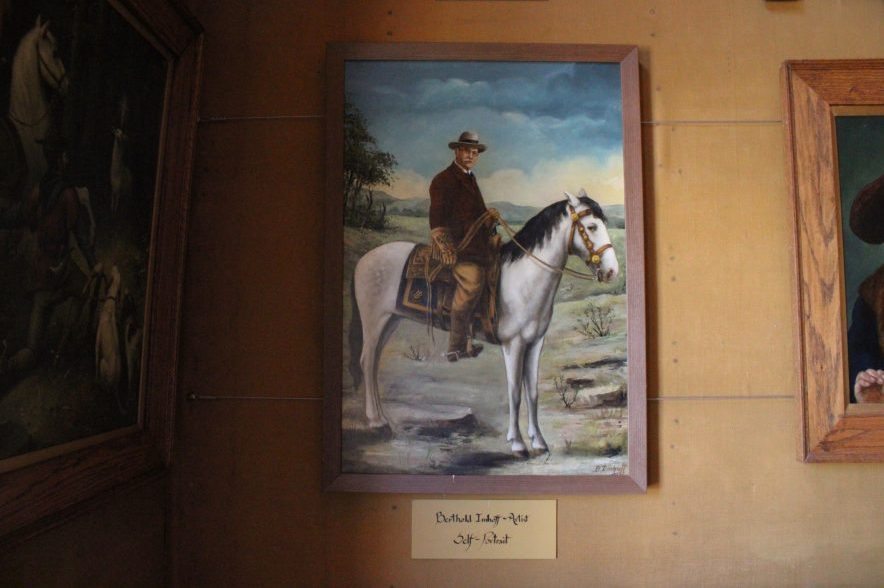
“This is another self-portrait of the artist,” Sharlene Rutherford noted. “This one is when he’s on one of his horses. He loved horseback riding. He loved hunting the outdoors, all of those things. This painting was served as the inspiration for the statue of the artist that’s in St. Walburg when you come in from the south side of town.” (Brittany Caffet/650 CKOM)
Imhoff didn’t put his signature in a big obvious spot in the churches he decorated. He would find a quiet place and leave it there.
Sharlene and her family once went looking for one of those signatures at a church in Pennsylvania.
They climbed into the loft of a church and looked up.
There it was.
“B.M. Hoff, 1935, Saint Walburg, Saskatchewan.”
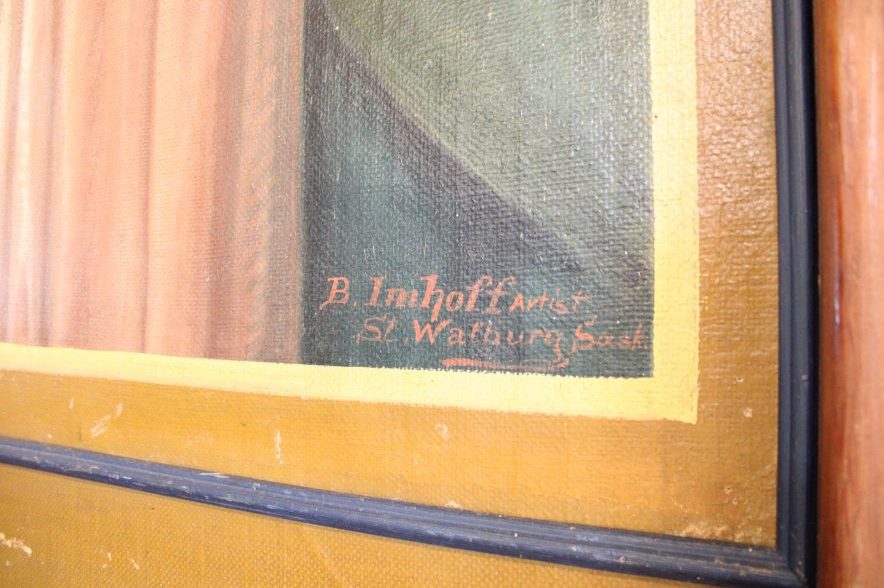
Imhoff signed his paintings with his name and his home. The family says he was proud to be from St. Walburg, Saskatchewan. (Brittany Caffet/650 CKOM)
For all the beauty in the studio, there is another side to inheriting something like this.
“This is not something that you can put away in a drawer and put on the top shelf and come back to it in a few years when you’re ready,” Sharlene said. “It’s always here and it always needs to be cared for.”
“The conditions in the studio are very good for the paintings,” Sharlene Rutherford said. “The building isn’t heated, so it is cool in here. And it’s a little darker in here, right?” (Brittany Caffet/650 CKOM)
For Bert, that responsibility started when he was a boy.
At the time, it wasn’t easy to see the privilege in it.
He knows what it’s like to be a kid who resents this place. He knows what it is like to feel the weight of something you didn’t choose.
But he also knows what it’s like to watch a stranger walk through the doors for the first time, eyes wide with disbelief.
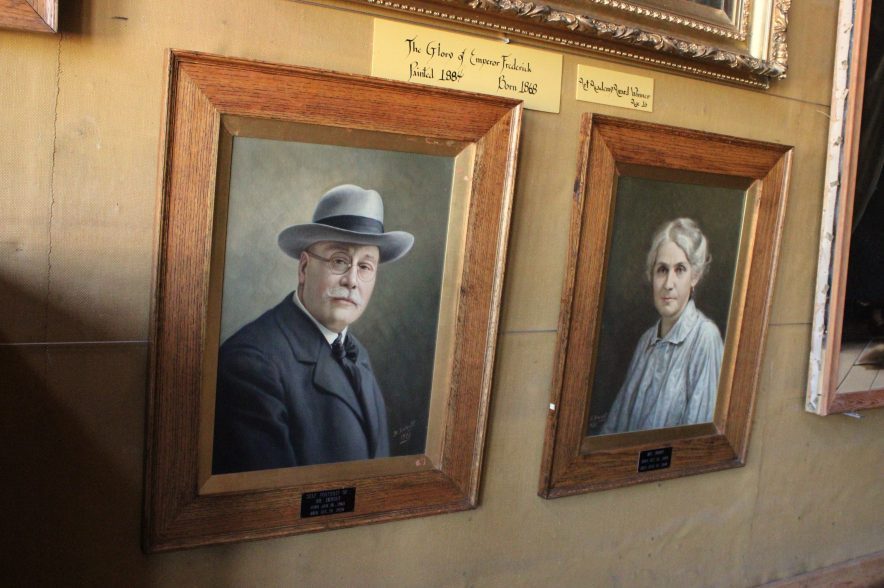
“This is the artist and his wife in their later years,” Sharlene Rutherford said. “Again, they are both watching you. Wherever you’re standing in here, you look at these paintings, and they are looking directly at you.” (Brittany Caffet/650 CKOM)
Over the years, the burden Bert felt became a connection. The obligation became stewardship. The place he once wanted to escape became a place he now helps protect.
He looks around the studio today and sees something different than he did as a boy.
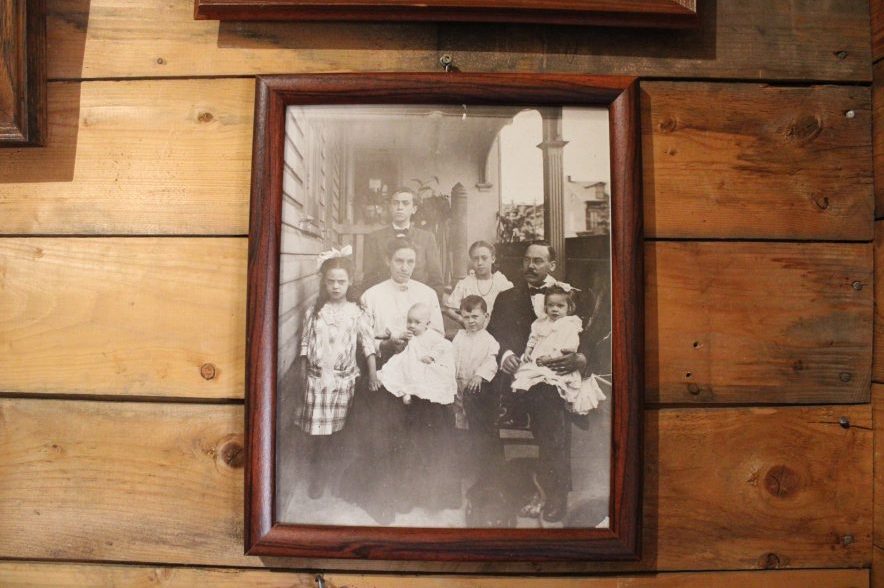
“The youngest little chap sitting on his mother’s lap is Carl, and that’s my dad’s dad,” Sharlene Rutherford said. (Brittany Caffet/650 CKOM)
He sees his grandfather.
He sees his family.
He sees a legacy.
And after everything, the feeling that remains is a simple one.
“Now, I’m pretty proud of the place.”
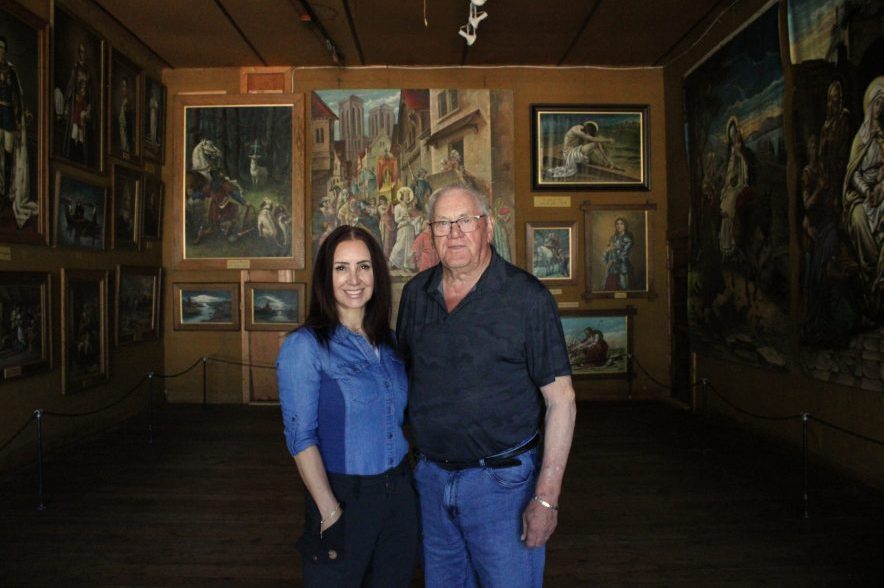
“What is the future? Right there,” Bert Imhoff said, gesturing toward his daughter. “Sharlene is the one that’s going to take over this place, and we know she’s going to carry on the way we did, and probably better.” (Brittany Caffet/650 CKOM)