

The parallels between parenting and péquistes
Murray Wood says a child's obstreperousness and separatism are analogous.
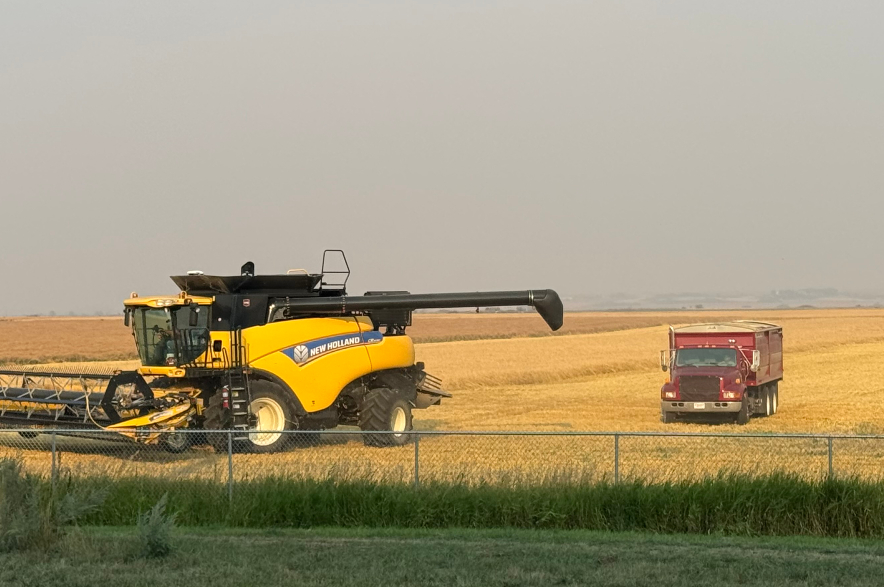
Saskatchewan’s harvest is close to complete as farmers race against the changing seasons to get the last of the 2026 crop into the bin.
According to the latest crop report from the Saskatchewan Ministry of Agriculture, which covered the week ending on Monday, harvest is 82 per cent complete across the province, up from 63 per cent in the previous week.
Read more:
But despite the progress, producers are still behind the five-year average of 97 per cent and the 10-year average of 88 per cent, largely due to heavy rainfall that delayed the start of the growing season in some regions.
Dry conditions helped farmers make progress, with “minimal to no rainfall” reported throughout the province over the week ending on Monday.
“Harvest progress continued this week as producers made good use of available field time, despite the humidity and dew reducing the number of harvesting hours each day,” the ministry said in its report.
“Harvest is furthest ahead in the southwest and west-central regions with 92 per cent of crops harvested in each. This is followed by the northwest region with 80 per cent of crops off. Harvest progress sits at 77 per cent complete in the southeast, while harvest is 74 per cent complete in the east-central and northeast regions.”
The ministry said all winter cereals and the majority of pulse crops have been harvested, while producers also made significant progress on spring cereals.
“Current crop yields are similar or slightly better than reported last month, and average provincial yields remain at or above historical averages for most crop types,” the agriculture ministry noted.
“However, yields vary throughout the province due to regional rainfall levels and agronomic challenges during the growing season.”
The ministry said its yield estimates are:
The quality of hard red spring wheat varies throughout the province, the ministry said, due to wet conditions and pest activity during the season, with the average quality this year below historical averages.
The ministry said 31 per cent of the hard red spring wheat was graded at 1 Canada Western, 44 per cent was 2 CW, 19 per cent was 3 CW and six per cent was CW Feed.
While conditions were largely dry over the week covered by the report, the ministry said topsoil moisture levels remained mostly adequate, but shortages are being reported in some regions.
In cropland, topsoil moisture was rated as eight per cent surplus, 83 per cent adequate, eight per cent short and one per cent very short. In hayland, topsoil moisture was sitting at three per cent surplus, 84 per cent adequate, 11 per cent short and two per cent very short. In pastures, moisture levels were two per cent surplus, 79 per cent adequate, 16 per cent short and three per cent very short.
“There is less crop damage being reported as more crops are harvested,” the ministry said in its report.
“For the crops remaining in the field, reporters noted that wind continues to blow swaths around, wildlife is feeding on crops, and freezing temperatures are impacting some crops.”
Producers are still busy as they wrap up harvest operations for the year, the ministry said, with many starting fall field work, which includes spraying for weeds, harrowing, applying fertilizer and moving livestock.