

Sarah Mills: Justin Timberlake's arrest video should be made public
Justin Timberlake is fighting in court to keep his impaired driving arrest video hidden. Sarah Mills says the multi-mill...
Saskatchewan doctors are working without compensation for almost 11 hours each week, on average, spending that time on administrative work instead of patients.
The January 2026 report, “Losing Doctors to Desk Work: Canadian physicians lose 20 million hours each year to red tape,” tied Saskatchewan as one of the provinces with doctors spending the most time per week on administrative work.
Alberta, Ontario and Saskatchewan all were ranked with physicians spending about 10.7 hours each week on desk work – which amounts to more than 20 per cent of their work week – in the report from the Canadian Medical Association (CMA) and Canadian Federation of Independent Business (CFIB).
Read more:
The least hours spent on administrative tasks was observed in Quebec at 7.7 hours each week. The national average is 9.1 hours each week.
Dr. Pamela Arnold, president of the Saskatchewan Medical Association (SMA) and critical care associate in Regina, called it a “major concern.”
Arnold is also trained as a family physician.
She said many doctors the SMA represents, particularly fee-for-service doctors in Saskatchewan, are dealing with this issue, spending 10.7 hours in a 50-hour work week on these administrative tasks.
Arnold characterized those tasks as health system requirements, insurance forms, and other patient-related paperwork for services like disability, tax credits and CPP.
“The completion of this necessary documentation does take a lot of time,” Arnold said. “It’s quite onerous and does contribute to physician burnout.”
She explained that these tasks are usually completed after hours by doctors and much of the work could be done by other people.
“(It) doesn’t necessarily have to be done by a physician, but it does require payment for the services to be done,” Arnold explained, meaning that if a physician isn’t the one doing the work, the doctor would have to hire someone to do it for them, typically falling to the physician to pay for, as well.
Arnold said this is a position that physicians are in, across the board.
“Although the vast majority of it will come from patient encounters in an outpatient setting,” she shared, “there are also a lot of forms that are presented to physicians while patients are in the hospital.”
Doctors who are in a fee-for-service setting tend to be more impacted by these administrative tasks than physicians in an alternate payment model, because those alternative models allow physicians to be paid for the work they do over a period of time, rather than the work they do in each clinical encounter.
Further, physicians in alternate payment models usually work in team-based settings alongside other allied health professionals who might be able to absorb some of the administrative workload.
Arnold said there is a large number of doctors in Saskatchewan working under the alternate payment model – about 51 per cent of physicians in the province – one of the highest rates in the country.
“It’s really a physician’s choice as to which model suits them and their practice best,” Arnold explained, noting that each model has its own benefits and drawbacks.
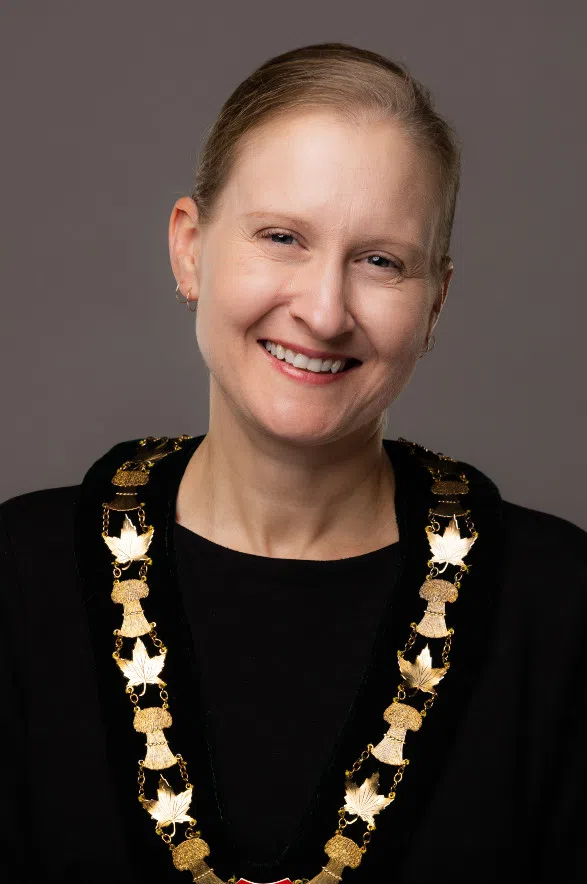
Dr. Pamela Arnold is the president of the Saskatchewan Medical Association. She said called the amount of time doctors are spending on desk work a “major concern.” (Saskatchewan Medical Association/Submitted)
As of January 2026, Arnold noted an announcement that employers cannot require employees to provide a medical note except for absences longer than five days.
She said reducing sick notes is one change beneficial to physicians.
Another, larger, solution that could be implemented is transitioning to a better-integrated electronic medical record system.
“A lot of time is spent working between systems and bringing information back and forth between the systems in order to create adequate patient notes, patient records, referrals and to fill out forms,” Arnold explained. “A better integrated system and EMR (Emergency Medical Responder) program would reduce the administrative burden exponentially for physicians.”
She said that sort of initiative is something the medical association really wants to see work done on. Other provinces, Arnold noted, have systems at least within hospitals that have these more integrated systems than what Saskatchewan doctors are working with.
The Saskatchewan Health Authority, Arnold said, is looking into this, as the SMA continues to advocate for it.
“There are other provinces in the country that, at least within their hospital system, have more integrated systems than what we have here in Saskatchewan,” Arnold shared.
“That would make huge changes to a physician’s daily life.”
The Saskatchewan Ministry of Health said there are improvements being made to “reduce the administrative burden on primary care providers to alleviate workload and create capacity for direct patient care.”
The emailed statement referenced the amendment made to The Saskatchewan Employment Act limiting requests for sick notes to physicians.
The Ministry said more than 300 primary care providers in the province have also now signed up for the Infoway AI Scribe Pilot Program, supported by the Saskatchewan Health Authority (SHA), SMA and eHealth Saskatchewan.
“Canada Health Infoway’s work includes national assessments of AI Scribe vendors, enabling accelerated vendor evaluation and alignment with national standards. It shortlisted 10 AI Scribe vendors that met the national standards,” the Ministry’s statement read.
The SHA is also currently developing an artificial intelligence acceptable use policy “to support responsible AI use across the organization.” It said the policy will support the use of AI, protect personal health information and sensitive data, and be consistent with current privacy legislation and clinical expectations.
“The Ministry of Health continues to work with health system partners to identify improvement through a strategic approach to the use of technology, including the potential use of AI tools, to reduce administrative burden and support high-quality patient care,” the statement concluded.
Arnold characterized the issue of high administrative hours as a systemic one rather than a patient issue.
“We want to remember that physicians ultimately want to treat and care for their patients,” Arnold said. “They want to provide good access to the patients of this province and they don’t want people to be waiting excessively long times to see them.”
Reducing the burden of administrative work on physicians, she said, would increase patient access and care, while also improving the work-life balance of doctors in Saskatchewan.