

Murray Wood: Who's hot... and who's not
Every Friday, Murray Wood takes a look back at the week's news and decides who's hot... and who's not. This week's list ...
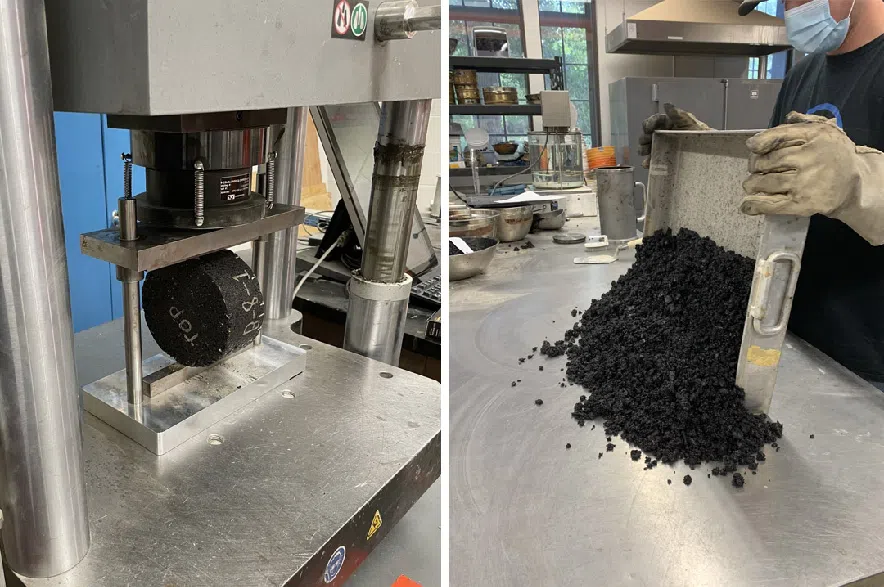
A new research project is examining new methods and materials to build roads that will better stand up to harsh Saskatchewan winters.
The project, a partnership between the University of Saskatchewan and City of Saskatoon, is being led by Dr. Haithem Soliman, an associate professor in the university’s department of civil, geological and environmental engineering.
Soliman said one of the biggest challenges when building roads in cold temperatures relates to asphalt, which must be hot when it is applied to the road surface.
Read more:
“At high temperature it becomes soft. At low temperature it becomes brittle,” Soliman explained in a statement.
“So, to build a good road we need to have the asphalt delivered to the construction site and it needs to be compacted at a high temperature to achieve good density, good stiffness and durability.”
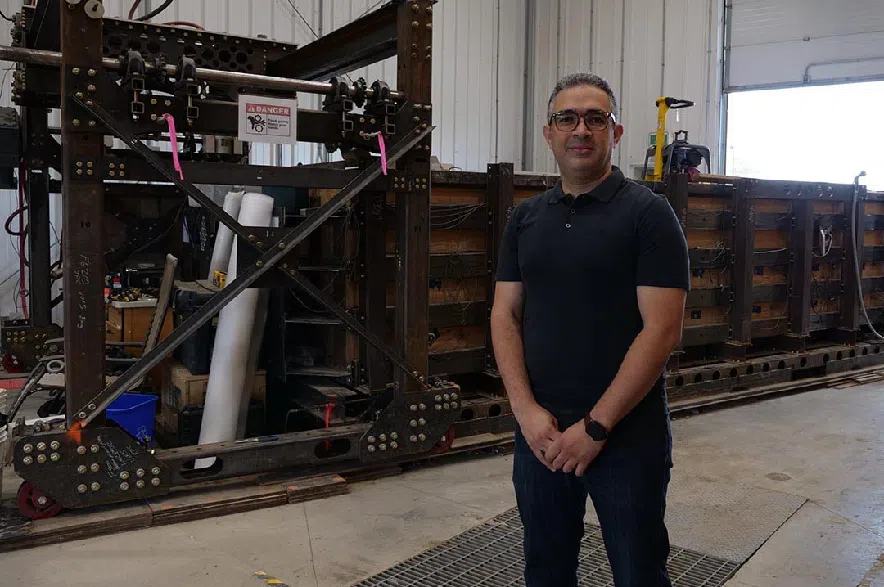
“If we have a condition that we need to pave at cold air temperatures, we can recommend different materials or different mix designs,” Dr. Haithem Soliman said. (Matt Olson/University of Saskatchewan)
Asphalt poured in the cold doesn’t settle properly and can create air bubbles, the university noted, which then fill with water and create cracking in freezing temperatures.
Soliman said inconsistent weather frequently creates challenges when it comes to construction. Short summers mean many projects drag on into the fall, when temperature shifts start to become an issue. The professor said construction methods, or the materials used in building roads, need to change to avoid those issues.
Soliman and his team will explore warm-mix asphalt, which can be used at lower temperatures, as well as additives that can be incorporated into asphalt mix to allow its use in colder weather.
“If we have a condition that we need to pave at cold air temperatures, we can recommend different materials or different mix designs,” Soliman said. “That is the objective.”
Soliman, whose work has previously explored the use of recycled materials such as plastic waste in road construction, said this project is his first collaboration with the city, and noted there has been a good connection so far.
Matthew Hiltz, the City of Saskatoon’s asset preservation manager, said the project is likely to produce some useful data that can be used to improve construction in the Bridge City.
“This research initiative will help the city better understand how paving in colder temperatures affects the service life of our community roadways, how other jurisdictions approach this challenge, and what tools and methods are most effective under cooler conditions,” Hiltz said in a statement.
“Ultimately, we’re trying to find ways to extend the construction window before winter arrives.”