

Evan Bray: Fall is the my pick of the seasons
It isn't quite fall yet - the season officially changes next week - but Evan Bray says fall is his favourite season, wit...
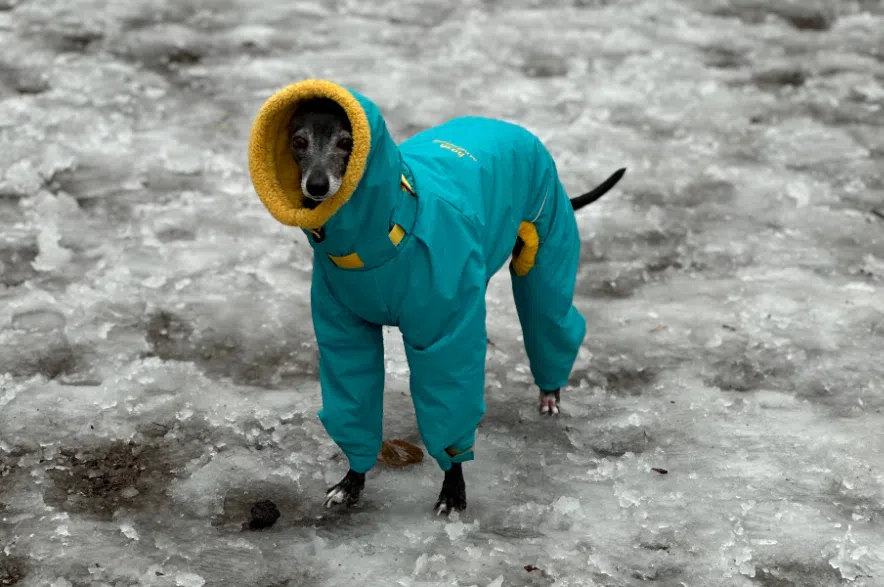
Regardless of the length or thickness of their built-in fur coats, pets shouldn’t be left outside for more than a few minutes when there’s extreme cold weather.
Jemma Omidian is the outreach co-ordinator at Saskatchewan SPCA and she said, “typically, there’s just no type of dog that’s going to be comfortable in – 40 C type temperatures.”
Read more:
So, instead of going for walks in this climate, she said pet owners should only take their dogs out for short bathroom breaks.
“Just really quick, five minutes, tops,” Omidian said.
From the feline perspective, farm cats should be kept inside the barn, an insulated shelter with a heater, or the house, for a bit, until the weather improves, according to Omidian.
Even when it’s only a few minutes outdoors, she said pet owners should keep an eye out for signs their furry loved one is getting too cold.
“Things like your dog is hunched over, kind of like a hunchback with the tail tucked, lifting their feet, shivering. They will often just tell you they’re too cold by whining or trying to turn around and go back inside,” she said.
In those instances, Omidian said the priority should be listening to them and going back inside to let them warm up. That’s true even if they haven’t gone to the bathroom yet. She suggests trying again, once they’re feeling better.
But, especially when it’s this cold, she said hypothermia can come on quickly. In pets, that could look like prolonged shivering, weakness, muscle stiffness, and difficulty walking — although there’s a range of symptoms.
“If they’re kind of having a hard time getting up, they’re not really wanting to move around, they seem like they’re not really strong … (if) they’ve got really pale gums, or if they’re confused and have slow, shallow breathing — all of those things are indicators of hypothermia,” Omidian said.
For pet owners noticing these signs, she said they need to call the vet and take their pet into an emergency clinic right away.

While some dogs do better in the cold than others depending on their fur coat, age, weight, and extenuating health issues, Omidian reiterated that with extreme weather it doesn’t matter, so putting on some winter gear can help. (Marija Robinson/650 CKOM)
According to Omidian, one way to make your dog more comfortable during those periods they’re outside is to put a coat or boots on them – although that can be easier said than done.
“I know that so many dogs absolutely refuse to wear those. I have six dogs, and not one of them will wear booties. But if you can get them on your pets, even if it is a quick five-minute pee break, it does make a really big difference,” Omidian said.
Those boots can serve a dual purpose, too, by keeping your dogs paws free from anything sprayed on sidewalks during the winter.
That’s “because the salt, and harsh chemicals from the salt, can actually burn their paw pads and their underbelly,” she said, adding that if your dog refuses boots you can wipe their paws off with a damp towel.
But, even with the right gear, pets will still be limited in how much time they have outside to burn off their physical energy in the winter.
Omidian said owners can try and keep their pets’ minds occupied by giving them enrichment activities in the house.
That could include puzzle feeders (interactive bowls that hide food), snuffle mats (pet toys designed to slow down fast eaters), or teaching them new tricks.
“I always make a joke because my dogs are much better trained in the winter than they are in the summer, and it’s because I give them like fun tricks to learn in the winter,” Omidian said.