

Murray Wood: Saskatchewan's auditor should go white elephant hunting
Murray Wood says the provincial auditor found the Global Transportation Hub could have helped Regina avoid giving Costco...
Saskatchewan has more nursing positions filled now than it did two years ago – but, one union representative said that’s not enough.
During the Dec. 11 public board meeting, the Saskatchewan Health Authority’s (SHA) CEO Andrew Will said, “the overall vacancy rate for chronic nursing positions saw a reduction of 56 per cent from September 2023 to September 2025.”
Read more:
In that same period, “the rural and northern chronic nursing vacancy rate also declined significantly,” according to Will, with a reduction of 64 per cent.
He said these improvements in the staffing levels of nurses are a result of multiple programs and recruitment efforts, including the training and hiring of new graduates, as well as bringing in nurses from outside Canada.
“Internationally, recruitment from the Philippines remains a key success story, with 392 nurses now working within the SHA,” Will said, adding how 93 per cent of them are licensed.
In addition to nursing vacancy rates, he also touched on the 77 new and enhanced full-time positions announced earlier this year, saying that 51 of them have been filled.
These figures come shortly after the release of the provincial auditor’s report, which found that by August of this year, the SHA had only fully implemented three of seven recommendations to fill hard-to-recruit healthcare positions.
These recommendations were first made by the auditor in 2022.
According to the report, the health authority still needs to assess which facilities are most likely to have shortages in hard-to-recruit positions, consider the root causes of those shortages, develop targets for performance measures in its First Nations and Métis recruitment and retention plan, and analyze the results of staff exit surveys in order to inform retention strategies.
Touching on the remaining recommendations, the SHA’s Chief Human Resources Officer Mike Northcott said partial progress has been made on the four.
He said in terms of looking at vacancies, the SHA is piloting a vacancy dashboard and working on doing “forecasts for each of the facilities.”
Those pilots are expected to be finished by December 2026, “and then that will expand,” according to Northcott.
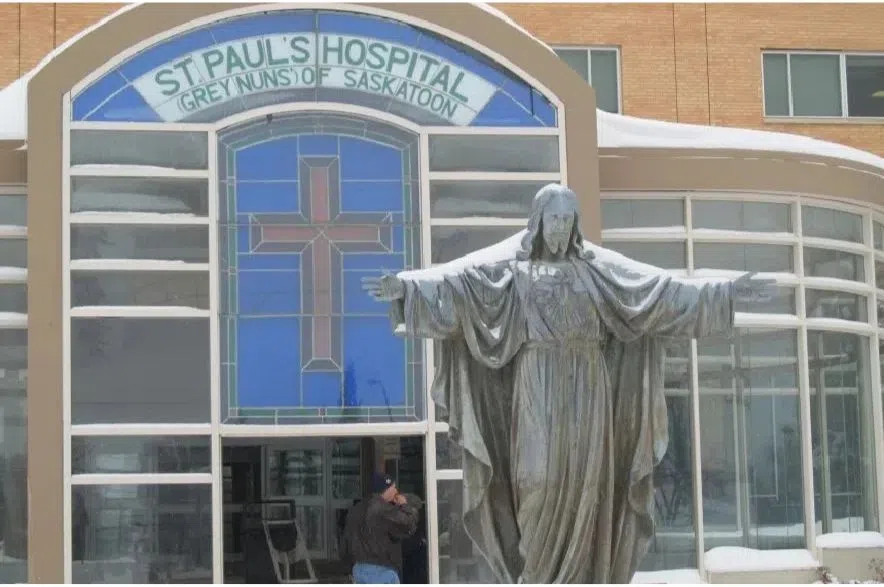
But, even with vacancy rates improving, the president of the Saskatchewan Union of Nurses, Bryce Boynton, said there still aren’t enough nurses – which is especially clear after the recent incident at St. Paul’s Hospital.
On Nov. 27, a man entered the hospital with a gun, multiple rounds of ammunition, and knives hidden on his person. Although he was then detained inside a locked room, he threatened to sexually assault and murder nurses and their families.
“It was fairly traumatic for everyone who’s in the vicinity,” Boynton said.
Better security, including metal detectors and more guards, could prevent a situation like that from happening at the hospital again.
“You would need to bring more security in if you were to implement more things like metal detectors with security cameras to monitor them,” he said.
But, with there also being safety in numbers, he’s pushing for the hiring of more nurses.
That way, “we can be more diligent and watch our work surroundings and support each other,” Boynton said.
It would mean nurses aren’t left alone with “high-risk patients,” he said, and can do their jobs without the threat of being assaulted.