

Murray Wood: Saskatchewan NDP might be better off with a new name
While Carla Beck has been trying to bring the Saskatchewan NDP closer to the centre, Murray Wood says the federal NDP ha...
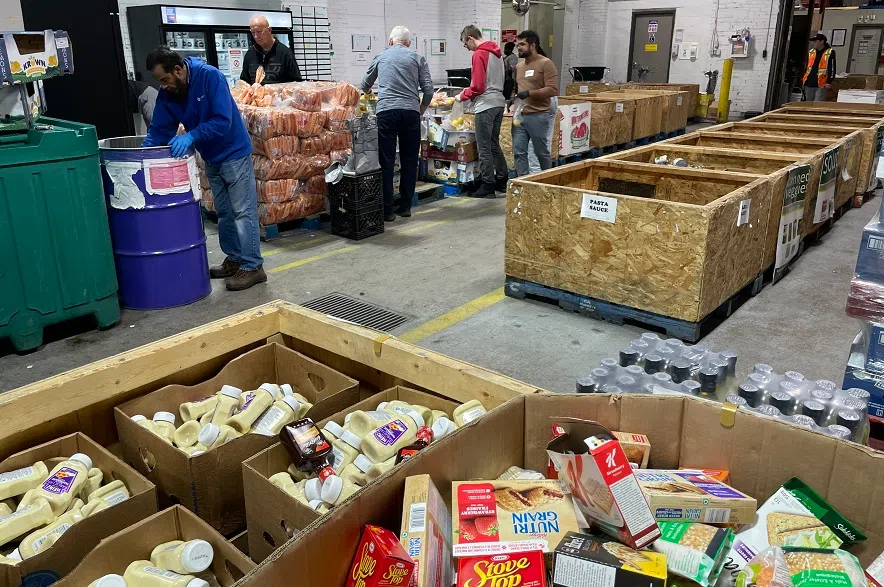
You can expect your grocery bill to go up by hundreds of dollars next year, based on Canada’s Food Price Report.
It forecasts that overall food prices will increase by four to six per cent in 2026.
Read more:
For a family of four, that forecast will look like a total yearly grocery bill of $17,591.79, which is an increase of $994.63 from 2025.
It’s predicted that the most significant price changes will be on meat products, which are anticipated to rise by five to seven per cent. In comparison, baked goods, dairy, and egg prices are expected to go up by two to four per cent.
The report also noted that 25 per cent of Canadian homes are “considered food insecure,” with almost 2.2 million people visiting Canada’s food banks monthly in 2025 – a figure which encompasses the thousands who’ve been visiting the Saskatoon Food Bank and Learning Center.
The food bank’s executive director, Laurie O’Connor, said the organization is “seeing an increase in need for emergency food” this year.
While it’s been a slowly and steady rise in demand, she said earlier in the year 23,000 people a month were coming out. Now, that figure has grown to 24,000 people.
That equates to roughly 8,500 food hampers being handed out each month, providing about two to three days worth of food. At this time last year, the food bank was giving away 7,800 hampers.
It’s not just those without work who are struggling to afford groceries, though, with around 20 per cent of visitors listing a full-time job as their source of income.
But, “if folks are working a full-time minimum wage job, that probably means a gross income around $30,000 a year,” O’Connor said, which makes a grocery bill of over $17,000 unrealistic.
The consequence, she said, is that some people will go without food.
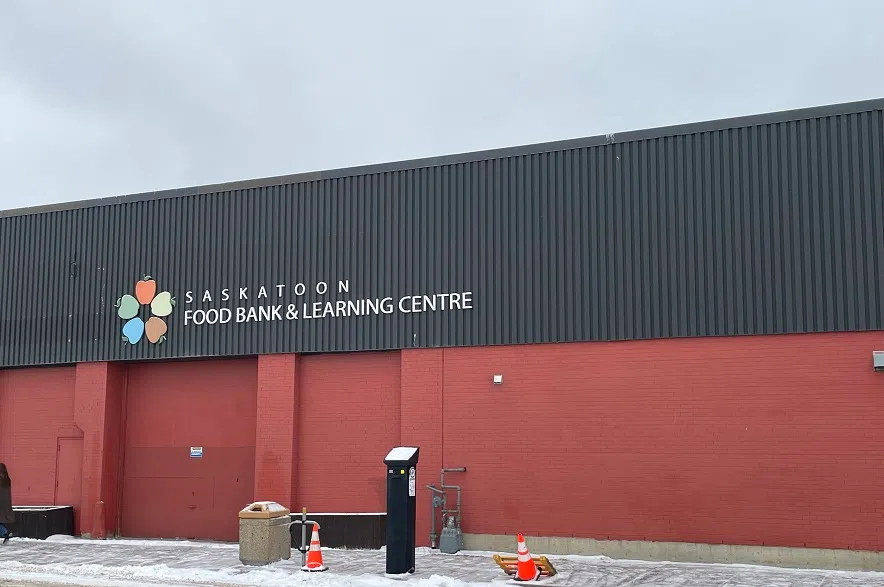
O’Connor said people will be looking for the best deals on food for their families, but “frankly, they just won’t be able to afford any increase. I don’t think they can afford what it costs now.” (Marija Robinson/650 CKOM)
“Something has to break at some point and if it’s choosing between a roof over your head or food on the table, people are going to choose a roof over their head. We live in Saskatchewan,” O’Connor said, adding how there are some who don’t have either of the two options.
She expects the people who are most at risk of being impacted by rising grocery costs are the ones living on a fixed income, like students, the elderly, and those on assisted wages.
A small silver lining, though, is that the groceries expected to increase in cost aren’t typically the ones relied on by the food bank, according to O’Connor, since the organization usually purchases packaged, canned or boxed food rather than meat and other “high cost items.”
With protein alternatives often included in hampers rather than meat, O’Connor said the food bank’s learning centre has a nutrition program where a key focus is on how to make “exciting” recipes that are “outside of the norm.”
Even as grocery prices continue to climb, O’Connor said it hasn’t impacted the generosity of Saskatchewan residents.
“We haven’t seen a decrease in donations,” she said.
But, even with people willing to give as their budgets tighten, O’Connor said it’s not the community’s role to fill the financial gaps of those who are struggling – it’s the government’s.
“We need to be thinking about [these problems] from a systems-level perspective, and governments need to step up and start talking about it and providing solutions,” she said.
– with files from The Canadian Press