Sarah Mills: Disconnecting from devices is the right way to reconnect
From wanting work-life balance to avoiding doomscrolling, Sarah Mills says many are ditching devices - or lessening thei...
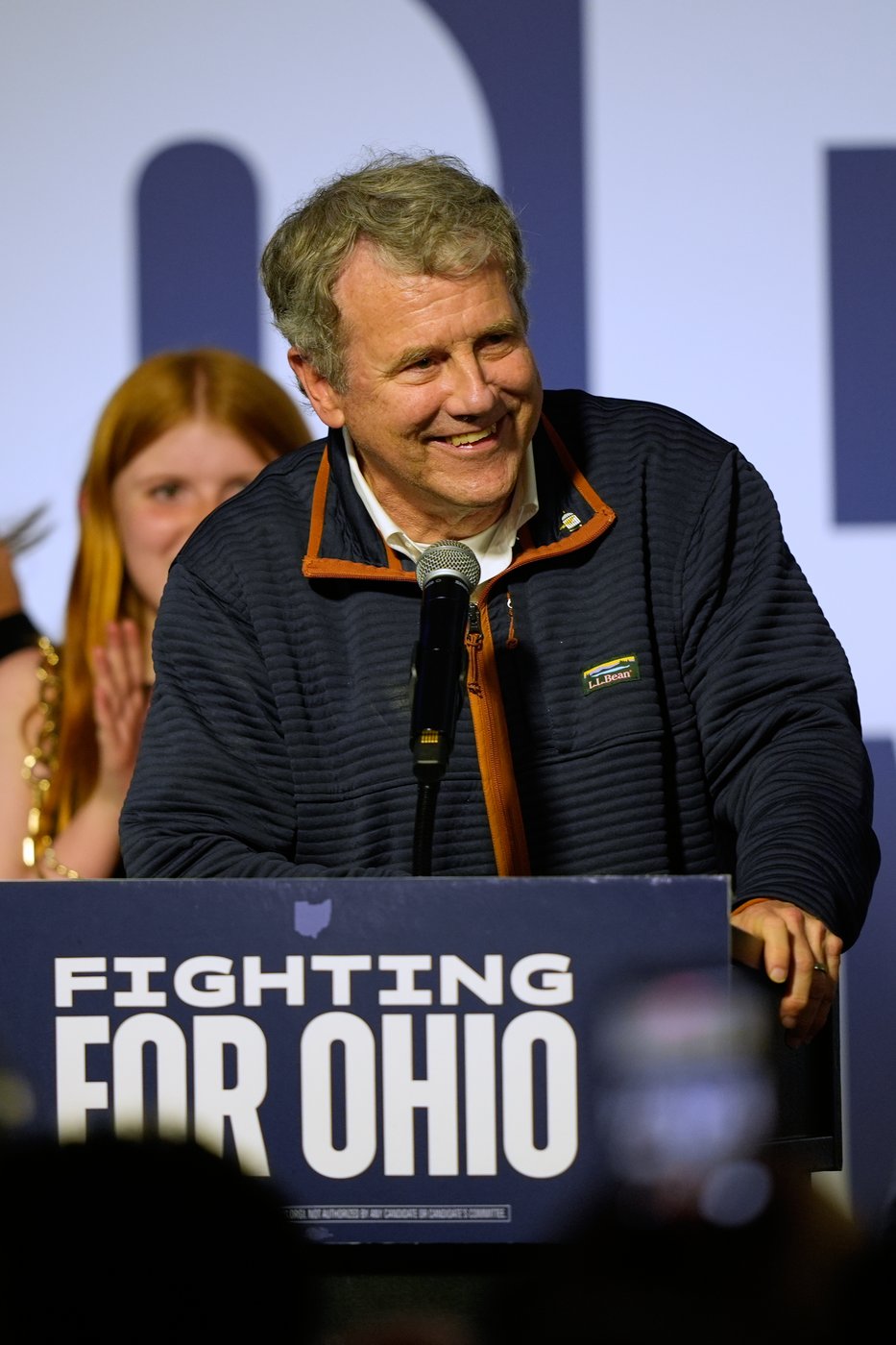
COLUMBUS, Ohio (AP) — Former Sen. Sherrod Brown defeated Republican Sen. Jon Husted in Ohio on Tuesday, flipping a seat that was crucial to Democrats’ strategy to retake the chamber and providing a ray of hope for the party’s longer-term prospects in a former swing state that had turned sharply to the right over the last decade.
Brown won after hammering Husted relentlessly throughout one of the nation’s most expensive races, drawing attention to the Republican’s support for artificial intelligence data centers, his ties to a bribery scandal at the statehouse and campaign donations he’d taken from billionaire retail magnate Les Wexner, who once employed the late sexual predator Jeffrey Epstein.
Husted argued that Brown, who has spent five decades in politics, was out of date and too liberal for Ohio voters. Late in the campaign, President Donald Trump — who made several Ohio visits on Husted’s behalf — became fixated on Husted’s athletic physique, promoting the former college football player as the better-looking candidate.
Both men delivered messages of unity on Tuesday night, though — pledging to work for a better future for the state that they love.
“My pledge to all Ohioans, whether you voted for me or you didn’t, is that I will always be on your side — always,” Brown said. “I do not work for the utility companies. I do not work for data centers. I do not work for Wall Street. I work for you, I work for Ohio.”
In his emotional concession speech, Husted said he has hope for the future of Ohio — a state where he spent most of the past 25 years in elective office — and for the country. He urged Americans to share that optimism.
“America is a great nation. You should love it, and you should fight for our founding ideals that our rights belong fundamentally to us, not to government,” Husted said. “And it’s on all of us to make this country a better place.”
Brown’s victory caps a remarkable turnaround for the longtime Democrat. He lost his Senate seat just two years ago, defeated by newcomer Bernie Moreno, only to jump back into the political fray for a successful comeback. The campaign featured a rush of more than $500 million in spending from both sides and their allies.
Since Tuesday was technically a special election in Ohio, Brown now serves out the final two years of the Senate term won by JD Vance in 2022. Husted — a former lieutenant governor, secretary of state and state House speaker — was appointed to replace Vance when he ascended to the vice presidency last year.
Brown’s victory could reshape Democrats’ perspective headed forward on Ohio, which many had largely written off as out of reach. The state’s electorate had swung strongly toward Republicans in the decade since Trump entered the political arena, prompting analysts to declare an end to the state’s traditional bellwether status.
But the president’s tariffs, trade war with Canada and the war with Iran that sent fuel prices soaring gave Brown, 73, a fresh opening with rural and working-class voters.
Where Brown gained ground
Ohio Senate voters had a more positive opinion of Brown than Husted, according to The AP Voter Poll, which found that about half of voters had a “strongly” or “somewhat” favorable view of Brown, while only about 4 in 10 felt the same way about Husted.
Most Ohio voters also saw Husted as “too supportive” of Trump, while less than half of voters said Brown was “too extreme.”
Brown substantially improved on his 2024 performance among young voters, while making more modest – but still significant – gains among moderates, lower-income voters and women. The vast majority, about 7 in 10, of voters under 30 supported Brown this year, while only about half of this group voted for him in 2024, according to AP VoteCast.
Brown also won about two-thirds of moderates this year, up from about 6 in 10 moderate voters in 2024.
Trump stumped for Husted without success
The landscape this year was significantly different than it was two years ago, when Brown lost to Moreno in a bitter campaign where spending topped $500 million.
For one thing, Trump was not on the ballot to drive Republican turnout, and the president’s low approval ratings complicated the impact of his once-coveted endorsements for candidates such as Husted. The president and vice president — with an advertising boost from technology companies — pressed a positive message on artificial intelligence data centers during their multiple rallies for Husted, keen on reversing one of his key vulnerabilities. Ultimately, it wasn’t enough.
This was Ohio’s third U.S. Senate race in as many election cycles, with another coming in two years, and it also notably featured no political newcomer. Running as an “outsider” with Trump’s endorsement had worked as a winning formula for both Moreno and Vance.
Instead, both Brown and Husted had long records in public office that the other could exploit. Husted, 59, has never been accused of any crime associated with the $60 million bribery scandal involving FirstEnergy, but he had been called to testify in the criminal trial of two former executives — footage Brown and his allies used to blanket the airwaves.
Husted also donated all the donations from Wexner left in his political accounts to an anti-sex trafficking charity, but the fact he received them was used by Brown to jab at a vulnerability for Republicans over their votes on releasing the Epstein files.
Meanwhile, to highlight Brown’s many years in Washington, Husted ran one ad noting that he was a 7-year-old playing pee wee football when Brown entered politics as a state legislator. Another cited Brown’s vote in favor of the bank bailout of 2008, nearly two decades ago, to paint him as beholden to Wall Street.
Brown’s longevity in politics did come with a key upside: strong name recognition. He didn’t have to work to identify himself to voters as Husted had to do, airing a variety of positive biographical ads.
___
This story has been corrected to show that Brown was serving as a state legislator, not in Congress, when Husted was a child.
Julie Carr Smyth, The Associated Press