

Sarah Mills: Saskatchewan's throne speech a blueprint for... what?
The Government of Saskatchewan has laid out its legislative plans for the year ahead, but Sarah Mills says families meas...
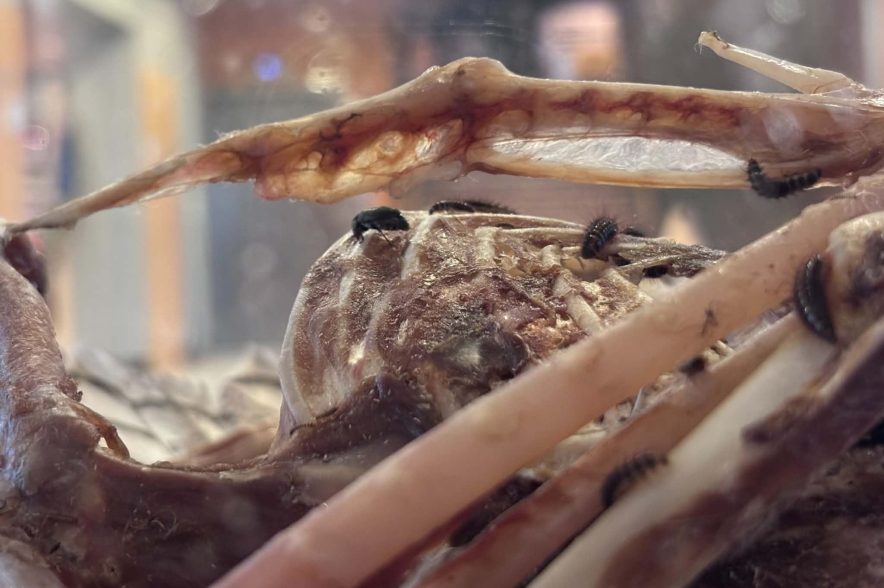
The creepy crawlers at the Royal Saskatchewan Museum may have a bigger appetite than the trick-or-treaters this Halloween.
A colony of flesh-eating dermestid beetles are key staff for the museum’s manager of vertebrate zoology, who thinks of the insects as the “hardest working members on the team.”
Read more:
“We can give a skeleton to them, and over the course of a few days or a few weeks, they will clean off all of that tissue,” said Danae Frier, the collections manager at the museum.
“By the end, we’ll just have this nice, clean skeleton that we can add to our collection.”
About 100 beetles and their larvae are sitting in a display in the RSM lobby feasting on the remains of a great horned owl. A larger colony is stored off-site.
The beetles’ hunger for body tissue shouldn’t worry museum-goers, Frier said, they only eat from dead creatures.
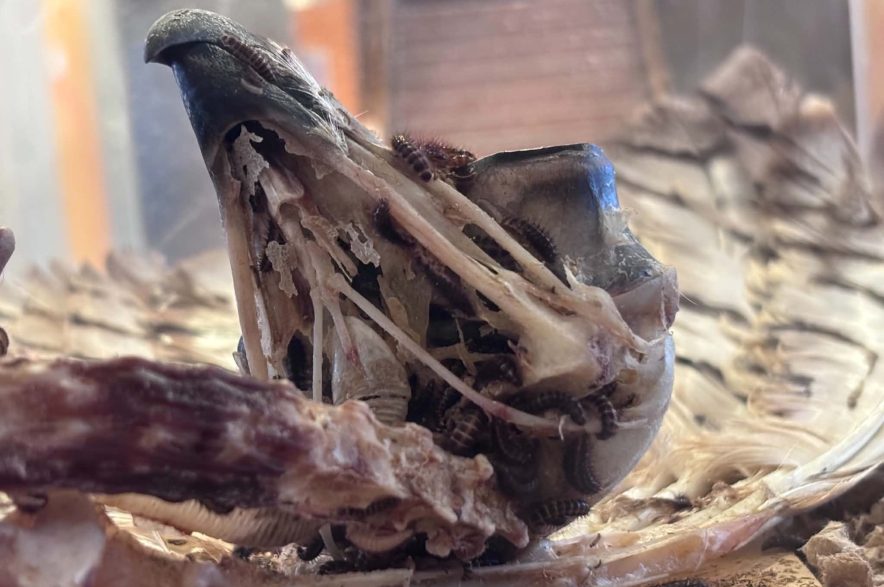
Flesh-eating beetles and larvae chow down on the carcass of a great horned owl at the Royal Saskatchewan Museum. (Gillian Massie/ 980 CJME)
“Flesh-eating beetle does sound a little bit scary, but they’re not going to to bite you or anything if they were on you,” she said.
If the beetles were to ever escape their enclosure, Frier believes they would “wreak havoc” on different displays at the museum.
“If you come see this exhibit here, you’ll be able to see that they have kind of a specialized double containment, just to make sure we don’t have any incidents,” she said.
Frier said the beetles work like janitors to tidy up skeletons for research.
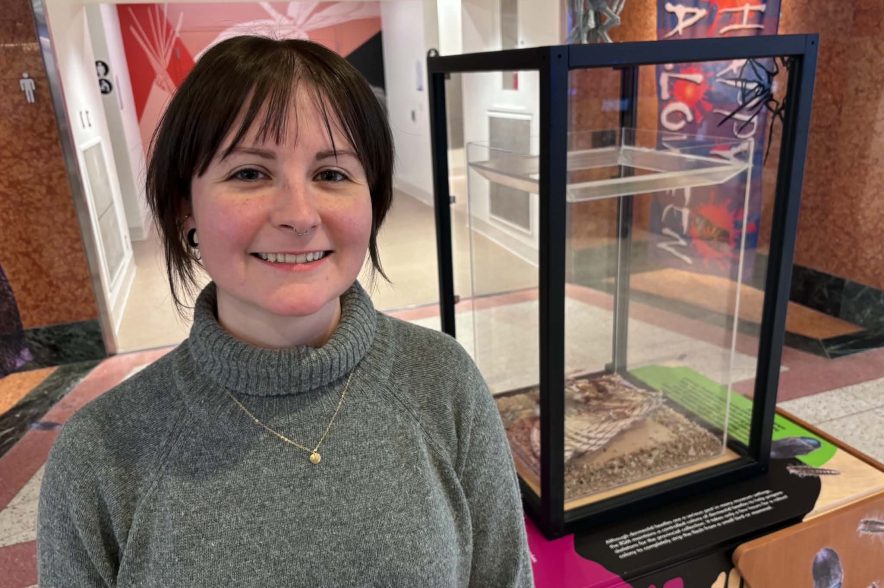
Danae Frier, the collections manager for vertebrate zoology at the Royal Saskatchewan Museum, stands next to a display of flesh-eating beetles. (Gillian Massie/ 980 CJME)
“They’re part of a greater assemblage of insects and bacteria and fungus that work as nature’s recycling crew,” she said.
“So they help make sure that things break down and all those nutrients get recycled. So they’re a really, really important part of of nature.”
Before the beetles are released on the animal remains, Frier said her team will measure the animal, look at its stomach contents, and take tissue samples.
Once the skeletons are cleaned they are stored in a box so researchers can look consult them in future years.
Frier said it takes a few days for the beetles to clear the flesh from a mouse skeleton, and a few weeks to munch off the tissue of a badger skeleton.
“They do work very, very efficiently, and they certainly save us a lot of time,” she said.
The flesh-eating beetles could take the title of zombies for the insect kingdom, but Frier said they are critical for decay and decomposition processes.
“I certainly have a skewed idea of what is creepy and what is gross, given that my job is is dealing with dead animals all the time,” she smiled. “But I think that’s part of the appeal.”
The display will remain at the museum until Sunday.
Read more: