Sarah Mills: Public entities need to be more transparent
Sarah Mills says a single coroner choosing not to release the toxicology report in the case of Saskatchewan Roughrider J...
The Canadian Forces has identified the four soldiers killed in Saturday’s fire at CFB Wainwright, including a soldier from Prince Albert, Sask., as officials reveal new details about the military training exercise and the sudden shift in winds that overwhelmed personnel.
During a news conference on Sunday, Major-General Wade Rutland, commander of the 1st Canadian Division, confirmed the identities of those killed and provided an account of the events leading up to the tragedy.
Read more:
Four soldiers died and 39 were injured during the Oct. 17 incident, with 19 patients in critical condition.
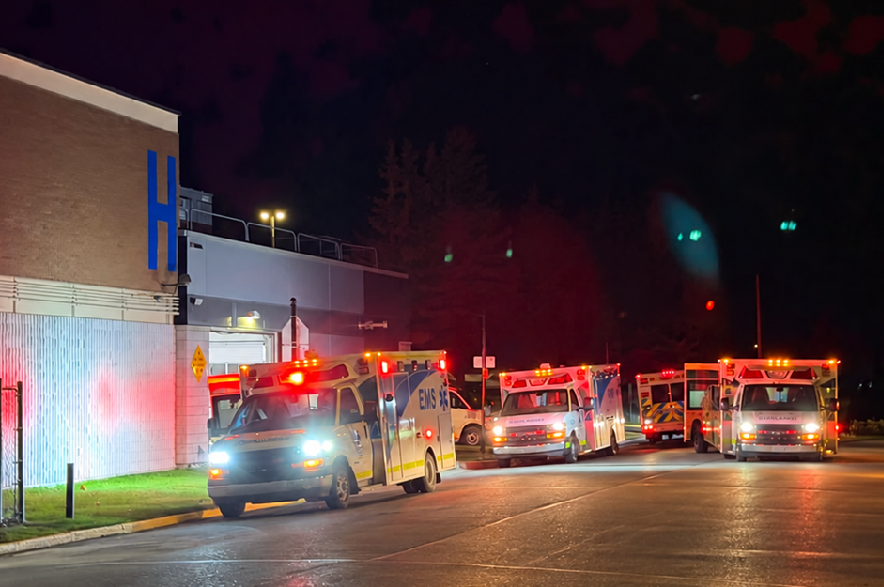
Alberta Premier Danielle Smith confirmed the emergency response involved 22 ambulances and eight aircraft, with injured personnel transported to hospitals across Alberta.
The military said the cause of the fire remains under investigation.
The Canadian Forces identified the four soldiers who lost their lives as:
All four were participating in military training at CFB Wainwright when the fire rapidly spread through the training area.
Farrell’s mother, Patricia Farrell, publicly shared the family’s loss on Sunday.
“It is with heavy hearts that we share the news that our son, Shaun Farrell, has passed away to be with our Heavenly Father,” she wrote on Facebook.
“We want to thank everyone for your love, support, and prayers during this incredibly difficult time. As our family navigates this profound loss, we kindly ask for privacy so that we may grieve together.”
She ended her tribute with the words, “Love you my darling child.”
Rutland confirmed the families of all four deceased soldiers have been notified.
He also said injured military personnel have been identified and their families have been contacted.
According to Rutland, the incident occurred during Exercise APOLLO SHOOTER, a training operation involving the 3rd Battalion, Princess Patricia’s Canadian Light Infantry.
The Edmonton-based battalion was preparing for two operational roles, including serving as a Global Response Task Force capable of deploying rapidly to international emergencies.
Personnel were also preparing for a deployment to Latvia next spring to reinforce Canada’s military presence in the region.
The exercise involved high-intensity combat training using live ammunition.
Rutland said approximately 84 soldiers were participating in training activities in the affected area.
One group was practising throwing hand grenades, while another was conducting section attacks against simulated enemy positions.
The battalion had more than 350 personnel involved in the broader training operation.
During the exercises, a grass fire was burning within the military training grounds.
Military officials were aware of the fire for several hours before the deadly incident, but it had been assessed as sufficiently contained to allow training to continue.
Rutland said the situation changed dramatically when unusually powerful winds swept through the training area.
The sudden wind shift caused the fire to rapidly change direction toward the military’s range area, overtaking personnel before they could escape.
“The fire was a kilometre away when the wind shifted,” Rutland explained.
He said it was highly unusual for a fire to advance that distance in just 30 to 60 seconds.
The speed of the flames left little time for personnel to react, he added.
The fire also crossed established fireguards and spread beyond the military training grounds before being contained, with assistance from municipal emergency crews.
Rutland acknowledged questions about why training continued despite forecasts calling for damaging winds.
He said wind speeds had generally remained below 50 km/h for much of the day and within the military’s established training procedures.
However, the sudden deterioration in conditions was unlike anything he had previously witnessed.
Military training decisions are made in consultation with commanders and range control personnel, who monitor weather reports and operational conditions, he explained.
Rutland said investigators will examine whether existing safety procedures were followed and whether changes are needed.
Although the fire occurred during live-fire training, military officials have not determined what caused it to ignite.
Rutland confirmed that various types of ammunition and explosives were being used throughout the training area, including grenades, grenade launchers and small arms ammunition.
He cautioned against drawing conclusions before investigators complete their work.
Preliminary information has not indicated that the fire was caused by damage to oil and gas infrastructure or outside interference. However, he said the military is continuing to examine all potential causes.
The Canadian Forces National Investigation Service, the 1st Military Police Regiment Incident Response Team and RCMP investigators are involved.
Canadian Armed Forces fire marshals have also been deployed to assist in determining the cause and circumstances of the incident.
Rutland said a formal board of inquiry will be required, and cautioned that the investigation will take considerable time.
He indicated that more complete answers could take at least a month.
Alberta Premier Danielle Smith provided an updated medical assessment during Sunday’s briefing.
Of the 39 injured personnel receiving care, 19 were in critical condition, eight were stable, and 12 were ambulatory patients receiving treatment for injuries that did not require hospital admission.
Patients were transferred from Wainwright Health Centre to four major hospitals:
Smith said some patients sustained severe burns and could require weeks or months of specialized medical treatment.
She specifically thanked Saskatchewan for providing additional air ambulance capacity during the response.
“Albertans should all be incredibly proud of their frontline health care workers and our acute care system that has managed this mass casualty event,” Smith said.
She added that the emergency response was organized without overwhelming the province’s health-care system.
Several hospitals activated Code Orange protocols Saturday evening to prepare for the sudden arrival of large numbers of injured patients.
The designation allows hospitals to mobilize emergency personnel, trauma teams, surgeons and additional resources while adjusting regular operations.
The emergency response remained active for more than 10 hours as patients were transported and treated.
Smith confirmed on Sunday that Code Orange had been lifted at all affected facilities and hospitals were returning to regular operations.
Officials also confirmed that all patients had been accounted for and no additional patients were awaiting transportation.
Acute Care Alberta said hospital teams had been mobilized across the province, with additional intensive care capacity remaining available.
Despite the immediate emergency response winding down, officials emphasized that the recovery process for critically injured soldiers could be lengthy.
Families seeking information about loved ones receiving medical care were encouraged to contact Alberta’s Health Link service at 811.
Rutland also addressed footage showing personnel parachuting into the community Saturday night.
He confirmed the parachutists were Canadian Armed Forces search-and-rescue technicians brought in to support the emergency response.
Their arrival was part of the wider mobilization involving military aviation, emergency medical personnel and civilian responders from several jurisdictions.
The operation included assistance from STARS air ambulances based in Edmonton and Saskatoon.
Defence Minister David McGuinty described the tragedy as one of the Canadian Armed Forces’ most difficult moments on home soil during peacetime.
He thanked military and civilian emergency responders, medical personnel and community members who assisted those affected.
Prime Minister Mark Carney earlier ordered flags at federal buildings across Canada lowered to half-mast in honour of the fallen.
Flags at Alberta and Saskatchewan government buildings were also lowered.
Smith said the provincial government will continue supporting injured personnel, their families and the military community throughout their recovery.
She also recognized residents who donated blood, provided meals and offered assistance to emergency crews and grieving families.
Rutland said military support services, including chaplains, commanders and family assistance personnel, were being mobilized to help those affected.
The Municipal District of Wainwright No. 61 confirmed late Saturday that the wildfire south of the community was being held, with fire crews remaining on watch for changing conditions.
For the Canadian Armed Forces, the immediate priority remains caring for the injured, supporting grieving families and determining how the deadly incident occurred.
“Four soldiers came to Wainwright to prepare to defend this country,” McGuinty said.
“Canada will remember them.”