Sarah Mills: There is no interference in the U.S. midterm elections
The U.S. ambassador to Canada is telling Canadian politicians to stay out of American politics. Sarah Mills says that's ...
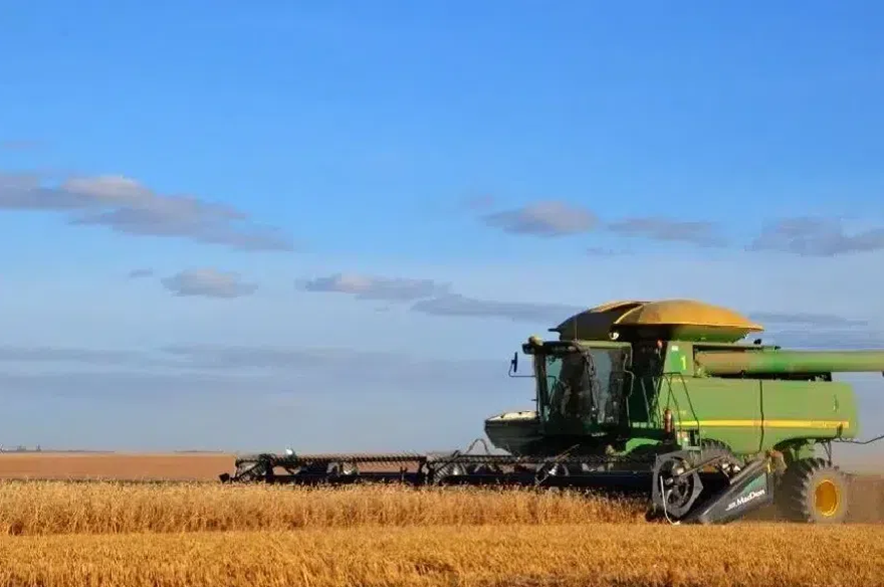
Farmers in Saskatchewan are nearly done with this year’s harvest, and it’s become a race against time for the producers with crops still standing in their fields.
According to the latest crop report from the Saskatchewan Ministry of Agriculture – which covered the week ending on Monday – harvest is now 93 per cent complete across the province, up from 82 per cent the previous week.
Read more:
Rain and snow over the weekend slowed the tail end of harvest operations in many parts of Saskatchewan, the ministry said, leaving producers hopeful that favourable conditions will let them finish up before the arrival of winter weather.
Harvest is 98 per cent complete in the southwest, the ministry said, with the west-central region close behind at 97 per cent. Harvest is 91 per cent done in the east-central and northwestern areas of the province, while the northeast and southeast are both sitting at 89 per cent complete.
Many parts of the province saw rain and snow during the week ending on Monday, the ministry said, and while the precipitation slowed down some harvest operations, the farmers who had completed their work were thankful for the extra moisture, which will pay dividends during spring seeding.
In cropland, topsoil moisture was rated as five per cent surplus, 88 per cent adequate, six per cent short and one per cent very short. In hayland, topsoil moisture was sitting at three per cent surplus, 87 per cent adequate, nine per cent short and one per cent very short. In pastures, topsoil moisture was rated as two per cent surplus, 81 per cent adequate, 15 per cent short and two per cent very short.
“Current crop yields remain consistent with the previous report, with average provincial yields remaining at or above historical averages for most crop types,” the agriculture ministry said in its report.
“However, yield variability persists due to differences in rainfall distribution and the range of agronomic challenges experienced throughout the growing season.”
For cereal crops, yield estimates were:
For pulse crops, yield estimates were:
For oilseed crops, yeild estimates were:
The ministry said wind, frost and waterfowl were the most common sources of crop damage during the week covered by the report. Flooding also caused issues in some areas and wildlife caused damage to crops left in the field or in open grain bags, but the ministry said the damage “remains limited and is not considered significant.”
With harvest nearly complete, many farmers are turning their attention to weed control, applying fertilizer, harrowing their fields and servicing equipment, while ranchers are busy moving cattle from pastures, hauling bales and marketing their animals ahead of the winter months.
A full version of the weekly crop report can be found on the Saskatchewan Ministry of Agriculture’s website.