

Murray Wood: Why this Roughrider season has not been like a roller coaster
Murray Wood says the Saskatchewan Roughriders' fans like him remain defiantly optimistic no matter what, even if they so...
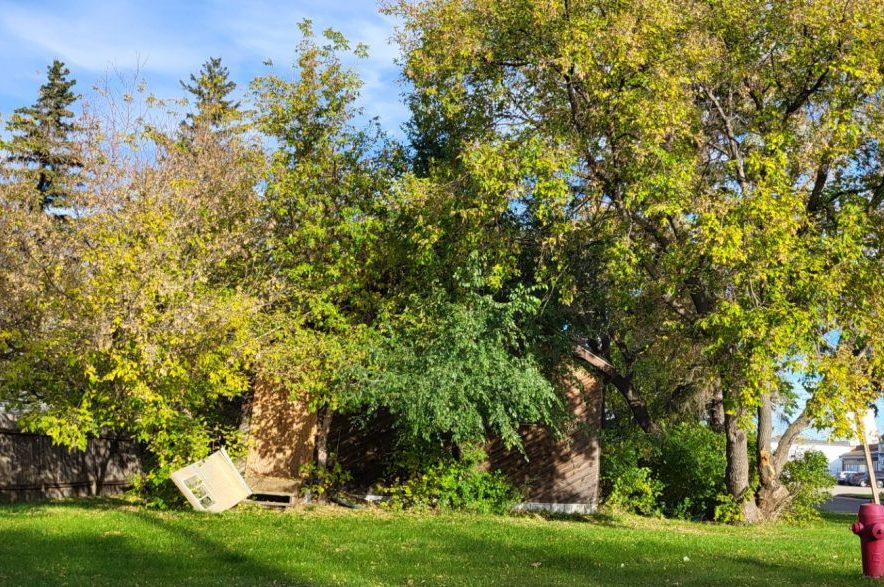
After a death at a hoarder’s home in rural Saskatchewan led to the seizure of dozens of cats from the house in January, the town of Wynyard is still dealing with consequences stemming from that situation.
Jason Chorneyko, chief administrative officer for the Town of Wynyard for the past two decades, said the family that was living in the home where about 50 cats were rescued from extreme hoarding conditions had a history with the town.
Read more:
According to Chorneyko, the family had lived in two other homes in the town over the past two decades – one they owned and one they rented. The town had to demolish both of those homes.
In late April 2026, a formal complaint was lodged against the Town of Wynyard for “the municipality’s failure to act on a well-known and prolonged dangerous property within your jurisdiction, which resulted in severe human and animal suffering, and ultimately the death of a resident.”
The complaint, which was shared with 650 CKOM, was sent by Ashlyn Weninger, president of SOS Prairie Rescue, one of several animal rescues that helped capture and provide emergency care and shelter for the cats in the Wynyard home.
It alleged the conditions in the Wynyard home were “extreme and hazardous,” describing garbage accumulation as tall as five feet throughout the home. The complaint alleged that the town’s failure to act resulted in a “vulnerable resident living in unsafe and inhumane conditions,” the death of that resident in the home, delay in discovering the deceased, about 50 cats “living in conditions of significant distress and neglect,” and the need for emergency intervention by external parties.
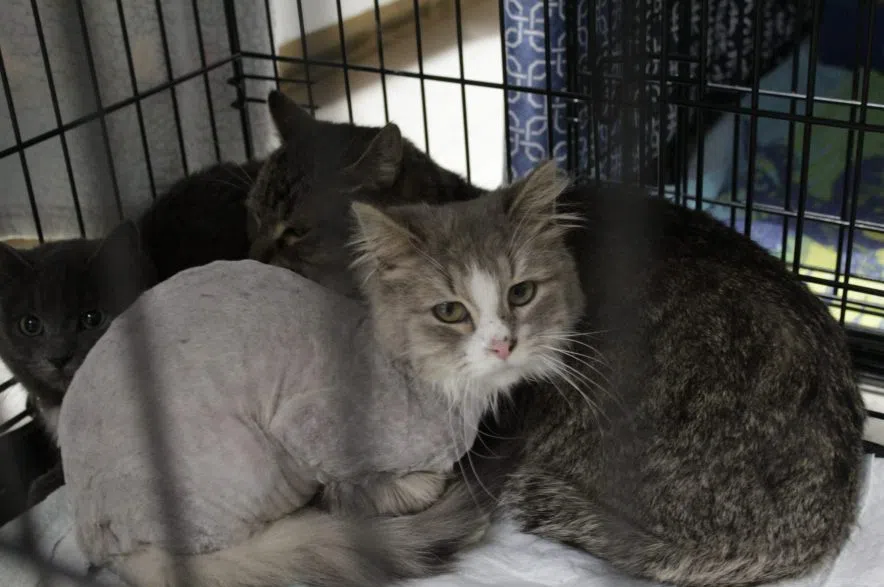
Some cats rescued from the Wynyard house were shaved because their long fur was too matted to be combed. (Libby Gray/650 CKOM)
The complaint stated that SOS Prairie Rescue incurred “tens of thousands of dollars in costs related to rescue, veterinary care, stabilization, and ongoing support for the animals removed from the property,” and alleged the town could have intervened before the situation escalated.
Chorneyko said the situation was never that simple.
A few complaints had been made by the occasional person who had walked by the home, Chorneyko said, noting a smell coming from the home. He noted immediate neighbours had never lodged any complaints about the home with the town office, which Chorneyko said was “surprising.”
When those complaints were lodged, Chorneyko said the town saw no exterior signs of damage or cats present in the house. After consulting with a health inspector, the town was told that nothing could be done unless inspectors were invited into the home.
The town also contacted social services about the family and their hoarding situation and was told that the family members in the home needed to ask for help or no steps could be taken to correct the situation. The same answer was given when the town inquired with the health region about the circumstances.
“We knew there (were) hoarding issues, but you know, (in) a municipality, you know, in Canada and Saskatchewan, property rights still reign supreme and no one has the authority to just go kick in a door and … inspect the property without permission from the owner,” he explained.
Chorneyko said a hole in the roof became noticeable several years ago at the house from which 47 cats were rescued from this past January. Chorneyko said a building inspector assessed the property at the time and issued an order to repair or demolish. The family opted to repair the roof and, according to the building inspector, the repair met minimum standards.
According to Chorneyko, it’s only since then the extent of the family’s hoarding tendencies have been realized.
“There was stuff in there, like, don’t get me wrong,” he clarified, “but there was nothing to how it ended up, and there was definitely no animals in there eight years ago.”
About a year and a half before the hoarding situation became public and the cats in the home were removed, the town asked the RCMP to complete a wellness check based on a complaint about a smell coming from the home and after noting one of the sisters living there had not been seen recently. When that check was completed, both sisters were found alive and living in the residence.
“It was probably somewhere between a year and 18 months before the news hit … the person died,” Chorneyko estimated.
“We contacted health inspectors, health regions, social services and we got the same answer every time: Unless they ask for help, there’s nothing that we can do, or unless they allow us into their property, there’s nothing that we can do.”
While hoarding is a “serious problem that affects municipalities of all sizes,” Chorneyko noted that hoarding in itself is not enough to warrant serious intervention. The town dealt with a similar situation in the past, about 50 years ago, when Chorneyko said a home with several cats was demolished.
“There has to be outward signs of deterioration,” Chorneyko explained.
In the first Wynyard home the sisters lived in, a hole in the roof also appeared. Chorneyko detailed that the roof was visibly sagging and windows had been smashed in the small house. An order to repair or demolish was issued in the case of that home, and the house was torn down in the early 2000s. Chorneyko said the town was able to take those steps through its nuisance bylaw, which the CAO said every municipality in the province has a version of.
“You have to have a reason,” he explained, adding that if no access is granted, the town would have to take legal action to gain access to the property for an inspection. “You can’t just go in and force your way into their property because you suspect something.”
About a decade ago, a second home the family was renting showed similar signs of deterioration. Chorneyko said the family’s hoarding caused the damage. Again, a building inspector issued an order for repair or demolition, and the home was ultimately destroyed.
Chorneyko said these situations cause public safety and public health concerns.
“It’s up to them (property owners) to maintain their property to standards that don’t cause issues to other people in the municipality,” he explained.
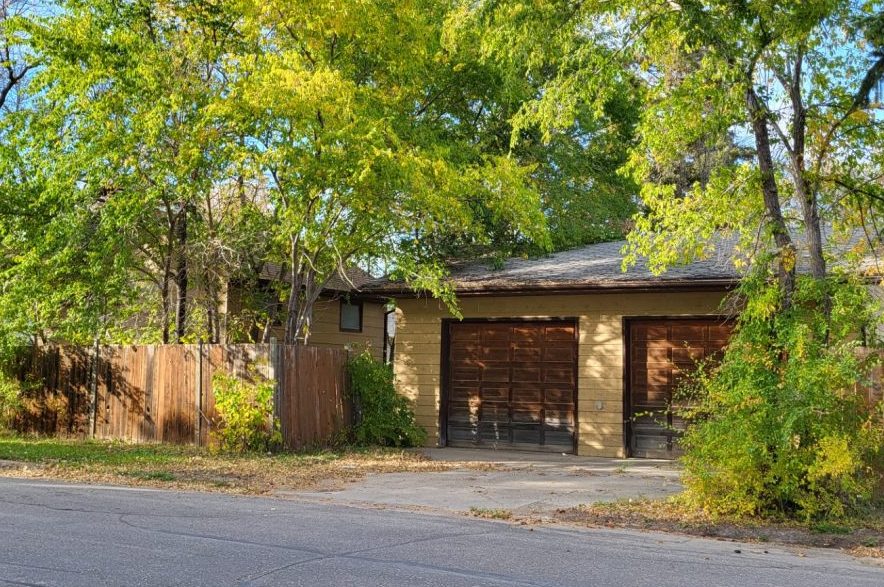
The house on Fourth Street West in Wynyard on Oct. 5, 2026. (Paddy Meredith/Wynyard Advance Gazette)
Both previous demolitions, Chorneyko noted in a letter to the Saskatchewan Urban Municipalities Association, were completed “before the costs of demolition became prohibitive.”
“Back in whatever year that was, you could demolish a house for $1,200,” he said.
“You didn’t have to do all the testing and things that you’re required to do nowadays, and it, just, people didn’t charge that much to do that.”
Chorneyko said the town plans to either clear out the home and have someone purchase it as-is, or simply demolish it. There are also concerns about asbestos in the home, which could increase the town’s expenses.
“What people have to realize is hoarding is a severe mental health issue,” Chorneyko shared.
“A lot of people don’t understand how hoarding, when you’re in the throes of that mental health addiction, it is an addiction,” he said. “People just can’t get rid of their stuff, and it ends up being a huge problem for municipalities.”
He said the town council is aware of a handful of other hoarding situations in the town presently.
“It’s there in every community.”
Chorneyko suggested further actions should be available to address and prevent extreme hoarding situations.
“When people are suffering from mental health issues and they’re not prepared to get the help themselves, then there’s got to be another method to assist these people with their illness,” he said.
In a letter to SUMA in February, Chorneyko lobbied for further options to prevent hoarding situations from impacting towns. He asked whether it is fair for a municipality to undertake the costs of a situation like this that could have been prevented.
“It is not a fair statement to say that the Town of Wynyard did not do enough to try and prevent this unfortunate hoarding situation,” he wrote. “Every time we asked for assistance, we were told that no assistance can be given unless the people suffering from mental illness asked for assistance.”
The surviving family member who was living in the home has relocated to another province, according to Chorneyko. As of the end of August, the town was selling a mobile home the family had owned, which Chorneyko said ended up being a tax-title property for the town.
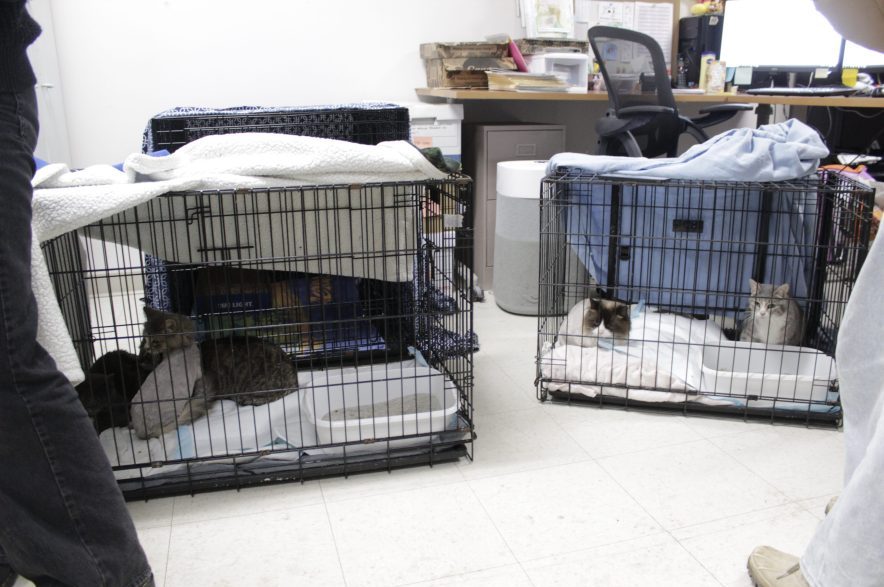
Two crates of cats delivered from Wynyard on Jan. 7, 2026 to Saskatoon’s SCAT Street Cat Rescue. (Libby Gray/650 CKOM)
In the May 2026 animal control report shared with the town council, animal control officer Andy Labdon noted that requests for cat traps had increased in recent weeks, “indicating a growing concern regarding stray and free-roaming cats within the community.”
“This may be a knock-on effect from the hoarding situation and subsequent rescue leaving a number of cats behind that were not caught,” Labdon’s report surmised.