Murray Wood: It's long past time for nuclear power in Saskatchewan.
Murray Wood says we've flirted with nuclear power in Saskatchewan, but always flinched. Wood argues it's the most reliab...
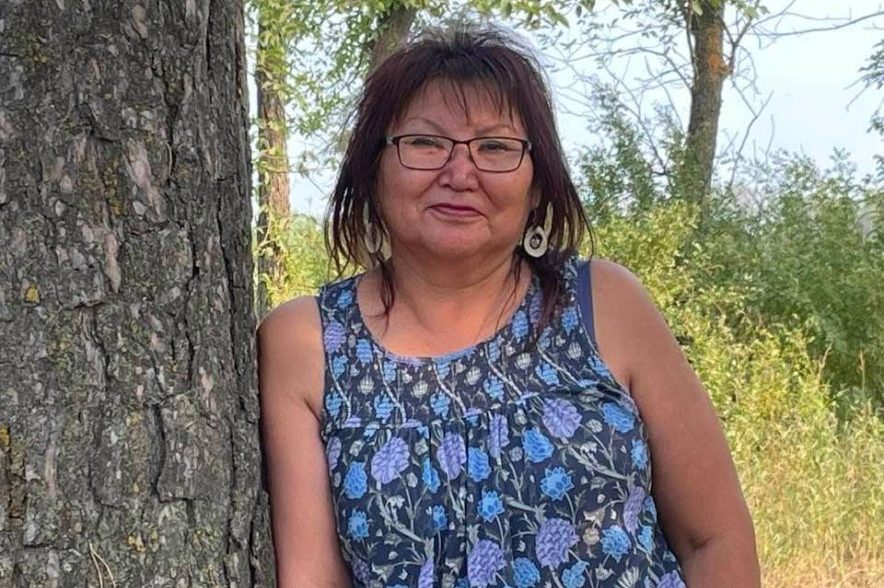
It was a beautiful day in August of 1964 when Rosalie Tsannie-Burseth was told she was going to school.
She was six years old, and she was delighted.
“I didn’t understand what school meant,” she reflected.
She remembers getting onto a small airplane. There were goodbyes, familiar faces, familiar voices.
The plane lifted from the ground. For a little while, Tsannie-Burseth was still excited for the adventure to come. Then she looked out the window.
Far below the aircraft was Wollaston Lake, the enormous northern lake that had been the centre of her young world.
“I noticed the lake was getting smaller and smaller and smaller,” she said.
She watched it shrink.
Then she began to cry.
The pilot turned around.
“I remember that pilot,” Tsannie-Burseth said. “He turned around and said, ‘It’s OK, don’t cry.’ And I remember he gave us Smarties. I’ll never forget that. I wish I knew who he was.”
She remembers his kindness, and she remembers watching her home disappear from view.
The next morning, Tsannie-Burseth woke up in a world that bore almost no resemblance to the one she had known.
She was at St. Michael’s Residential School in Duck Lake.
“There were stone walls,” she remembered.
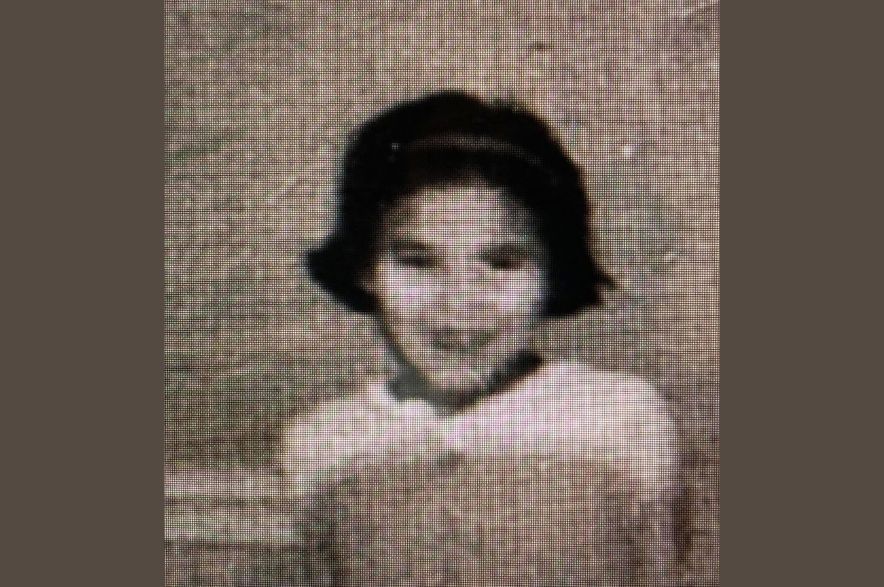
Rosalie Tsannie-Burseth was only six years old when she was taken from her home in Wollaston Lake to St. Michael’s Residential School in Duck Lake. (Rosalie Tsannie-Burseth/Facebook)
St. Michael’s opened in 1894 and remained in operation until 1996. By the time Tsannie-Burseth arrived, thousands of Indigenous children had passed through its doors.
It was part of a system built to take children away from their families and communities, to educate them away from home and, ultimately, to strip away the languages and cultures they had been raised in.
But Tsannie-Burseth knew nothing about the school’s history. She only knew that she was very far from home.
Before she was old enough to understand why she had been taken there, she began to understand what she had to do to get through it.
Tsannie-Burseth quickly learned the first lesson of the school: how to endure and find her way.
Tsannie-Burseth was Dene. Many of the children around her were Cree, and the differences between them could make her a target.
“It was not a good experience,” she recalled. “There was always a lot of bullying.”
But she wasn’t entirely alone. Her sister was with her.
“My sister looked after me,” Tsannie-Burseth said.
There were older girls, too, some in their teens, who looked out for the younger children. Tsannie-Burseth said she remembers them as small pockets of safety in a place where she was still trying to understand how to belong.
Even some of the nuns quietly kept watch over them.
“The nuns took us under their wings without other children knowing,” she said. “They’d keep an eye on us.”
There was kindness there, but there was cruelty, too.
And somewhere in the middle of it all, Tsannie-Burseth learned that she needed to be careful. Especially with her language. She remembers hearing stories of children being caught speaking their language and taken away.
“They were caught for doing something, and they were taken kind of in the basement,” she recalled.
For a child, even the possibility of punishment was enough.
So each day, the sisters waited until night fell and the school was quiet. Then they spoke Dene.
It was only a whisper, but it was theirs.
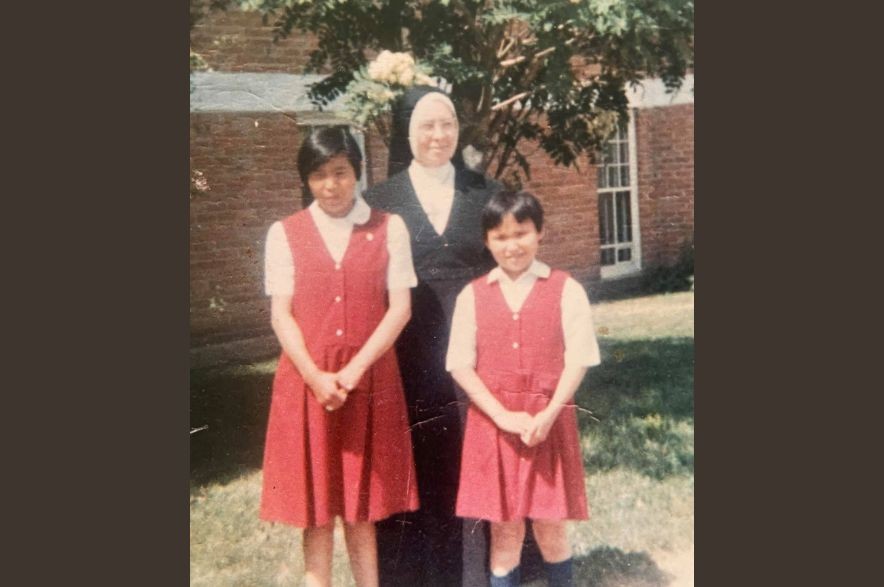
Rosalie Tsannie-Burseth says while she felt isolated at residential school, she was never alone. Her older sister was her companion and protector at St. Michael’s. (Rosalie Tsannie-Burseth/Facebook)
For much of the year, that whisper was one of the few pieces of home they could keep with them.
Then, finally, summer came.
Tsannie-Burseth remembers the flights home, the many stops along the way and the familiar sight of Wollaston Lake below them. The looks of relief and joy on the faces of parents waiting to greet their children after months apart.
“Everybody was there to welcome us home,” Tsannie-Burseth said. “Everybody would run.”
After months of being careful about the words they spoke, the sisters returned to a place where they could speak their language without fear.
“We come home and everyone spoke it at the time,” Tsannie-Burseth recalled. “No one spoke English.”
They didn’t have to whisper. They were home.
Eventually, Tsannie-Burseth stopped attending St. Michael’s and continued her education in Wollaston Lake. But she was changed by the years she had spent away.
She spoke English now. She understood ways of living far beyond the north. She had learned how to move between worlds.
She describes it as “when my worlds collided.”
Years later came another departure. This time, it was her choice.
She moved south to attend the University of Regina. Eventually, she brought what she had learned back home.
In 1987, Tsannie-Burseth returned to Wollaston Lake as a teacher. This time, she wasn’t the child sitting in the classroom. She was the one standing at the front of it.
“The kids only spoke in Dene,” she remembered.
The other teachers struggled to understand what the children were saying, but Tsannie-Burseth knew the language.
She also knew what it meant for a child to have their language treated as something they should hide.
Her own experience had given her a different vision for those children.
She believed they should be taught in Dene first, and in English afterward. Not because English didn’t matter. But because Dene mattered, too.
The language Tsannie-Burseth once whispered at night has become her life’s work.
“I advocate for language and culture,” she said proudly.
She is currently pursuing her PhD with a research focus on Indigenous curriculum development and linguistics, determined to make sure the language and culture of her people will never be hidden again.
Tsannie-Burseth now lives near Prince Albert. But when she talks about Wollaston Lake, geography seems almost irrelevant.
“I’m always here,” she said with a smile. “This is home. It’s where my people are, where my heart is.”
Many years ago, Rosalie Tsannie-Burseth was six-year-old girl watching that home become smaller beneath an airplane.
She couldn’t have known then that she would spend much of her life finding ways to return to it.
Not only physically, but through language. Through teaching. Through memory. Through the stories she now carries for those who came before her and those who will come after.
Wollaston Lake disappeared from the airplane window that day, but it did not disappear from Tsannie-Burseth.
She carried her home with her. And she still does.
Rosalie Tsannie-Burseth whispered Dene at St. Michael’s Residential School so she wouldn’t be punished. Today, she is a teacher and PhD student fighting to make sure her language is never silenced. (Rosalie Tsannie-Burseth/Facebook)