Murray Wood: It's getting better all the time
Even if it seems - as the rejoinder in the Beatles' song observed - 'it couldn't get much worse,' Murray Wood suggests w...
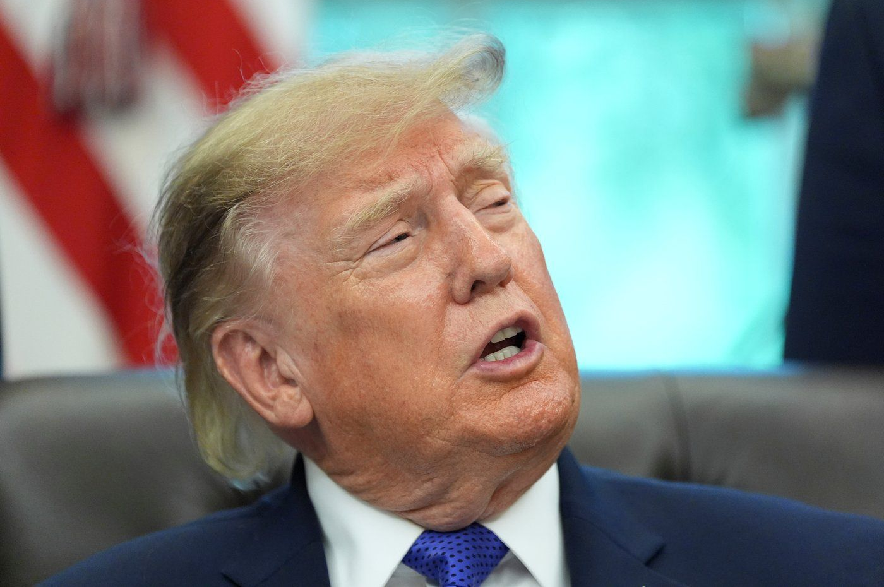
U.S. President Donald Trump has escalated his trade war with Canada with outright bans on imports of certain Canadian goods.
Trump’s previously announced bans — which affect some alcoholic drinks, dairy byproducts and motorcycles, among other goods — came into force at 12:01 a.m. ET Tuesday.
Read more:
Canada-U.S. Trade Minister Dominic LeBlanc’s office said Monday the government’s top priority remains “protecting and supporting Canadian workers, farmers, families and businesses from these unjustified actions.”
The bans mark the latest escalation of the trade war between the two countries as the Trump administration seeks to pressure Canada into concessions in trade talks.
The trade restrictions could prove devastating for the affected industries but are unlikely to significantly undermine Canada’s overall economic growth in the near term.
Jacob Jensen, director of trade policy at the centre-right American Action Forum think tank, calculates that the ban would cover US$967 million worth of Canadian imports, based on 2025 numbers. Of that, 87 per cent would be alcoholic beverages that the U.S. targeted because of some Canadian provinces responding to Trump’s provocations by banning U.S. booze from store shelves
The ban also covers motorcycles. BRP Inc. in Quebec confirmed that its three-wheel Can-Am Spyder and Canyon motorcycles “will be excluded from importation into the U.S.’’ But BRP said the impact likely won’t be felt until next year because it has completed most production and shipments for the current season.
Official trade talks broke down down last month, with both countries accusing each other of adding eleventh-hour changes.
Trump said Monday he expects Canada to return to the negotiating table in the coming weeks with an apology.
“I think what’s going to happen is over the next three or four weeks, they’re going to come to us and they’re gonna say, ‘We’re gonna get rid of all the tariffs,'” Trump told reporters in the Oval Office.
“We’re going to win everything.”
In the hours after negotiations broke down in August, the United States hit an array of Canadian goods with 50 per cent tariffs. Ottawa responded with its own tariffs a few weeks later.
Trump responded by signing an order directing some federal agencies to remove Canadian goods from procurement lists, and another to impose Tuesday’s import bans.
The president also signed an executive order to change the name of Lake Ontario to Lake America.
Canada is also being hit with 10 per cent tariffs, which the Trump administration claims are connected to forced labour in supply chains. Those duties do not apply to goods that comply with the Canada-U.S.-Mexico Agreement on trade, known as CUSMA.
And Canadian industries like steel, aluminum, automobiles and cabinetry are being slammed by Trump’s separate sectoral tariffs
This report by The Canadian Press was first published Sept. 29, 2026.