

Murray Wood: Is it fake, or just stolen?
People looking for news on Facebook need to watch out for fake content. And even if it's true, it may have been stolen. ...
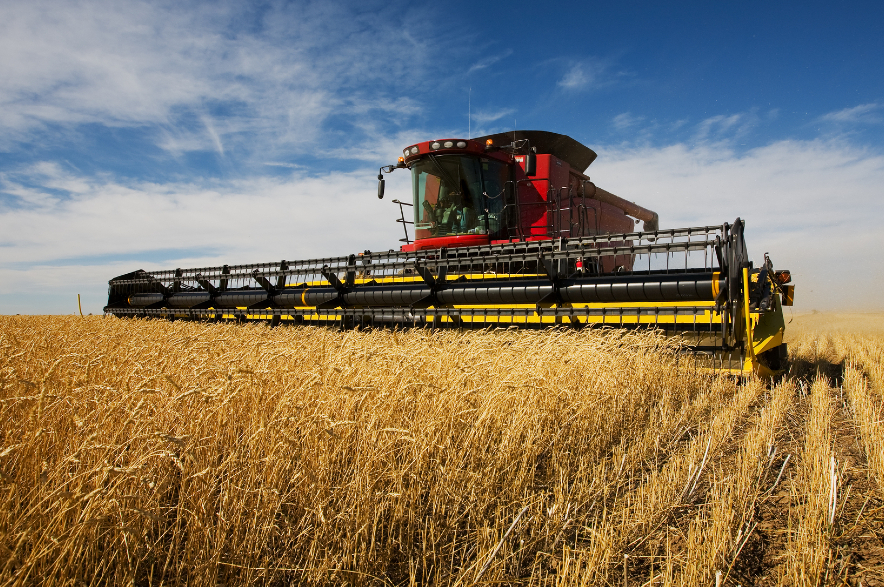
The conditions this year have been anything but cooperative for farmers in Saskatchewan.
Farmers have faced waterlogged fields, high temperatures, hail, rain, and uncertainty around Canada’s relationship with the United States. They are now facing a new threat: rising diesel prices.
Bill Prybylski, president of the Agricultural Producers Association of Saskatchewan, joined guest host Brent Loucks on The Evan Bray Show on Monday to discuss the pressures farmers are facing.
Read more:
This interview has been edited for length and clarity.
BRENT LOUCKS: There’s a lot of talk about the input costs these days. It seems like everything is going up cost-wise on the farm, and the one item that’s certainly getting a lot of attention is diesel. Then, of course, last week you had U.S. President Donald Trump start thinking out loud that gee, maybe they need to put a ban on diesel exports leaving the United States. Do you have any sense where most of our diesel comes from here in Western Canada, Bill?
BILL PRYBYLSKI: I know the co-op refinery in Regina supplies the majority of diesel in and around the Regina and south part of the province. So, it’s one of those things that we definitely need more capacity to make sure that we can fulfill all the needs in Western Canada. But certainly, we do rely on some coming up from the States.
I know Trump took a lot of criticism after he made that comment last week, saying he would look at perhaps shutting down diesel exports out of the United States. I think he’s backtracked, or at least his people have backtracked on that for the time being. But if indeed some of that diesel were to end up here in Western Canada, that could pump those prices up a little more?
PRYBYLSKI: There’s always a risk that anything that happens geopolitically, and you know, obviously the Strait of Hormuz has had a huge impact on the world oil price, so that’s affected our diesel prices. It’s one of those things that’s very volatile and is fluctuating day in, day out, so we are always aware of things that are happening and concerned about the risk of increased diesel prices.
It seemed like for many years we were in a stable situation where gas and diesel prices just didn’t move all that much, and now it seems like every day you’re driving to work, you’re looking up at the gas station marquee to see what the price of gas or diesel is. Do you want to talk about what farmers need to keep in mind when it comes to getting some help, and that is the AgriStability program. What exactly is that for people that don’t know it?
PRYBYLSKI: It’s a program that’s jointly funded by the provincial and federal governments and producers that helps stabilize producers’ margins. The program looks at historical margins over the last five years, averages them, and sets a baseline so that if a producer’s current year production margin falls below a certain level compared to their historic average, it triggers a payout. So it’s basically an insurance on their margin. It’s received some bad reviews over the last several years. Still, we think that some of the changes that have been introduced into the program over the last couple of years, and the fact that a lot of producers have built some pretty decent reference margins, means this may very well be a good year for producers to take another look at that program and see if it works for them on their operations.
What were some of the criticisms of it, Bill?
PRYBYLSKI: Some of the ways that things have been calculated, particularly concerning livestock feed and homegrown feeds and things of that nature, land rent, those types of expenses that were calculated somewhat oddly. The compensation level has been increased. Some of the criticism was the response time for the program, where, you know, farmers weren’t seeing any benefits for a couple of years after the fact, but they’ve increased the amount that a producer is eligible to receive as an advance payment on an expected payout. So, nothing major, but a lot of incremental changes that have made the program a little bit more responsive, a little bit more fair, I would say, to producers, and I think it’s worth taking another look at it.
I know from the information that I was provided with these higher diesel prices, that’s adding about $20 per acre in production costs, so that’s a significant amount of an expense that farmers are dealing with that they maybe didn’t think they’d have to deal with when they put the crop in the ground this spring.
PRYBYLSKI: It’s kind of just added to the whole level of cost for producers. In the spring, we were looking at some record-high fertilizer prices. Now we’re looking at record-high diesel prices, and on top of that, the market volatility with tariffs and all the trade issues that may affect the producer’s ability to sell their crop at a profit. So we’re looking at higher expenses and possibly lower returns. So again, the program may not be for everybody, but I think it’s worth it for producers to have a look at it.
Especially now, they’re up a bit of a crunch here, timeline-wise. Is the enrollment deadline, coming up this week?
PRYBYLSKI: So initially, the enrollment deadline was in the spring, but the government has extended that deadline to October 1. So if producers are thinking about it, they still have a couple of days. They don’t need to supply all the historical data that’s necessary. They just need to make that call to the crop insurance office and let them know that they want to enroll if they make that decision.