

Murray Wood: Who's hot... and who's not
Every Friday, Murray Wood takes a look back at the week's news and decides who's hot... and who's not. This week's list ...
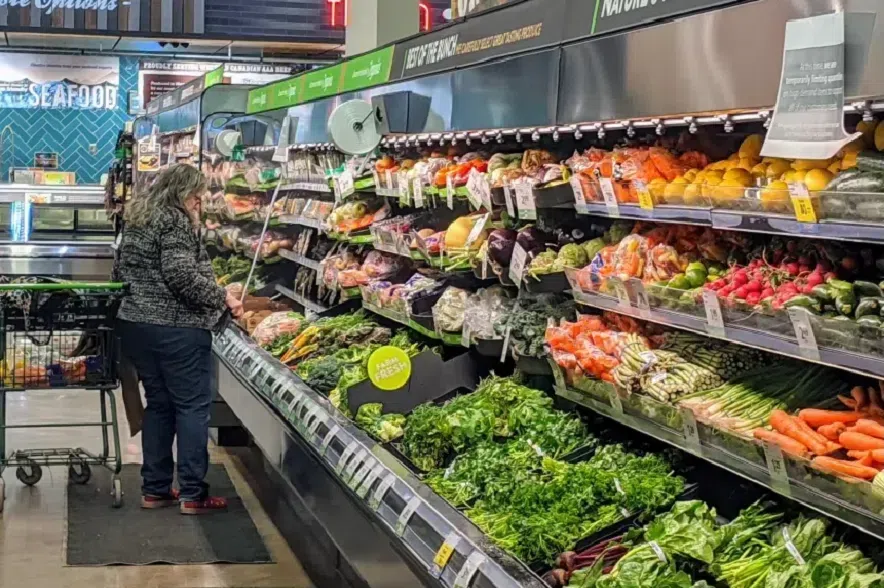
Canadians have been watching their grocery bills climb for years, and one food expert says higher diesel prices could add even more pressure in the weeks ahead.
Dr. Sylvain Charlebois of Dalhousie University’s Agri-Food Analytics Lab joined The Evan Bray Show to discuss what is driving food costs, how quickly higher transportation expenses can reach grocery-store shelves and how Canadians are changing the way they shop.
Read more:
Charlebois also discussed what Regina’s new Costco could mean for competition in the city and how uncertainty surrounding Canada-U.S. trade is affecting the food industry.
The following transcript has been edited for length and clarity.
EVAN BRAY: Should we be worried about Donald Trump’s threat about restricting diesel exports from the United States?
SYLVAIN CHARLEBOIS: No, I don’t think so. First of all, the midterms are really creating noise. The White House is making a lot of noise to reassure President Trump’s base.
Diesel is out of whack. Prices are higher, but contracts are already done and prices are committed, so you’re not making more money; you’re just spending more money.
Of course, trucking is impacted, and our big focus at the lab is retail prices.
We didn’t model diesel prices last week, which seems like a century ago, and we’re looking at an extra 0.6 percentage point on retail inflation within four to eight weeks from now.
It wouldn’t be instantaneous. It’s going to take a while for grocery stores to realize food is costing more because trucking is costing more. Is the impact delayed?
CHARLEBOIS: We look at about 50 different factors impacting food prices, and the one factor that really impacts food retail pretty quickly is diesel prices.
The correlation is 0.89, knowing that a perfect correlation is 1.0.
It’s immediate. It’s quick. So it’s probably 0.6 percentage point within the next four to eight weeks, and that’s not going to help.
We’re hearing now that there are surcharges being applied by trucking companies. That’s going to impact grocers’ distribution.
And, of course, we haven’t talked about food service. Sysco and Gordon Food Service are both starting to look into surcharges for their clients as well.
Over the last 18 months, we’ve had tariffs, trade issues and the push to buy Canadian. Are you seeing people spend more time looking at prices and labels when they go grocery shopping?
CHARLEBOIS: Not necessarily. There are more trips, and trips are shorter.
Consumers are more strategic. In other words, they’re showing up with more information.
If you’re buying turkey in a couple of weeks for Thanksgiving, or carrots or potatoes, more and more people know what to expect at the grocery store before even showing up.
Fifteen or 20 years ago, I was asking people, “What’s the price of milk? What’s the price of butter?” People barely knew.
Now they’re more educated about what’s going on with prices, generally speaking.
People are consuming more information and more data in the store in real time, but it doesn’t take them that long.
Visits are up probably about 20 per cent. The average Canadian right now is visiting a grocery store 5.2 times a month.
Regina is a market you’re following because of the new Costco. What kind of impact can a new store like that have?
CHARLEBOIS: The Costco effect is pretty significant.
It’s actually good news even if you’re not a member at Costco.
Costco is about membership cards. That’s how they make their money. They’re going to sell membership cards and people are going to go to Costco.
For the first year, you’re going to see a lot of retailers readjusting prices to keep traffic coming into their stores.
Whether you’re at Co-op or Safeway, it doesn’t matter. You’re going to benefit from seeing a major new player in the city.
When we’re talking about the cost of food, what is the biggest driver of the pressure we’re seeing?
CHARLEBOIS: It’s the hardest thing to measure, and that’s uncertainty.
A lot of companies are hedging against CUSMA.
If you look at the second quarter of 2025 versus the second quarter of 2026, despite all the noise, we’re actually exporting more food than ever, which is good news.
Eighty per cent of that growth is actually going to the U.S. Americans are still buying more food.
But what I’m hearing from companies is: How long can we actually sell? Are conditions going to change?
They’re trying to pivot. They’re trying to look at other markets.
You’ve raised concerns about Mexico’s approach to the United States. Why does that matter from a food standpoint?
CHARLEBOIS: I’ve been concerned about Mexico from day one because they’ve put emotions aside and focused on the deal.
They don’t get caught up in things like the noise about potash and a diesel ban. They actually focus on the deal.
My question to Ottawa is: If there’s a bilateral deal between Mexico and the U.S., what’s our plan?
I’m a believer in the North American fortress. From a food-security perspective, that’s important.
Why is North American trade so difficult to replace with somewhere like Europe?
CHARLEBOIS: Europe is a 450-million-person market, and we buy more food from them than they buy from us.
It’s much easier to deal with the U.S. We speak the same language and have similar regulatory systems.
Mexico, the U.S. and Canada — it would be hard to replicate that.
Donald Trump also raised the possibility of buying more potash from Belarus. What did you make of that?
CHARLEBOIS: The rhetoric around potash this week was misguided a little bit from a Canadian perspective.
President Trump did what he does all the time: lots of noise, no substance really.
We reacted by saying it’s impossible to replace Canada as a seller of potash, which is true when you look at geography.
But I think the point he was trying to make was: Have we actually made our potash industry competitive?
In Saskatchewan, we have 10 mines. We have potash for thousands of years.
BHP is ramping up a new mine, which I think is great news. That will make the potash industry more competitive.
In the meantime, I think the White House is concerned about fair pricing.
My question to Nutrien and Mosaic is: Are you willing to set competitive prices for our farmers over the next five to 10 years?