Evan Bray: Fall is the my pick of the seasons
It isn't quite fall yet - the season officially changes next week - but Evan Bray says fall is his favourite season, wit...
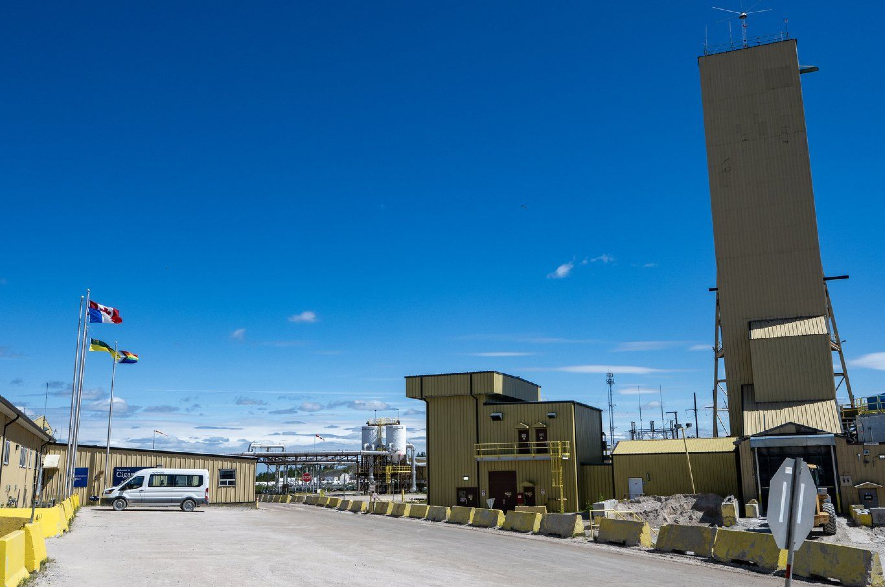
As Canada looks to expand its impact and reach into other trade markets, companies across the country and in Saskatchewan are looking to the future.
Tim Gitzel, CEO of Cameco, recently joined the Evan Bray Show to discuss Canada’s recent investment summit and the future of nuclear energy.
Read more:
This transcript has been edited for length and clarity.
EVAN BRAY: You were obviously a key part of that summit, watching the discussions, taking part in the discussions. How do you feel after the two days in Toronto?
GITZEL: Well, it was quite a production, Evan. I was actually quite proud of how Canada showed up. I mean, there was an array of people there — investors, pension funds, big private equity money. I think it represented like $120 trillion from around the world to hear from Canada, to hear what Canada has to offer. And so there were events all around the summit. There was a big reception on Sunday night, and then Monday night, a big gala dinner. The summit itself was on Tuesday, opened by the prime minister and closed by former prime minister Stephen Harper, and in between, lots of talk on critical minerals, energy, finance, artificial intelligence, defence, things like that. I was on the panel right after Prime Minister Carney and got to talk about uranium and Saskatchewan, of course, and nuclear energy. So we got a great reception there.
Were you working on any specific deals or partnerships while you were there, or were you just there, part of the bigger group?
GITZEL: We didn’t have any specific deals we were working on. We do have a lot of them that we’re working on around the world, obviously, both on the uranium and nuclear fuel side and on the nuclear reactor side. But nothing specific at that summit.
I think about the deal that Cameco recently made with India, for example, with regard to uranium. There was the deal in the States with regard to nuclear reactors, and so Cameco’s got a foot in both worlds. Is it equal opportunity going forward for your industry when it comes to the nuclear side and then the raw uranium side?
GITZEL: Both are just humming right now. Obviously, we came back — the week before the summit, we were in London at the World Nuclear Symposium that’s held every year. The premier was there with us as well, and we heard about a tripling of nuclear energy over the next 20 years. Just the demand for clean, reliable, 24/7 energy is through the roof, and so nuclear is having its moment. So, to your question, both on the nuclear fuel side and on the reactor side, we are very busy.
There were a couple of announcements made there. One of them that we’ve heard about, and I think we’re all just still trying to pull it apart, is this notion of a productivity mega deduction, basically giving a broader array of assets that could be covered under this. How will that impact your industry, Tim?
GITZEL: We think it’s positive. Our tax experts are looking at it now. That mega deduction, where you can deduct, I think, 100 per cent of the cost of eligible new investments, which we’re making right now up in northern Saskatchewan, and so we think it’s going to be positive. The other piece, Evan, that we found interesting and positive, if it comes to life, is there was this one project, one review, one year concept thrown out there, and if that’s the case, that’ll really help things move along.
When you talk about approvals for projects and things like that, that’s something that it feels like that we’ve been hearing the government focusing on trying to reduce those timelines. I think that’s probably what’s got some people nervous to understand what this associate membership with the EU means because there’s some fear about the regulation standards over there and what this is going to look like, how it’s going to impact us. Do you have any thoughts on that?
GITZEL: We certainly don’t want to import any of that part of it. We’d love to get that trade agreement done. You know that CETA agreement, Canada-Europe trade agreement, that’s been in the works for some years now. I think they still have 10 countries that need to sign that. We’d love to see that put in place, but we don’t need any more regulation from the European Union.
Who in the world right now would you say is at the forefront of nuclear energy use and production?
GITZEL: China, 100 per cent China. They are putting up between eight and 10 large new nuclear reactors per year. I’ve been in this business, as you know, Evan, for 40 years. They had none when I started. Today, they have about 70 big reactors operating, another 40 under construction, and they’re not stopping. And so you can imagine what their uranium requirements are as well. And so China is leading, but India is catching up. Evan, we’ve talked about the big sale of uranium to India. Now the West is trying to catch up. Canada, U.S. all wanting to build, France is building, the U.K. is building, so it’s a bit of a race now.
What kind of a relationship from a uranium standpoint, and even on the nuclear front, do we have with China?
GITZEL: We have a cautious relationship with China. We do sell some Canadian uranium to them, in limited amounts. They’re part of the World Nuclear Association, and they’re covered by the World Association of Nuclear Operators. So their units are all open to inspection by Western countries. So they run a good program and they’re able to build reactors in about half the time we can in the West, and at about half the cost.
What needs to happen to speed that up for us? How quickly can we build?
GITZEL: We got to get going. I mean, that first-of-a-kind thing. You’ve got to build the first one. It’s going to be expensive, but as you continue to build and you get good at them, they cookie-cutter them, pretty much, there, and they go from one to another to another, and they can bring the time and the cost down. And that’s what we’re trying to do here in North America.
We’ve been talking so much about this AI data centre in Saskatchewan, which I know you would have been present at the summit for that announcement as well. To say it’s met with mixed reactions is probably a very accurate way to put it. There are some people, I think, that are just wanting to know more details. One of the interesting pieces of this is under the new framework that the provincial government has set up. If you want to build an AI data centre, you’ve got to bring your own power. I can’t help but think there’s going to be a day in the not-too-distant future where your company will play a role in that.
GITZEL: You know what struck me on that announcement was that this new data centre that we’re building requires 1.2 gigawatts of electricity. That’s the exact same size as Cameco’s AP1000 reactor. So, not to say that we’re building it for that. You know, we’ll be taking more time once the province decides which way they want to go on nuclear, but this is just one. Evan, that’s one data centre. There are many, many, many more around the world that are going to be built that are going to require electricity, and they’re going to need a lot of nuclear energy.
Do you see that as part of the nuclear future? It’s one thing to talk about a provincial power grid, which obviously there’s a role to play there, but even mine sites, I can’t imagine that this isn’t going to be the way that we’re going to see things go.
GITZEL: We heard at that World Nuclear Symposium the world needs to double the amount of electricity we have going today. So that means keeping every source of electricity — a lot of it’s still coal — every source, and then doubling it. So, you know, we’re in all-of-the-above categories. We’re going to need everything we can get, and clearly nuclear power is going to play a big role. We’ve got, I think, 40 countries now committed to tripling their nuclear power, and so, yeah, nuclear power will play a big role. And it’s data centres, but, you know, electric vehicles — they’re not going away. Maybe here they’re not so popular, but Europe — they’re going strong, especially with the price of gas and all the issues we have with gas and diesel, and just electrification. I think of steel plants that are moving from metallurgical coal now to electric arc furnaces instead. The demand for electricity is not going down.
If Canada wants to become a global nuclear leader, or at least a player, when I ask you who’s leading the way, there was no hesitation. You said China. You mentioned India. If we want Canada up there, what are the things that need to happen to get us there?
GITZEL: We’re putting them in place now. So the federal government put an electricity strategy in place that says we need to, I think, double the amount of electricity in Canada. They have a nuclear strategy in place now, saying they’re going to support nuclear power. You’ve got Ontario, where already 60 per cent of its electricity is nuclear. They want to add another 14 gigawatts, so that’s about double what the whole province of Saskatchewan has right now. They want to add 14 gigawatts of nuclear power. Our premier, Premier Moe, has been very clear and strong on the desire for nuclear power in this province. So, obviously, Cameco is working with SaskPower and the provincial government. So we just need to get going now. We need to move from ambition to action, as we say.