Evan Bray: What would 'associate' EU membership mean for Canada?
There's been a lot of talk about Canada possibly becoming an "associate member" of the European Union. Evan Br...
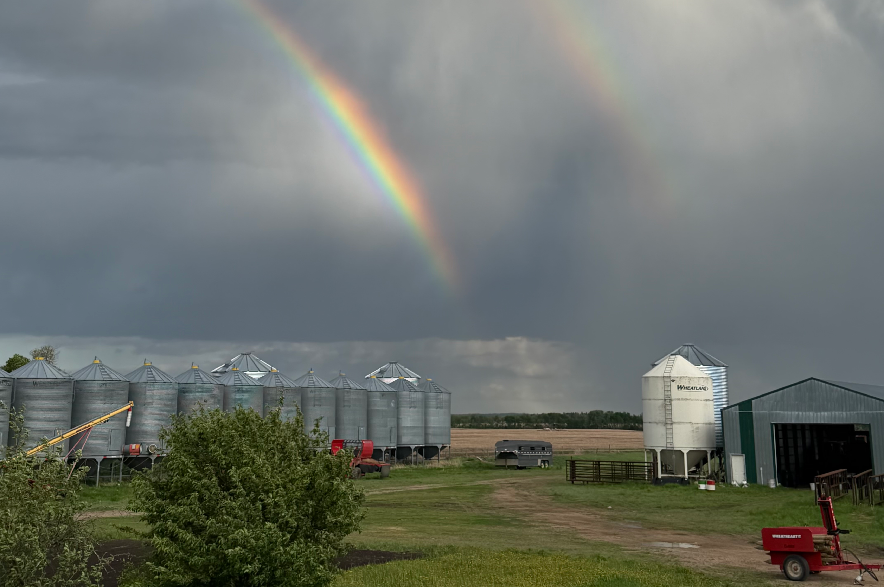
Harvest in Saskatchewan continues to lag well behind the long-term averages, as widespread rainfall stalled operations on many farms.
According to the latest crop report from the Saskatchewan Ministry of Agriculture, which covered the week ending on Monday, harvest is just 32 per cent complete across the province, up from 27 per cent the previous week. That leaves producers far behind the five-year average of 71 per cent and the 10-year average of 63 per cent with frost starting to become a concern in some areas.
Read more:
“With wet field conditions continuing to slow harvest, producers are hoping for warm, dry weather to allow harvest to resume,” the ministry wrote in its report.
The ministry noted that excessive rainfall in some areas has affected grain quality, adding that crop yields and quality are quite variable “due to differences in rainfall throughout the growing season.”
The RM of Sarnia saw the most rain in the week ending on Monday, the ministry said, with 97 millimetres. The RMs of Sasman and Aberdeen were close behind, with 85mm and 80mm respectively.
The rain left excess water in many fields around the province. Provincially, topsoil moisture in cropland was rated as 34 per cent surplus, 63 per cent adequate and three per cent short. In hayland, topsoil moisture was rated as 21 per cent surplus, 74 per cent adequate, four per cent short and one per cent very short. In pastures, moisture levels were rated as 13 per cent surplus, 79 per cent adequate, six per cent short and two per cent very short.
Most of the harvest progress was accounted for by winter cereal crops, pulses and early-seeded cereals, the ministry said, with the harvest of winter cereals nearly complete.
Ninety-eight per cent of the fall rye crop is in the bin, the ministry said, along with 93 per cent of winter wheat, 89 per cent of triticale, 88 per cent of lentils, 84 per cent of field peas, 51 per cent of mustard, 47 per cent of barley, 46 per cent of durum, 26 per cent of chickpeas, 19 per cent of oats, 18 per cent of canary seed, 17 per cent of spring wheat, 15 per cent of canola, seven per cent of soybeans and five per cent of flax.
“Excessive moisture, strong winds and waterfowl activity were the primary causes of crop damage this week,” the ministry said.
“Frost damage in later-seeded crops and hail were also reported in some areas.”
The full report can be found on the ministry’s website.