Murray Wood: Is it fake, or just stolen?
People looking for news on Facebook need to watch out for fake content. And even if it's true, it may have been stolen. ...

Saskatchewan’s premier says he disagrees with Prime Minister Mark Carney, who described Canada’s close trade relationship with the United States as a weakness in a video shared online over the weekend.
But while Scott Moe says he doesn’t feel like any trade relationship is a weakness, he emphasized the importance of trade diversity and said there will be tough conversations ahead as Canada’s federal government attempts to work out a trade deal with U.S. President Donald Trump.
Read more:
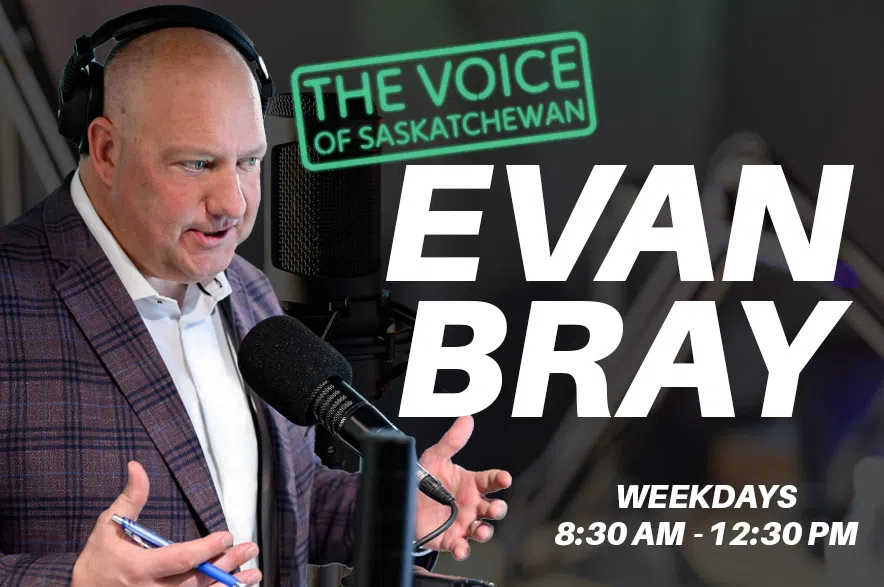
Moe joined The Evan Bray Show on Tuesday at the Saskatchewan Chamber of Commerce’s Food, Fuel and Fertilizer Global Summit in Regina to discuss the future for the province’s largest industries, the challenges global uncertainty is creating for trade and what the future holds for Saskatchewan’s economy.
The following transcript has been edited for length and clarity.
EVAN BRAY: You can feel the excitement in the air. You’re taking the stage right away. Tell us about the importance of this, the fourth year of this summit, which is proving to be a pretty important event.
SCOTT MOE: Well, when you think about those three industries, production of food, fuel and fertilizer in this province is really what drives our economy, and everything that feeds into those significant industries here in our province. And so this is an exciting conference. We see mining conferences and we see energy conferences. What this one does is bring a number of industries together, and really gives everyone a chance to see some of the opportunities and challenges that you don’t always see within the the industry that you’re aligned with, whether you’re mining, whether you’re oil and gas, helium, lithium, hydrogen or, of course, agriculture. So it is an interesting and somewhat unique conference.
We talk about global uncertainty and challenges all the time. Two points that come to mind. The first is this room is full of optimistic people, right? I was just at that supply chain summit that was in Saskatoon last week for the mining sector. Same thing there. Really optimistic about the future and about the role our province can play. And I love that perspective, but I don’t think that’s told enough.
MOE: Yeah, the challenges and the uncertainty in the world – whether it’s geopolitical, we see wars happening, whether it’s tariff or trade-related discussion – those are all real, and every one concerns us. In Saskatchewan, we’re in somewhat of a protect mode. We need to protect what we have. And what I always say is, let’s not get into such a shell that we’re missing opportunities as they arise, because in amongst all of that uncertainty, there’s gold in those hills, and we have some of the global-leading industries in the mining sector and the energy sector, in the agricultural sector, and let’s take advantage of those where we see them. So it is this odd space where we’re taking care of what we have, but we’re also poised because of the world-leading industries that we have to take advantage of the opportunities as they arise. And that’s that’s the optimism you’ll feel.

Saskatchewan Premier Scott Moe speaking at the Food, Fuel and Fertilizer Global Summit in Regina on April 21, 2026. (Abby Zieverink/980 CJME)
Often it gets glossed over, the role that our province plays on the global economy when it comes to providing fuel for energy, providing potash for fertilizer, uranium, of course, is a big one. And I know you’re talking with CEO of Cameco, Tim Gitzel, this morning. As a province has, have we seen that elevated status, or is this the way it’s been for years, and the world is just catching up to the importance of the role we play?
MOE: I would say a little of both. But the world, certainly, as they look for the products that they need – food, fuel and fertilizer – and where they can get it in a sustainable way with a trustworthy trading partner, Saskatchewan and Canada is certainly that. And we’re happy to be in a number of these countries over the last number of years. And it is Saskatchewan’s time right now, and I think that is showing and arriving with the expansion of our industries and over $60 billion of private-sector investment into these industries that are attending this conference. And I think it is our job now to work together, as a government, to to ensure that that’s the new normal moving forward, that this isn’t a bell curve. It’s not a one-time investment and done. We can continue to use the relative strength that we’re seeing, the investments we’re seeing in Saskatchewan, and ensure that that continues by expanding into industries of the future, the helium, the hydrogen, the lithium. The data center was, I think, one that people didn’t expect, and so Saskatchewan, I think, is at the forefront as the place to be, as opposed to what it traditionally was, a place to be from.
I wonder if we could just talk about uranium for a second, premier, because I mentioned you’re on the stage with CEO of Cameco, Tim Gitzel, in just a bit here. Uranium plays an important part when we think about the transition to nuclear energy. I know recently our province signed on with Bruce Power in terms of getting some help, best practices, if you will, from how they set and structured things in Ontario. Can you talk about that transition to nuclear and how important the work we do today is for 10 and 15 years from now?
MOE: It’s incredibly important from a provincial perspective, or from a power-sovereignty perspective for our nation. We need to plan for the future. And I just talked about the significant investments that are landing here in the province. They all use power. We need reliable, affordable power for those industries, those careers, as we expand our opportunities in Saskatchewan, but also reliable, affordable power for the people that live here. And so that’s number one – what we are doing transitioning to a nuclear future and starting the conversation, not only about (small, modular reactors) in Saskatchewan, but moving to large-scale reactors as well, and maybe in partnership with other provinces, maybe in partnership even with some of the northern U.S. states. That’s number one. Number two is, not only are we in the uranium-mining business in this province, and forefront is companies like Cameco and Denison and others, but now what we see is in particular in Cameco transitioning into the nuclear space, owning an actual nuclear company – one of the most significant, if not one of the largest nuclear service companies in the world. And so this just opens up all sorts of opportunities that maybe weren’t available for us prior to this being part of the supply chain. We’re engaging with Bruce Power on not only our future, but how we work with other provinces and other countries around the world in their nuclear future as well. So it’s a really an exciting time and really an expanded conversation compared to what we’ve been used to in the last 50 years in this province.
I was at that mining forum at Prairieland Park last week, and I talked with a few vendors there who were quite somber about the worry about scared investment away from Canada. Are we worried about that? That’ll be a discussion point, I’m guessing, over the next couple of days at this conference. Are we making strides in a regulatory environment that incentivizes investment? I know our province is focused on that federally. Are we and should we be doing more?
MOE: We’re talking about it, and we need to bring some action to that conversation. The words are good. We see the MOU between the federal government and Alberta. That’s a positive step. We need to deliver and actually get to the finer points of that operational environment. The production of additional barrels of oil in western Canada and Saskatchewan is part of this discussion, with our western oil field in the Lloydminster, North Battleford area. We need to bring some action to some of the words that have been spoken, whether it’s on the the operating environment, the expansion of our industries in the oil and gas sector, the mining sector, the agricultural value-added sector, all of those sectors, but also on the trade front. We saw some progress in China. We saw some progress in India. Those are numbers two and three for Canada’s largest markets. The next one is going to be more difficult and likely more spirited, but we now need to see some progress with our largest trading partner, which is the United States of America. So we need to control what we can control. If we’re going to become an energy superpower, we need to get the regulatory environment right. We’re not there yet. We’ve said we want to get there, but we need to get there, and then we need to get the trade environment as good as we can.
You’re feeling confident that we’re going to get there? Yesterday on the show we did an open-line segment after Prime Minister Mark Carney gave that update to the nation on the weekend. Many people are feeling like there’s been a lot of talk over this first year of his term in office, but not a lot of action. You’ve been someone who’s been with him overseas on a couple of trade missions. Are you confident that we’re going to see action?
MOE: Well, we need to, and so we’re confident. Can you predict what the president of the United States is going to do in the next week or months? And so I don’t know that confidence is the right term to be searching for. We need to search for a deal. And I would say that no one needs it more than the president of the United States of America. Canada has most certainly what the United States needs. And as we find our way into what is going to be a very, very difficult conversation, I would say there’s two happening in Canada right now. One is the operational environment for industries, the regulatory environment. We need to fix it. That conversation is underway, and that needs to happen. The second piece is that as we go into USMCA negotiations, I think Prime Minister Carney sees a tough negotiation ahead of him, and he’s trying to temper expectations and he’s trying to lower expectations. We should not. We see Mexico engaging and going into their negotiations sooner than Canada. That’s not a good sign. We need to get into those negotiations. We need to be either alongside Mexico or operating at the same pace. This is our largest trading partner. Not finding a successful trade relationship with the United States of America, that cannot be the outcome that that occurs later this fall or any time this year. And so this is priority number one, and one that I would hope the federal government is entirely focused on. So I wasn’t a fan of the comments the other day, simply because I think they were lowering expectations. I understand why a politician might make them, however. Let’s bring the action to the table, and let’s make sure that’s not the outcome.
Is it a weakness that we have this relationship with the United States? That’s what the prime minister is saying: what has been our strength has now become our weakness. We’re hearing a bit of a different message from Pierre Poilievre, who’s saying “We’re not going to be the 51st state, but we have to be a little more patient.” Where do you think the reality is?
MOE: I don’t think any trade relationship is a weakness. If you start to rely on one too much, potentially, I suppose you you need to diversify the trade. That’s what we’ve been doing as a province with our trade offices in other countries around the world, and we’ve seen some successes in those other countries around the world. Our trade relationship with the United States is not a weakness. It’s one of our greatest strengths from an economic perspective, and one of our greatest relationships in ensuring that we have sovereignty, not only in Canada, but this continent, across North America. And so it is not a weakness. However, given the dynamics of the current president, there are certainly challenges in that significant trade relationship and the significance that it has for us. But I’m going to talk today about the fact that United States of America needs to trade with Canada as well. We have what they need. Our pipelines head down into the refineries in the U.S. Our uranium powers one in 17 homes in the U.S. We need to find a path forward on this, and it’s going to be a spirited discussion, but it’s one that has to have a positive outcome.