
Murray Wood: Is it fake, or just stolen?
People looking for news on Facebook need to watch out for fake content. And even if it's true, it may have been stolen. ...
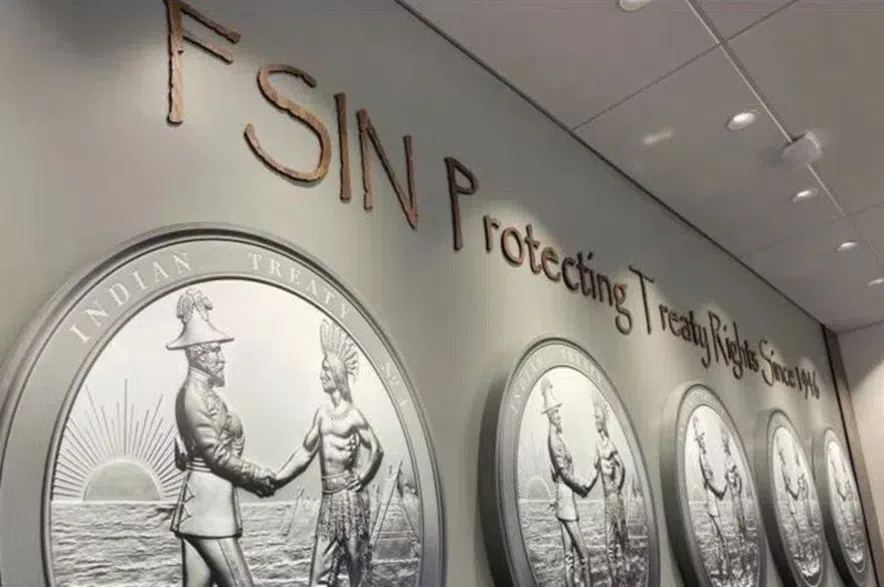
Chief of the Federation of Sovereign Indigenous Nations, Bobby Cameron, said important “items to work for” have been the reason for his silence on the audit his organization is facing for the past two years.
In an interview with CKOM News on Tuesday, Cameron said the FSIN has its financial controls in place and all the deliverables have been met.
He stated there are three or four individuals who “caused” the federal audit.
Read more:
“It’s very political,” Cameron said. “They can deny it if they want, but our staff have cooperated to the fullest extent with ISC (Indigenous Services Canada) every step of the way.”
Cameron pointed to the personal protective equipment (PPE) deliveries to First Nations during COVID-19, stating that it was delivered properly to communities in need during the pandemic.
“There’s a couple individuals that were saying that they did not receive it,” Cameron said. “Obviously we don’t agree with it.”
He said the majority of First nations have confirmed to the FSIN they received PPE support from the organization during the pandemic, and Cameron called the forensic audit “nonsense.”
Cameron said “everyone has an opinion,” but insisted funding was distributed properly to First Nations following the pandemic.
On Monday, the FSIN invited only one media outlet to its headquarters for a press conference about the audit. Cameron said this was because he wanted the interview to be an exclusive for that outlet.
Cameron said he is willing to pursue legal action in response to the federal government’s request for multi-millions to be repaid.
In a media release shared earlier on Tuesday, the FSIN said the audit is not a matter of misused funds but what it called a fundamental disagreement in interpretation.
The FSIN claimed that at no point has there been any finding of fraud, personal gain or intentional wrongdoing.
“The FSIN has been transparent, responsive, and accountable; our stewardship of funds exceeds standard industry practices and are based on the best of western and traditional self-government practices,” Cameron said in the statement.
“Our top priority when the COVID pandemic hit was to implement our inherent and treaty rights under the Famine and Pestilence clause and we did so, proving that the FSIN will continue to be treaty-focused and treaty-based for the benefit of all First Nations in Saskatchewan.”
The FSIN also maintained that administration fees are used to support governance, operations and the infrastructure to deliver programs.
In it’s release, the organization said it has “serious concerns” around the public narrative surrounding the audit, stating it “does not reflect the facts.”
“This reinforces a long-standing pattern where First Nations institutions are placed under heightened scrutiny while their perspectives are not fully represented,” the statement read.
A former chief of the Federation of Sovereign Indigenous Nations (FSIN) says the organization’s response to the federal audit is “really unfortunate.”
A letter sent from ISC dated March 13, 2026, ordered the FSIN to pay back $28.7 million, giving the organization until April 2 to respond and provide documentation.
The revised audit – covering April 1, 2019 to March 31, 2024 – found a total of $4,805,760.58 in ineligible expenses and $23,938,821.07 in unsupported expenses with the majority linked to COVID- 19 spending.
The FSIN represents 74 First Nations in Saskatchewan.
“The Federation is in no man’s land right now,” said Roland Crowe, who served as the FSIN Chief in the 1990s. “It’s given us a terrible picture in the eyes of the public,” he said, noting it will take decades for the organization to rebuild trust following the audit.
Crowe said during his time as chief, he never experienced such an incident and said the only way the FSIN could gain back its credibility is to “cease and desist.
“It’s hurt a lot of people that it should have never hurt.”
Crowe, also a former band chief of Piapot First Nation, said when financial agreements are signed, it is the responsibility of those in office to ensure the conditions are followed.
The former chief said the millions Ottawa provided the FSIN for resources did not reach the First Nations it was intended to.
“I see the poverty, the difficulty, I see the drug problem that’s not being addressed,” Crowe said. “It’s unfortunate that the money never got to the people.”
Crowe said he doesn’t see fault on just the FSIN’s side but also from the federal government for continuing to fund the organization over the years. He also questions if the organization will continue to function after the April 2 deadline.
“What happens to the liabilities? Is anybody going to pay back the money?” Crow asked. “We don’t know if any of it is retrievable.”
Another issue Crowe pointed to is the election process for the FSIN, which only allows chiefs and council members to elect its leaders, leaving many First Nations voices out of the conversation.
Crow also commented on the decision to only invite a single media outlet to its news event on Monday, calling it “not fair.”
“Every time I had a press conference, I allowed all press,” Crow said. “There was never a time in my leadership days that we kept (out) any media or press.”
–with files from paNOW’s Nigel Maxwell