Murray Wood: Is it fake, or just stolen?
People looking for news on Facebook need to watch out for fake content. And even if it's true, it may have been stolen. ...
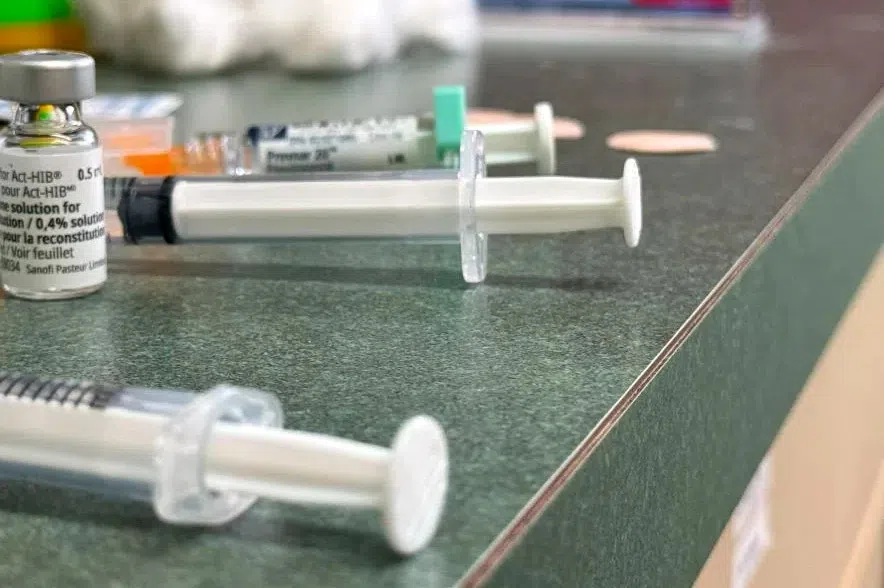
Six years after Saskatchewan confirmed its first case of COVID-19, scientists in Saskatoon said the pandemic remains a defining moment that reshaped how the country prepares for future health emergencies.
The first case in the province was announced on March 9, 2020, the start of a period that would soon see lockdowns, overwhelmed hospitals and a worldwide race to develop vaccines and treatments.
At the Vaccine and Infectious Disease Organization (VIDO) at the University of Saskatchewan, Dr. Paul Hodgson told the Evan Bray Show that researchers immediately understood the virus had the potential to spread quickly once it was identified as a coronavirus in 2020.
Read more:
“We had seen the impact of other coronaviruses,” Hodgson, the organization’s director of operations, said. “So we knew as a respiratory pathogen, once it was identified as a coronavirus, it had the potential to spread rapidly.”
That early understanding helped shape the response at VIDO, which became one of Canada’s key research hubs during the crisis.
“ver the course of those few years, we (VIDO) tested over 500 different medicines – and that’s vaccines, that’s therapeutics, including antivirals, to try and end this pandemic,” Hodgson said. “The dedication of the staff over that course of that time was absolutely incredible.”
Hodgson said the pressure inside the facility was unlike anything the team had experienced before. While much of the University of Saskatchewan shut down early in the pandemic, VIDO continued operating because it had the high-containment laboratories needed to safely work with the virus.
“As you may be aware, early on – when the University of Saskatchewan basically closed down – VIDO was the only group able to operate because we have something called a high containment, or containment level three,” he explained.
Researchers, technicians and graduate students worked around the clock as governments, pharmaceutical companies and global organizations searched for solutions.
“The amount of dedication that not only our scientists, but technicians and even graduate students lent to this as this continued to expand was incredible,” Hodgson said. “I think everyone here felt almost a moral obligation to do everything they could to try and end this.”
Hodgson said part of what made COVID-19 so damaging was the combination of how easily it spread and how deadly it could be on a large scale.
“When something spreads rapidly, even at a one per cent to two per cent mortality rate, the overall impact of that is incredible,” he said.
Six years after that first Saskatchewan case, Hodgson said the pandemic had left lasting changes in how Canada prepares for the next global health threat.
“As it was ongoing, we were looking at our own infrastructure and saying, what are we missing?” he said.
That reflection led VIDO to establish new vaccine manufacturing capabilities in Saskatoon, allowing the facility to produce vaccines locally if another outbreak emerged. Hodgson said that VIDO in Saskatchewan has the ability to produce vaccines for the province and beyond.
The organization has also expanded its planning around supply chains, containment infrastructure and pandemic preparedness.
Asked whether Canada would be better prepared if a new infectious disease appeared tomorrow, Hodgson said “100 per cent” the country had learned from the crisis.
Still, he said, the pandemic remains a reminder that preparation must begin before the next emergency.
“You can’t have a fire and then start to try to look for a fire department,” Hodgson said. “You can’t have an emergency and then start to hire police. This is all about preparatory insurance to make sure that we’re ready for the next challenge.”
Read more: