
Murray Wood: The new phone books are here!
Once a Steve Martin catchphrase, Murray Wood says physical phone books are rapidly becoming relics of another age, but t...
OTTAWA — Prime Minister Mark Carney is facing mounting calls to speak out against the United States for widening its restrictions on fuel reaching Cuba, or to send aid to the country.
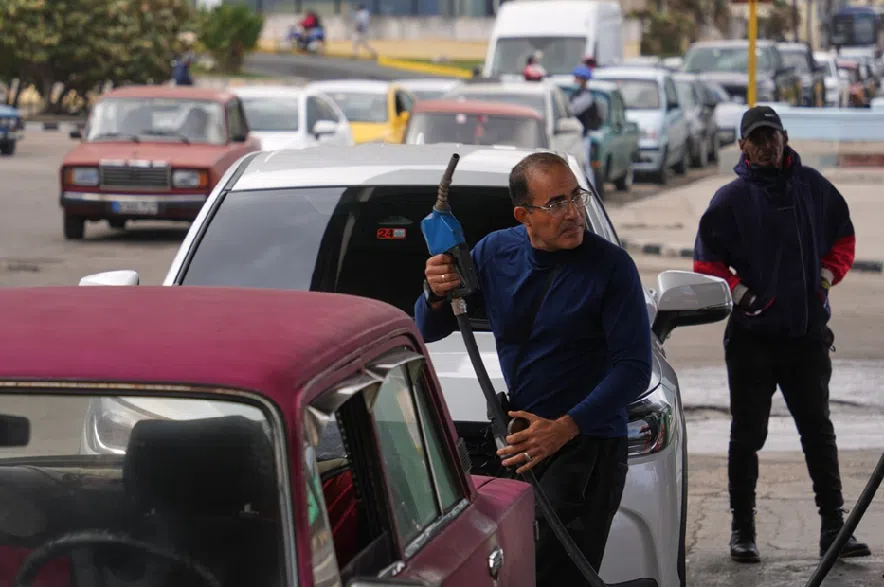
For more than a year, Global Affairs Canada has warned travellers of “shortages of basic necessities, including food, medicine and fuel” across most of Cuba. In January, the island lost its main source of fuel when the U.S. took control of Venezuela’s oil reserves.
Read more:
Canadian airlines have suspended flights to the island, citing fuel shortages, while carriers like Air France have added a refuel stop in nearby countries.
U.S. President Donald Trump has also threatened tariffs on any country selling or providing oil to Cuba, prompting the island to ration energy in recent days. The restrictions add to decades of American restrictions on goods and services in Cuba, an embargo that Canada has never replicated.
Some within the Trump administration, such as Secretary of State Marco Rubio, have long called for regime change in Cuba, and they’ve warned Havana of possible military actions following the U.S. raid on Caracas that led to the capture of Venezuelan President Nicolas Maduro.
Mexico has sent navy ships carrying food staples and personal hygiene items to Cuba, and the New Democrats say Canada should follow suit.
Last week in the House of Commons, NDP interim leader Don Davies urged the government to “support Cuba in the face of aggressive U.S. imperialism,” arguing this would give heft to Carney’s speech at the World Economic Forum that urged middle powers to stand up to intimidation by superpowers.
Foreign Affairs Minister Anita Anand did not say whether Canada will speak out against Washington or offer fuel or humanitarian aid. She instead noted efforts to support Canadians in need, including to leave the country.
“We are deeply concerned by the deteriorating conditions in Cuba,” she said. “Our top priority will always be the safety and security of Canadians, and our foreign policy is based on that.”
The government has not said whether it is looking at extending humanitarian aid to Cuba. Davies has argued Trump is “emboldened by the lack of pushback” to his raid in Venezuela, and said Carney “has remained silent” as Trump threatens Cuba and the broader Western Hemisphere.
Bloc Québécois Leader Yves-François Blanchet said he raised the need for Canada to send Cuba humanitarian aid in a meeting last week with Carney, writing that Cubans “do not deserve their current suffering” in a French-language statement.
“I asked the prime minister to follow Mexico’s example and come to the aid of the Cuban people, whose living conditions are rapidly deteriorating due to the American embargo,” Blanchet wrote.
Advocates for Cuba note that Canada is the only major country in the Americas other than Mexico that maintained ties with Havana after the 1959 communist revolution, despite American pressure.
Cuba’s ambassador to Ottawa, Rodrigo Malmierca Diaz, said at an event last week that Washington is violating international law, but he did not make any specific request of how Canada should be responding.
“The United States government’s policy of economic warfare against Cuba has reached its most ruthless expression in recent days,” he said, according to remarks posted on the embassy’s website. “This is how they intend to make Cuba surrender: suffocating our economy and our population.”
This report by The Canadian Press was first published Feb. 17, 2026.
—With files from The Associated Press
Dylan Robertson, The Canadian Press