
Murray Wood: It's a Monday Melange
From the B.C. NDP being DOA to the Riders, Trump and Murray Wood campaigning for a spot at the trough.
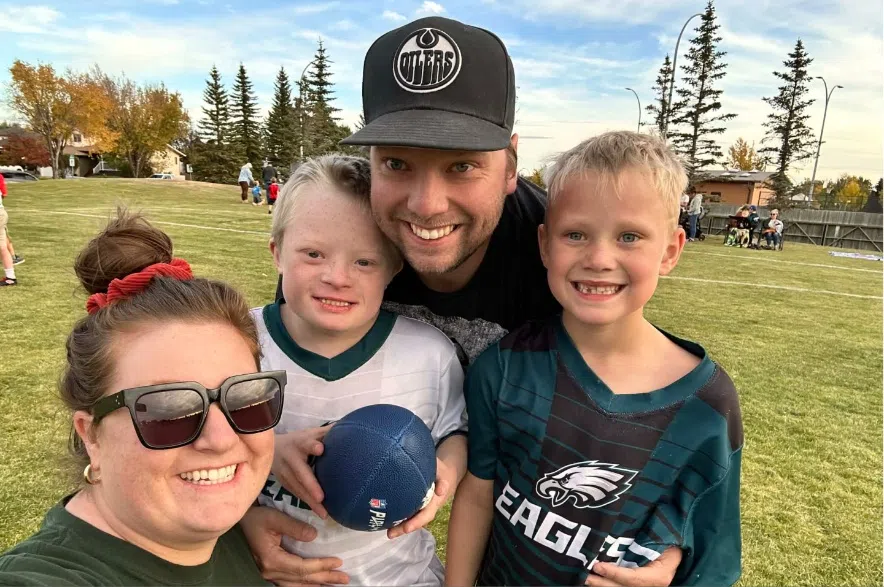
It’s an uphill battle for at least one mom in Saskatchewan struggling with a lack of access to speech therapy for her son.
For Ashley Schwartz, that battle plays out every day. Watching her son struggle to be heard, and searching for services that once felt guaranteed, now feel out of reach for her 10-year-old son, Hayes, who is diagnosed with Down syndrome.
Read more:
“It’s been a detriment to Hayes in a way that we struggle with communication. He does speak, but he’s difficult to understand, and we do a little bit of sign language, but not everybody in his surroundings knows sign language, and so that’s very limited in the communication that he has.”
When Hayes was younger, Schwartz said support was steady and reliable. From birth until kindergarten, she said, speech therapy through the health division was always available.
“It seemed at that time that we had unlimited access to those speech services. But once he reached kindergarten, we were no longer able to access that,” said Schwartz.
Schwartz said what made it even more difficult, was losing someone Hayes trusted – which was the most frustrating part.
“We had seen such growth and development, and she had just figured out a way to work with Hayes that worked so well for him, and to no longer receive that has been very hard.”
After that, services became inconsistent. Schwartz said Hayes had a handful of speech therapy sessions throughout the school division in Kindergarten and Grade 1, but in recent years, support has been extremely limited.
“I actually don’t know that (school) speech (therapist) has even seen him yet this year in Grade 5, and it’s been very frustrating as a family,” said Schwartz. “Hayes is just in Grade 5, and our limited access up until now has been terrible, so moving forward, I only see it’s going to get worse and worse.”
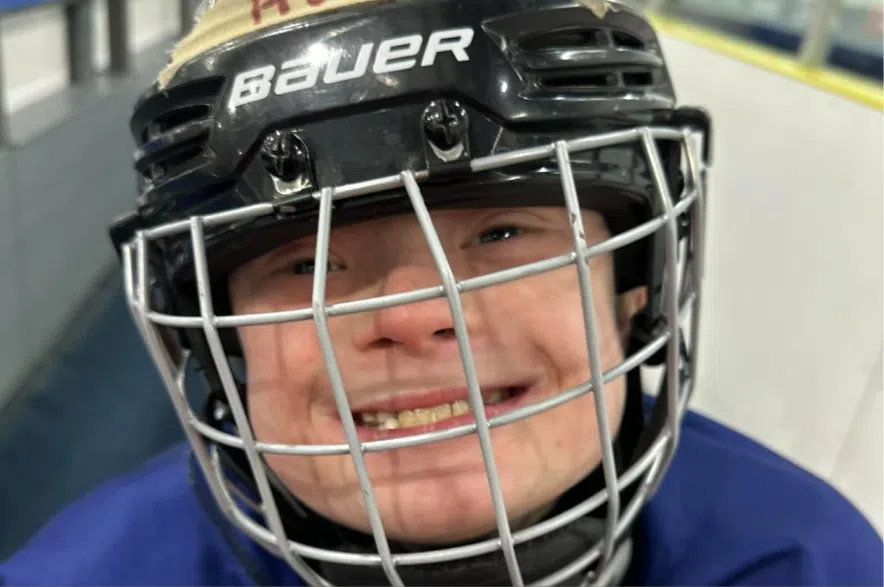
Ashley Schwartz says her son Hayes is very athletic and loves playing hockey, soccer and basketball with his peers. (Ashley Schwartz/Submitted)
While Schwartz said they do get speech therapy and literacy support through the Ability In Me program, it’s based out of Saskatoon, so everything is delivered virtually, creating new challenges.
“You are just so limited on what you can do through Zoom and getting his attention, and when I’m logged into the session, the lag in the internet, and then just being able to understand him is very hard through Zoom.”
Schwartz explained kids at school have learned to understand Hayes, but communication is still something he struggles with daily.
“It’s very hard for him. Sometimes he just can’t get his point across. People don’t listen to him. He has something to say, but they don’t know what he’s saying,” she said.
“He is a very energetic, interactive kid. He has a lot to benefit in a classroom and in society, but when people don’t understand him, it limits him,” added Schwartz. “We do see that very frustrating. He gets very frustrated, and we have to really break down and try and figure out what he wants to say sometimes.”
Schwartz said private speech therapy is also very limited in southwest Saskatchewan. Not only is it expensive, she said, but there are also just no private options for them.
She worries about how many other kids are missing out.
“If someone like Hayes with a Down syndrome diagnosis who has speech problems and challenges, if they’re not seeing a speech therapist, what other children are missing that opportunity to see a speech therapist?” questioned Schwartz.
“It’s not just my child, it is every single child.” Late last year, 980 CJME reported on a shortage of speech pathologists in Saskatchewan. While a new Master’s of Speech Language Pathology is set to start at the University of Saskatchewan later this year to get more people trained in the career here in our province, some parents, like Schwartz, are feeling the gap in the meantime.
Schwartz hopes the new master’s program will help keep speech pathologists right here at home in Saskatchewan.
“Speech is the basis of learning, of communicating with society. It’s such a vital, important part of our culture and in society.”