

Murray Wood: Who's hot... and who's not
Every Friday, Murray Wood takes a look back at the week's news and decides who's hot... and who's not. This week's list ...
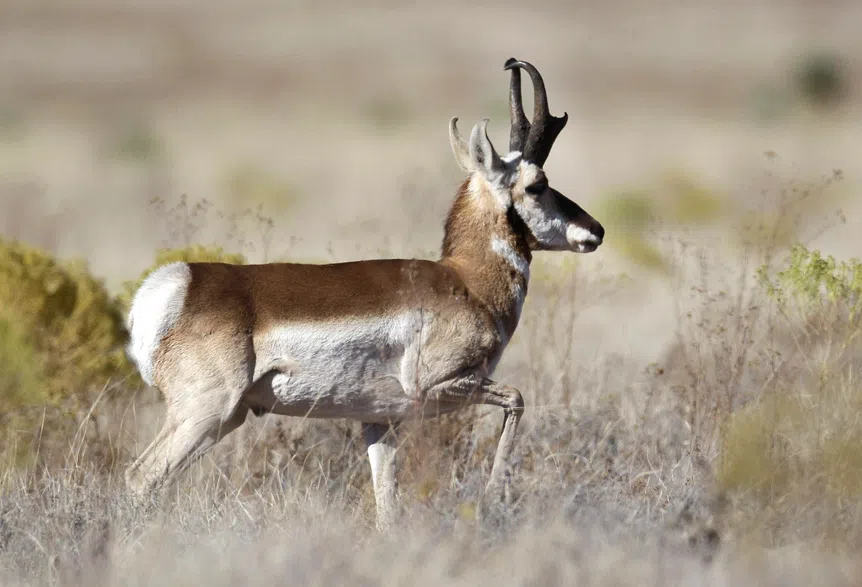
Saskatchewan’s environment ministry is working alongside the Global Initiative on Ungulate Migration to protect the province’s pronghorn population by reducing threats to their seasonal migration.
The ministry explained that Saskatchewan’s pronghorns “live at the northern edge of their range” and migrate seasonally in order to find food but human activity can interfere with their migration routes, making it difficult for the animals to move and creating risks for their survival.
Read more:
“Our province is blessed to be part of the pronghorn’s Canadian range,” Darlene Rowden, Saskatchewan’s environment minister, said in a statement.
“In addition to being a sought-after game species, pronghorn viewing has become a popular activity with wildlife enthusiasts, due its iconic status as a native grasslands species.”
The province noted that the pronghorn population is relatively stable at about 15,000 to 20,000 animals “after a century of dramatic fluctuations,” but without efforts to protect native grasslands and migration corridors, those numbers could be at risk of dropping off.
“Growing threats, including climate change, extreme weather and expanding development continue to challenge pronghorn movement and resilience,” the ministry noted.
The Global Initiative on Ungulate Migration works to conserve populations of animals including pronghorn, bison and caribou, the ministry explained, adding that healthy migration is essential for ecosystems, the economy of rural areas and the relationships between predators and prey.
The ministry said the organization has created detailed migration maps that will guide the province’s efforts to protect the crucial migration corridors and “inspire global conservation action.”
Read more: