Evan Bray: Harvest time brings back memories of home
Evan Bray recently spent some time on his family's farm, helping with harvest. He says it's a special time of year that ...
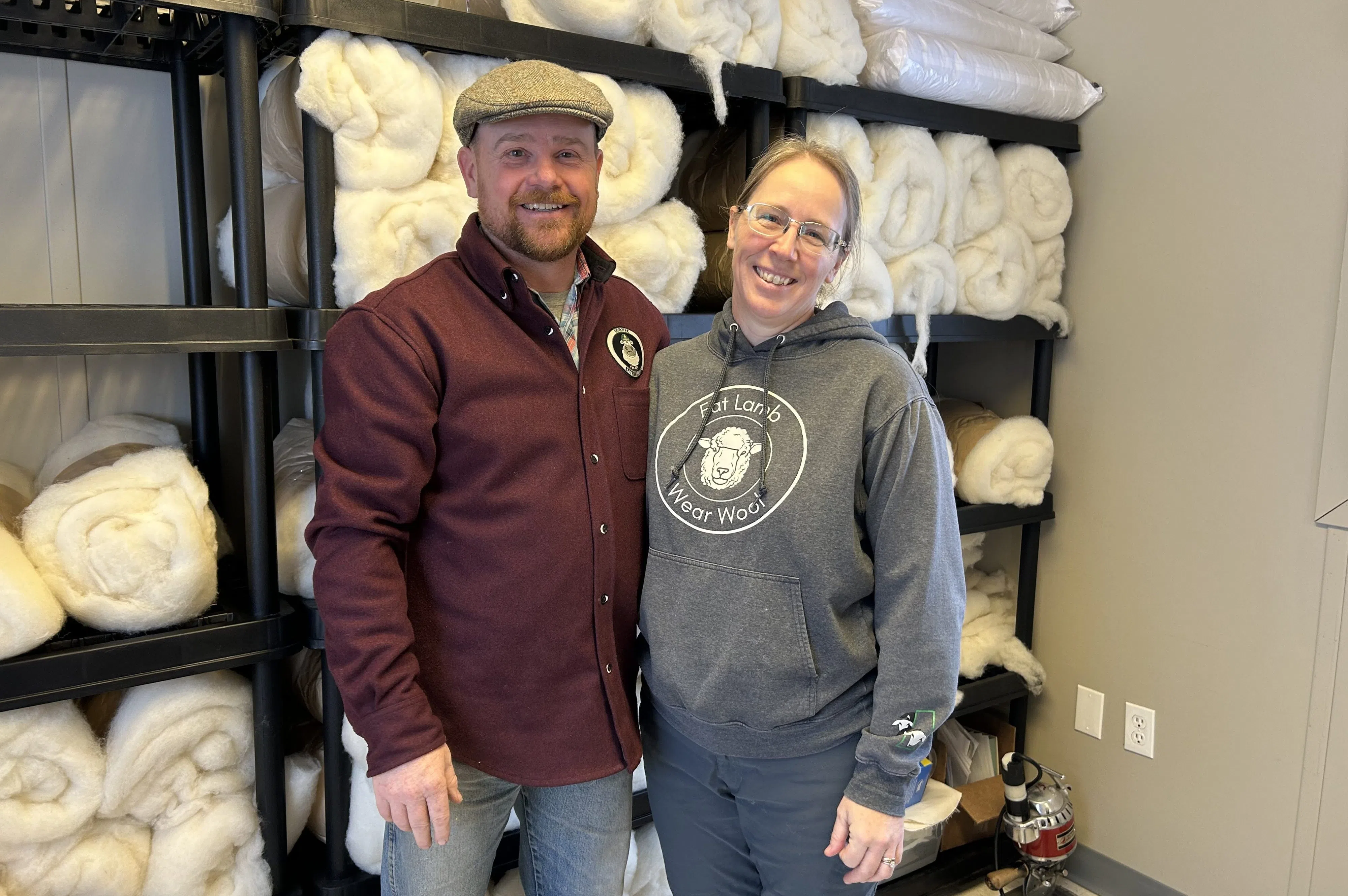
They say one man’s trash is another man’s treasure.
On a quiet farm near Hanley, Brian and Aimee Hunstad take that saying seriously.
Read more Saskatchewan Stories from Brittany Caffet:
For most sheep producers in Canada, wool has long been treated as a problem, not a prize.
“Wool in Canada is considered a waste product,” Brian explained in an interview with 650 CKOM. “In Canada, we have to feed in the winter. Depending on how you feed, the wool gets very dirty. When you do sell it, you don’t really get paid very well. Most producers are burying it or burning it.”
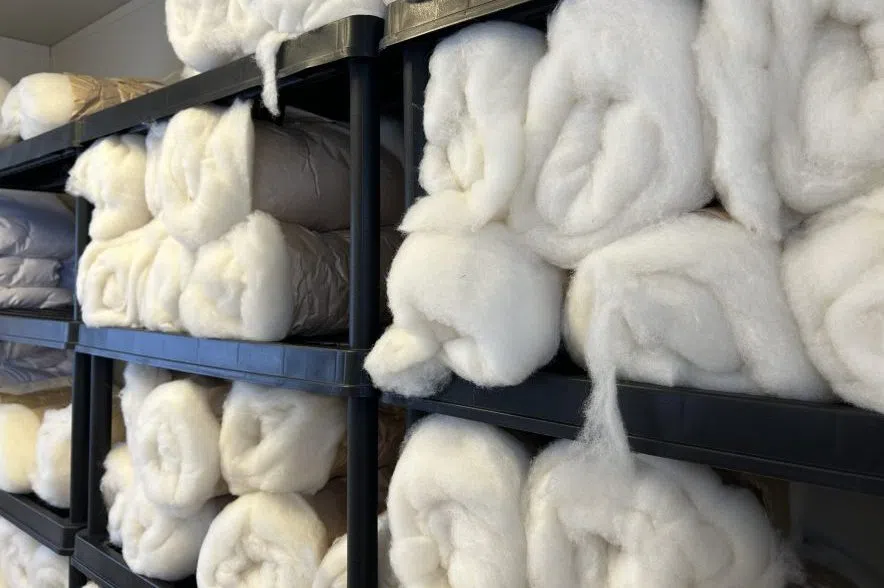
The Hunstads source the wool for their products from eight Saskatchewan sheep producers. It is sent to a mill for a thorough cleaning before becoming bedding. (Brittany Caffet/650 CKOM)
In a province with about 80,000 sheep, that’s a lot of discarded potential.
The turning point didn’t come from a boardroom or a business plan. It came from Aimee standing in their own home and thinking practically.
“In watching and researching some videos on how to make wool bedding, I was pretty sure I could figure it out,” she recalled. “I just decided to bite the bullet and get some stuff cleaned and go for it. But it really was just for our family. That’s all. I was like ‘Just make six duvets and we’ll be good.’ And then it just kept going.”
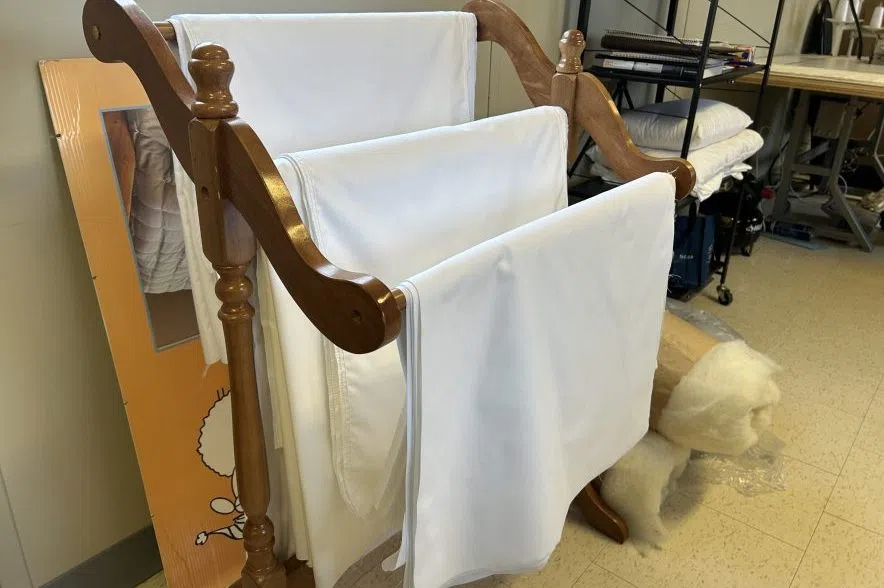
The Hunstads use 100 per cent cotton with a high thread count as the shells for their pillows and duvets. (Brittany Caffet/650 CKOM)
Those six duvets changed everything for the couple. With their cozy new blankets on their beds, the Hunstads slept differently — better. Wool, they discovered, wasn’t just warm. It was breathable. It regulated temperature.
“The biggest thing we noticed is you slept dry,” Brian said. “I used to sweat, and it went away, like 100 per cent.”
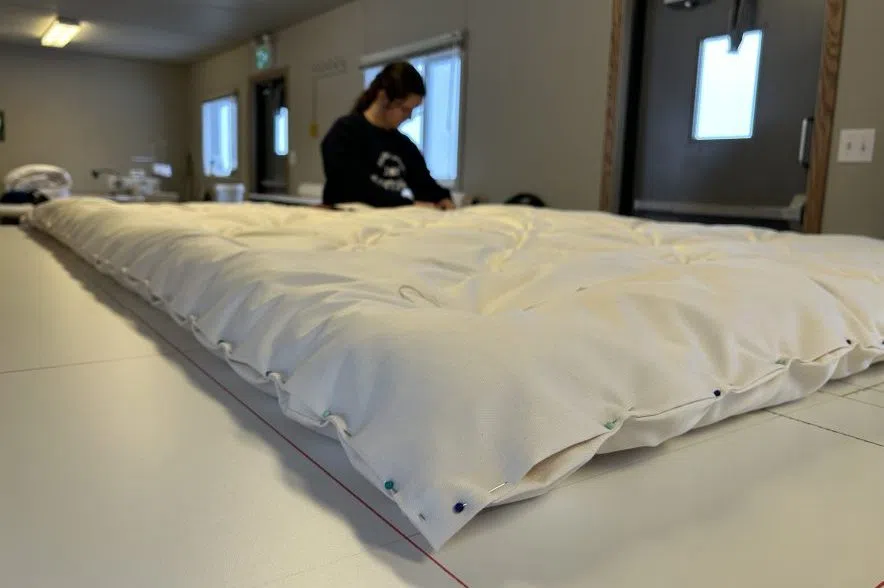
Each duvet from Count Your Sheep is assembled and tied by hand, adding a personal touch to this prairie-grown product. (Brittany Caffet/650 CKOM)
At first, the couple wondered if it was just them. Then neighbours tried the duvets, and the feedback was immediate.
“They were like, ‘Holy cow. This is pretty nice,’” Brian laughed.
Word spread the way good prairie stories do — quietly, honestly, from one person to the next.
What began with duvets soon expanded. Customers wanted more options, leading Count Your Sheep to grow into pillows and other wool bedding products. The business quickly outgrew their own flock. They began using wool from a brother-in-law nearby, then from friends just a couple miles away, but even that wasn’t enough. Eventually, they made a difficult but telling choice.
“We ended up selling our flock so we could focus on this business and let it grow,” Aimee explained.
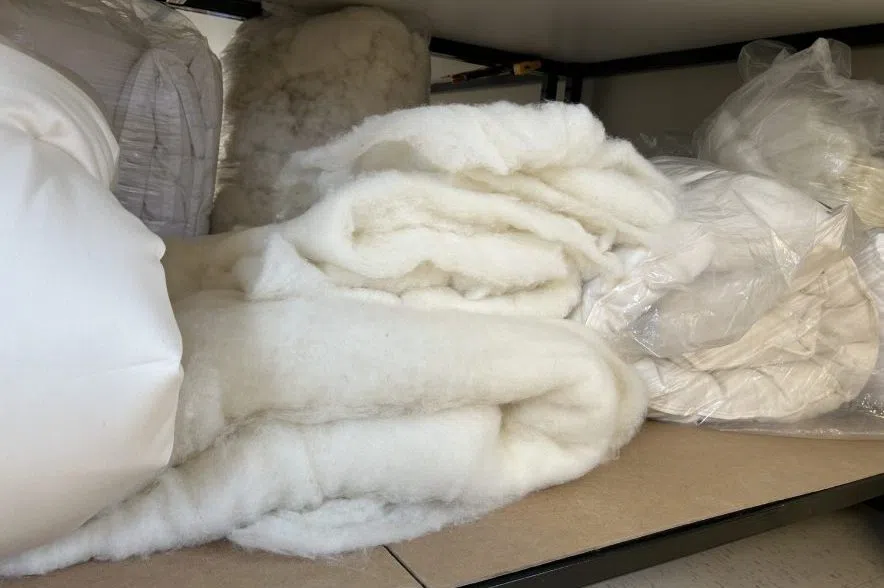
The wool batting feels much like any other batting. Warm, soft and cozy, but with one major difference: it’s 100 per cent Canadian wool. (Brittany Caffet/650 CKOM)
Today, Count Your Sheep sources wool from eight producers across Saskatchewan, including a large flock near Grenfell that provides all of the wool for their pillows.
What makes this business truly special isn’t just the product. It’s the ripple effect.
“We’re really pro-sheep industry in this province,” Brian said. “For people to start realizing they have this thing that they’ve been throwing away, that it’s actually really good, has been pretty cool.”
One man’s trash became another family’s treasure, and then a province’s.
On the prairie near Hanley, Count Your Sheep proves that sometimes the most meaningful businesses are built not by chasing something new, but by finally seeing the value in what’s been there all along.
Brian and Aimee Hunstad turned trash into treasure, creating bedding out of Saskatchewan wool that once would have been burned or buried. (Brittany Caffet/650 CKOM)