

Murray Wood: It's a Monday Melange
From the B.C. NDP being DOA to the Riders, Trump and Murray Wood campaigning for a spot at the trough.
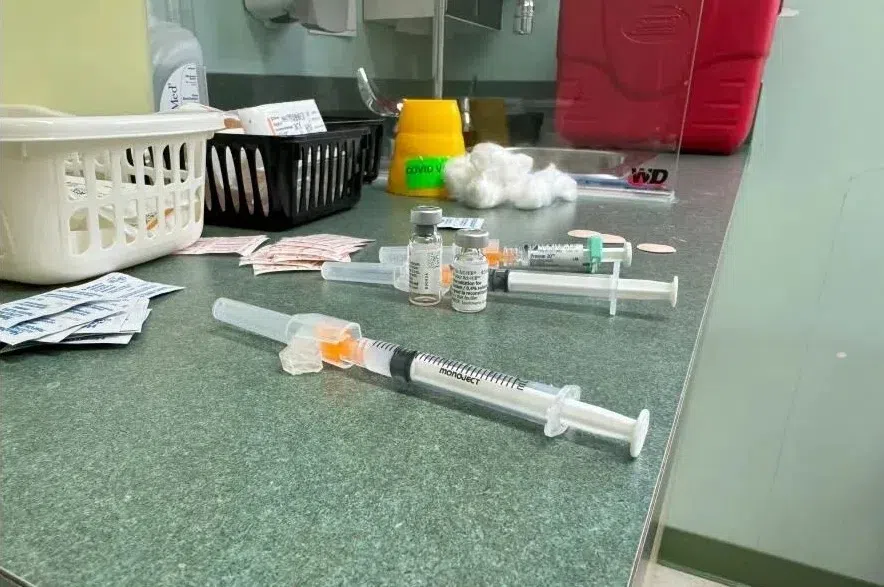
Saskatchewan’s chief medical officer of health is hopeful that a new immunization program for newborns will reduce the impact of respiratory syncytial virus (RSV).
The most recent Community Respiratory Illness Surveillance Program (CRISP) Situation Report, covering the period from Dec. 14-27, shows an increase in test positivity rates for RSV from 2.2 per cent during the previous reporting period to 2.9 per cent.
Read more:
Influenza accounted for a larger positivity rate, 38.5 per cent, which was down from earlier in the month.
“Usually the RSV season starts less dramatically than influenza which comes very quickly and it has a longer kind of span, like three or four months during winter,” Dr. Saqib Shahab explained in an interview.
Shahab said he hopes to see less impact from RSV in very young children due to a change in immunization. All babies born in Saskatchewan between October and March are receiving a monoclonal antibody to protect against RSV.
“So we are really hoping that, while we are still seeing hospitalizations, especially in children under the age of two due to RSV, this year we will see lower impact of RSV, especially in the very young,” Shahab said.
“RSV’s one of those viral infections that, obviously if you’re a newborn, you haven’t had any exposure to it. But by the age of two, every child has been exposed to RSV and then you have some immunity so as you get older, the impact of RSV is lower as an older child.”
Of the cases of RSV that were lab-confirmed between Dec. 21-27, around 60 per cent of them were in children aged four and under.
Shahab hopes that the immunization will reduce severe RSV complications in children under two years old, such as bronchiolitis, an airway inflammation.
He advises parents to speak with their health-care provider if a newborn is fussy and has symptoms like a runny nose or cough.
“But obviously, if your child has underlying risk factors, has a fever, or is a newborn under the age of 6 months, it is good to call 8-1-1, seek medical advice, and then if proper, the child can be tested,” he said. “And that’s usually done for children who are mostly showing symptoms.
“At this point, it’s more likely the child has influenza because the test positivity for influenza is much higher than RSV.”