Murray Wood: Is it fake, or just stolen?
People looking for news on Facebook need to watch out for fake content. And even if it's true, it may have been stolen. ...
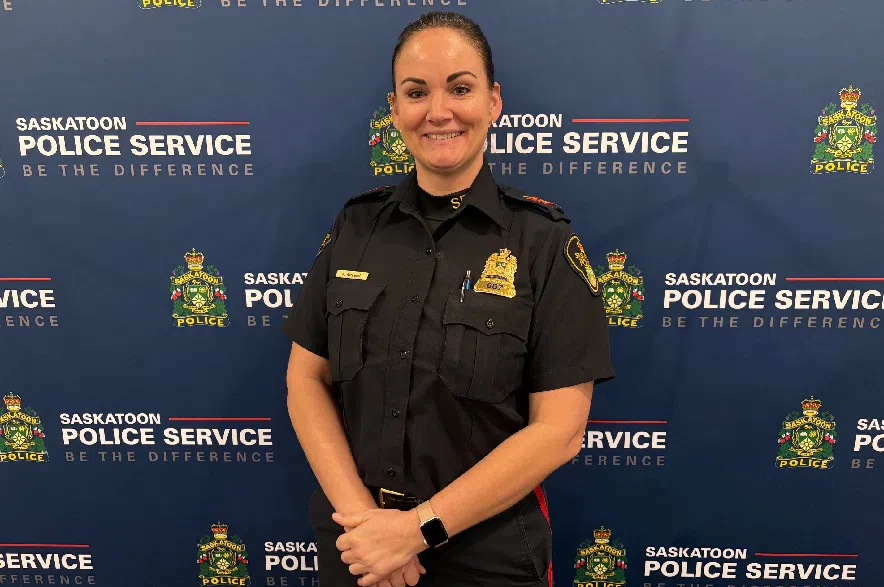
Sgt. Ashley McLeod of the Saskatoon Police Service says she’s locked into her career and can’t see herself in another job.
The police force has seen a decline in applications in recent years, and in her new role with the recruiting unit, McLeod said she hopes to show others that policing offers a solid career path, even for those who have never considered it before.
Read more:
When McLeod started her career 18 years ago, she said the service received hundreds of applications every year. Over the past few years, the number of applicants has fallen to around 150 each year.
McLeod said she thinks part of the reason behind the decline is due to changing perceptions of police and what she said are misunderstandings about the job.
“I don’t think people are really focused on this type of career, because they think it’s dangerous or they’re just not sure what the police do,” she said. “We need to do a better job at really pumping up our jobs and what we actually do and how we help the community.”
While there is a physical aspect, McLeod said policing goes beyond being physically fit and making arrests.
“I think women often cut themselves short, because they’re seeing the big macho-ism of policing, and it just isn’t the case,” McLeod said, explaining that the job can involve de-escalating potentially dangerous situations, problem-solving and finding resources for people in need.
She compared policing to social work in many of its aspects.
“We need people who are really good at talking to people, that can problem solve,” she said.
Another common misconception about policing is that applicants should have a background in criminal justice, McLeod explained. While it can help make an application more competitive, she said officers come from many different backgrounds.
“We have previous teachers, we have a previous doctor, we have social workers, people with psych degrees,” she said.
“We have such a diverse group of people in our building, and it makes the foundation of our work great,” McLeod added. “It makes our officers great, because we’re not all the same.”
The process of becoming a police officer is rigorous, she explained, and involves a mental abilities exam known as the SIGMA, and the Police Officers Physical Abilities Test.
McLeod said after the tests are completed and an application is handed in, individuals can get a pre-employment interview, polygraph testing, along with psychological testing. Successful applicants would then spend 22 weeks at the Police College in Regina.
Those who meet the requirements, have a clean personal disclosure form and perform well on their testing can be competitive applicants, McLeod explained.
In her role as a recruiter, McLeod said she is focusing on connecting with university and high school students to share information about careers in policing and the benefits that come with them.
“I want to plant that seed with younger individuals,” she said.
“Once we’ve done all the work we’re trying to do with recruiting initiatives now, I think eventually it will turn around.”