
Murray Wood: Is it fake, or just stolen?
People looking for news on Facebook need to watch out for fake content. And even if it's true, it may have been stolen. ...
Saskatchewan isn’t too worried about U.S. President Donald Trump’s tariff threat on fertilizer, yet.
Trump told reporters on Monday that he may impose “very severe tariffs” on fertilizer from Canada in an effort to bolster America’s domestic production.
Read more:
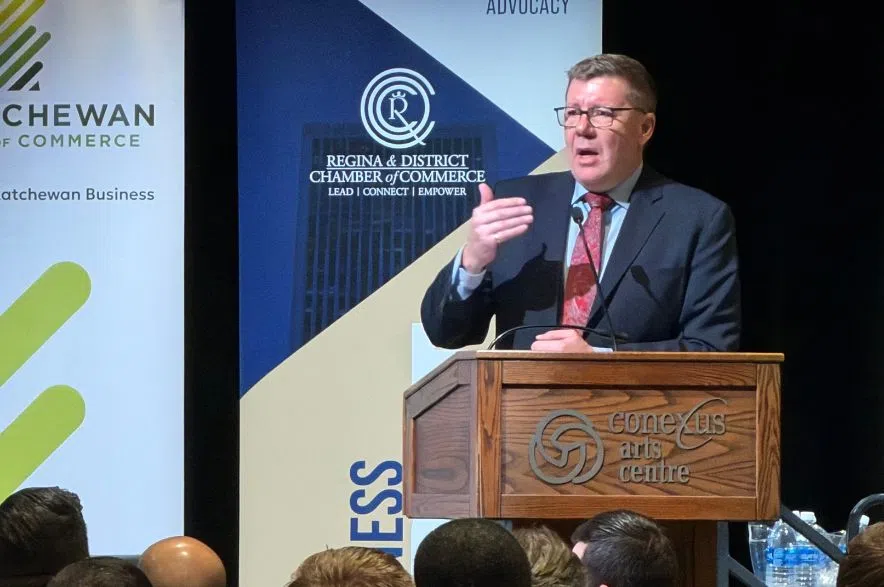
Speaking to media at the Trade & Tariff Forum in Regina, Premier Scott Moe spoke about Trump’s threats as he has in the past.
“When it comes to statements like this with President Trump, with all due respect, we need to take what he says very seriously; however, don’t always take what he says literally,” Moe said.
If tariffs are placed on Canadian fertilizer, it would have a major impact on Saskatchewan’s potash industry. Moe said if tariffs are placed, one of two things would happen.
He said American farmers would be forced to buy potash from Russia.
“I don’t think (that) is something that American farmers or Americans want to support,” he said.
Or, he said farmers will have to pay more.
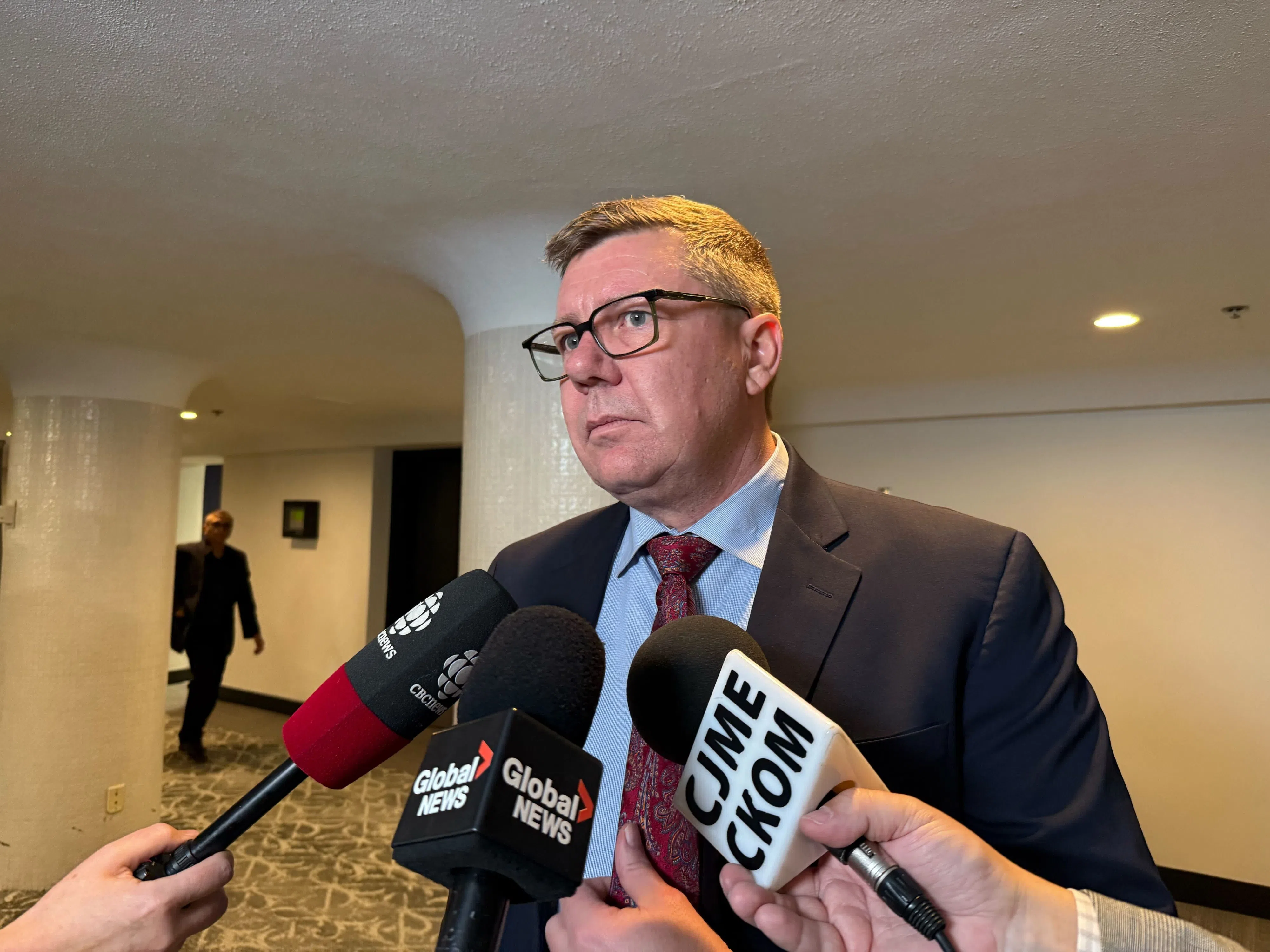
Moe said the province has had “boots on the ground” and representation in Washington, D.C., advocating for Saskatchewan as recently as just a few weeks ago. (Nicole Garn/980 CJME)
But Moe doesn’t seem too worried.
“With respect to these statements, we just take a breath and move on,” he said.
However, he did acknowledge that this does make for challenging conversations.
“The more quickly we’re able to get to a much more certain, free, fair and open trade environment … the better we are in this province and in this nation,” Moe said.
Moe made a point during his speech at the forum, and while speaking to media, about the importance of working with the federal government during times of uncertainty.
Canada’s 11 active potash mines are all found in Saskatchewan. In 2023, the Government of Canada said those mines produced an estimated 21.9 million tonnes of potash.
Chris Lane is the President and CEO of the Saskatchewan Trade and Export Partnership (STEP).
He said Canadian potash — meaning Saskatchewan potash — makes up about 80-90 per cent of potash used in the U.S. This means Saskatchewan exports a little more than half of its total potash to our neighbours down south.
While the U.S. is Canada’s biggest market for potash, it isn’t the only one.
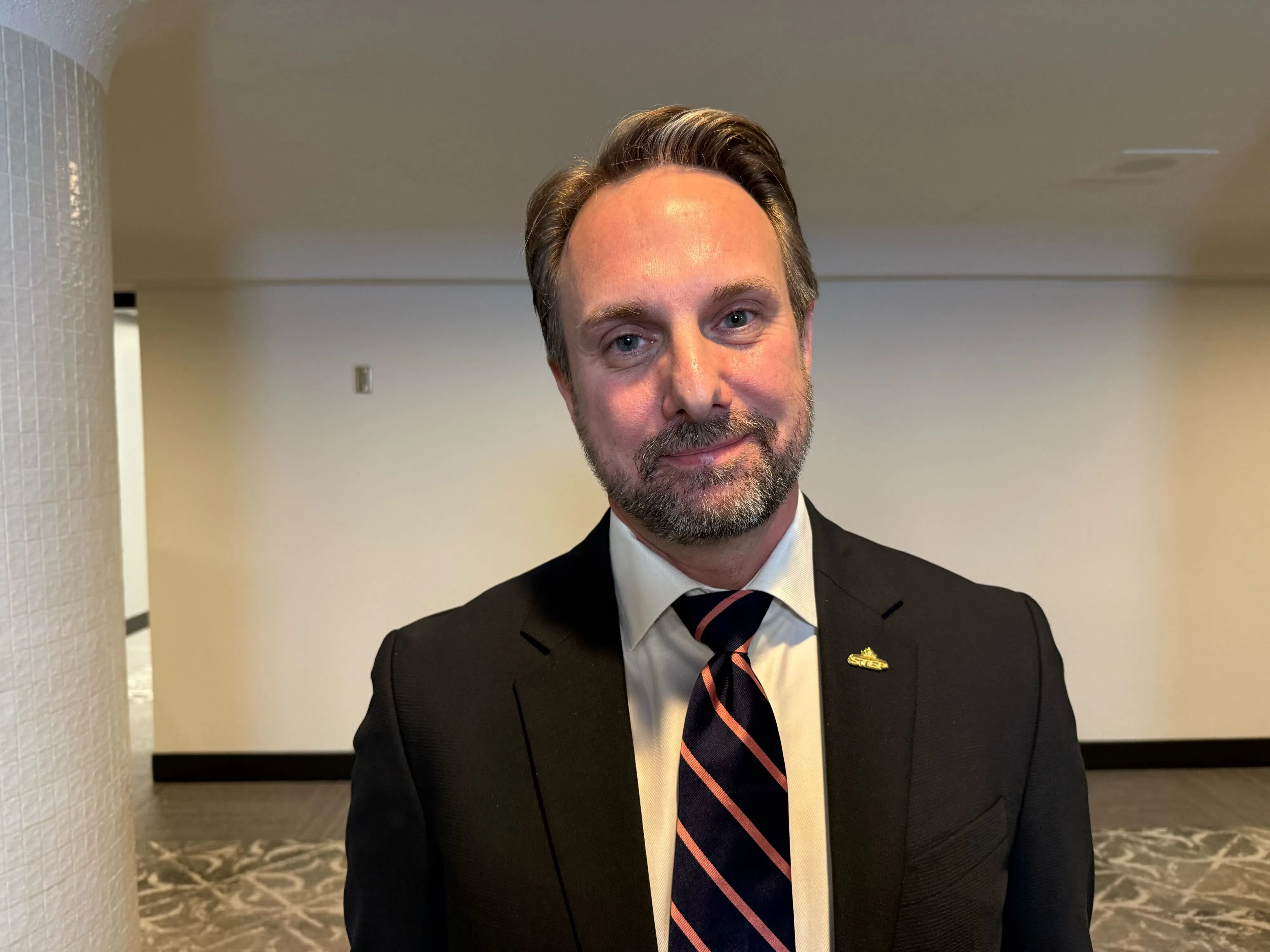
Chris Lane, STEP President and CEO, said it’s important to “take a breath” and make sure everyone understands what the real situation is. (Nicole Garn/980 CJME)
His message for Saskatchewan exporters is that it’s okay not to react right now.
“I think there’s a lot of value in not reacting too much to a declaration like that,” he said. “Separating the rhetoric from the reality on something like a tariff on fertilizer is an important message today.”
Lane said the reality is the U.S. does not have a lot of potash resources to turn to domestically.
“Canada fills that gap for the U.S.,” he said.
“Potash is a critical mineral, and the trade relationship that exists from mining it in Saskatchewan and shipping it to the U.S. is strong and will, in all likelihood, remain strong.”
He said Saskatchewan already has a strong diversification in many markets, saying the province sends products to more than 160 countries around the world.
Bill Prybylski, president of the Agricultural Producers Association of Saskatchewan (APAS), said the threat from Trump is confusing.
“I really don’t understand how putting American farmers at risk of not being able to access their potash fertilizer is gonna make a whole lot of sense, and (I’m) not too sure how that’s going to affect Saskatchewan producers going forward,” he said.
The uncertainty of the whole trade war continues to be troubling to producers, according to Prybylski.
While things like grains and other products farmers produce aren’t subjected to tariffs as they fall under the Canada-United States-Mexico Agreement (CUSMA), he said there is talk that that could be in jeopardy.
“It’s the whole uncertainty around it of what’s gonna happen next and will our commodities be affected by tariffs down the road? All that is added to the uncertainty in the marketplace and added stress to producers when they’re trying to market this year’s crops and plan for next year,” he said.
Prybylski shares similar thoughts to Moe when it comes to supporting the federal government. He encourages the government to continue to negotiate on behalf of all Canadian farmers and try to get a resolution as quickly as possible.
Trump was asked about profitability when it comes to fertilizer.
“A lot of it does come in from Canada. So we’ll end up putting very severe tariffs on that, if we have to, because that’s the way you want to bolster here,” Trump said.
“(If) you put very severe tariffs from coming into other countries, you’ll be making your own fertilizer.”
The announcement of the potential tariffs came after the U.S. announced a multi-billion-dollar funding package for its farmers.
— with files from 980 CJME’s Daniel Reech and Geoff Smith