
Murray Wood: Ugly wins still count
The Saskatchewan Roughriders had to battle from behind to beat the Toronto Argonauts, but they did. Murray Wood says the...
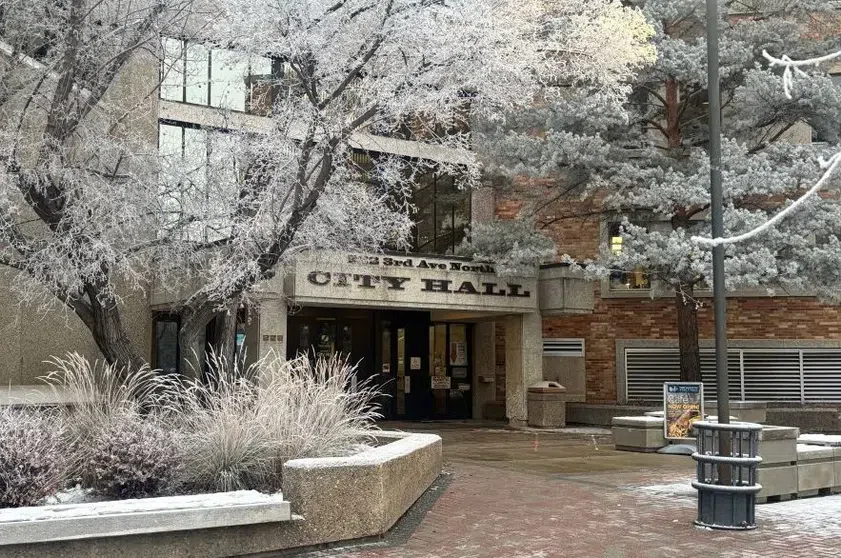
The latest property tax hikes could mean fewer jobs down the road in Saskatoon, say businesses representatives in the city.
Last week, city council voted to increase property taxes by 6.7 per cent for 2026 and 5.81 per cent for 2027.
Read more:
Keith Moen, executive director of the NSBA, Saskatoon’s Business Association, said the percentage for next year is the second highest tax increase in Saskatoon this century – and more work could have gone into lowering it.
It’s a sentiment shared by the Greater Saskatoon Chamber of Commerce’s CEO, Jason Aebig, who said this year’s budget deliberations didn’t keep affordability front and centre.
Instead, it was “about the revenue side of the ledger versus trying to find intentional cuts or savings,” he said, explaining how council could have reduced or eliminated certain programs and services, helping bring taxes down.
Aebig said businesses are the source of jobs and population growth in the city, since people coming to Saskatoon often do so because of an “economic opportunity” that’s waiting for them.
But these opportunities only exist so long as companies have enough room in their budgets to create them, and this latest property tax increase could jeopardize that, he said.
“We do run the risk of having our municipal taxes and utility rates outpace the capacity of our businesses to afford them. And we are getting, I think, very close to that point,” he said.
Once that happens, “we may be looking at a scenario here where it becomes less and less affordable for people to live here and for businesses to create jobs here, and that just means they’ll go somewhere else,” Aebig said.
For some businesses, though, it won’t be a case of moving elsewhere — they’ll just close.
While Moen acknowledged the inflationary costs facing the city, he said the increased property taxes are like another “pebble” being added to the backpack of businesses.
Eventually, the weight of increasing costs will present a challenge some businesses won’t overcome.
“There will come a point where businesses will not be able to pass along those costs to their customer base without losing those customers or their share of the market,” Moen said.
Instead of the 6.7 per cent increase, Moen said “it’d be nice” to see a figure around 2 per cent, matching the inflationary cost of the Consumer Price Index.
For Aebig, he said an increase of around 4.2 per “would have made sense.”
Although Aebig was hoping the new faces on city council would mean a break from “above average” property tax rate increases, that wasn’t the case.
“The process was better, [but] the outcome was the same,” he said, describing this year’s deliberations as a “missed opportunity.”
Even so, he said there were positive investments made into TCU Place, the Saskatoon Regional Economic Development Authority, and Discover Saskatoon, which are all key players in driving economic activity in the city.
He also acknowledged how the city kept focused on “staying in its lane” this budget cycle, funding the core services under its responsibility rather than covering those of other jurisdictions.
Read more: