
Sarah Mills: Critics don't define whether or not a movie is good
Filmmaker Taika Waititi has thrown a hissy fit on social media because critics don't like his movie, and neither do movi...
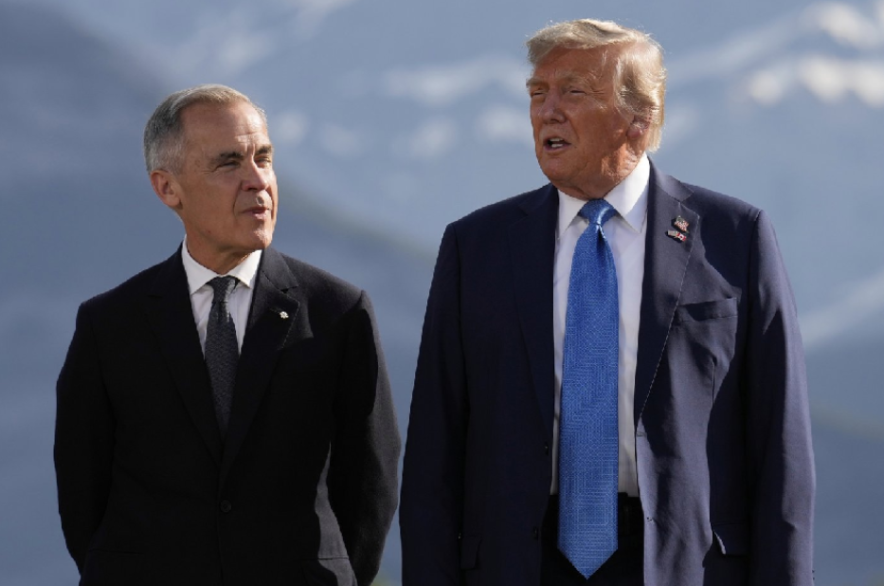
A blue wave sweeping United States politics may help Canada gain more leverage during trade negotiations.
The Democrats took control of the U.S. Congress during midterm elections on Tuesday night. Global National reporter Reggie Cecchini joined The Greg Morgan Morning Show on 980 CJME on Wednesday to explain what the political shift means for Canada.
Read more:
This transcript has been edited for length and clarity.
GREG MORGAN: For Canadians who are waking up to the headlines this morning, what’s the single biggest takeaway from these Democratic victories?
REGGIE CECCHINI: That there is a coalition problem within the Republican Party, and the MAGA brand that really worked for Donald Trump and the party as far back as 2016 is starting to fracture and fall apart. Whether it’s because there is an electoral shift just with the cohort of voters that went towards the Democrats, or because the Trump policies are having an impact in the states that Republicans used to think were just their own to carry. This is a reckoning for the Republican Party and a repudiation of Trump and his policies.
How does this result weaken President Trump politically?
CECCHINI: It weakens his standing, at least in the eyes of the American people, but it’s not going to weaken him by way of getting in the way of what he wants to do, because he still holds an incredibly powerful presidential veto. So even the majorities that we’re seeing for Democrats in the House – much bigger than we’ve seen for Republicans in recent years – unless they can cobble together some kind of supermajority, they can’t override the veto. They can put pressure on Trump, they can try to get extractions from him in order to move their agenda forward, but this is going to put Trump on defense for the next two years. But it’s not going to stop him completely.
Does a Democratic-controlled Congress mean less tension in Canada-U.S. trade relations?
CECCHINI: It means that there are more Democrats in Congress to try and get the attention of, to put pressure on Donald Trump. Democrats may be able to go to the White House and say, “Lessen some of the tariffs on Canada, and we will maybe open up conversations about opening up funding to keep the government funded down the road.” That’s kind of one of the pressure tactics they can use. The prime minister is going to have a talking point of, “Look, Mr. President, your tariffs are unpopular. Look at the states you lost, like Kansas and Maine and Michigan and Texas.” The question will be: does Donald Trump listen, or does he double down, thinking that that’s going to return the power to him?
Do you get the feeling that maybe Prime Minister Mark Carney will be slow to make a deal at the negotiation table right now, just to see how this pans out further?
CECCHINI: They said that a deal could be done in the next couple of weeks. It’s a question of whether the prime minister wants to wait and drag this out until the new Congress is actually sworn in and Republicans lose their control of Congress, which would not be until January. That’s a possibility, but there’s reporting to suggest that the U.S. trade rep wants to get something done as quickly as possible, and it’s possibly an understanding here that Democrats will try to get in the way and will try to, you know, take what they can from the White House starting in January. So Canada has a new friend in Washington. It’s unclear how complicated that friendship is going to get, with Donald Trump still in the office.
There really doesn’t seem to be any sort of uproar over the election results from either Trump or his Republican mates. There are no shouts of “Rigged!” at all. Are you surprised?
CECCHINI: For the last year we’ve been talking about what Republicans could do, what Trump could do, what the Department of Justice could do. But realistically, the elections went off without a real hitch. I think what we’re seeing now is Donald Trump trying to rework history up until the point of the last ballot being cast, where he’s now telling conservative outlets, “Well, this isn’t my fault. These are flawed candidates. I wasn’t on the ballot.” But remember, Trump told voters that he wanted them to think that he was on the ballot, and he handpicked many of the candidates that lost their races last night, so there is a reality that is going to set in here. What happens after that reality sets in is the thing to watch.
Let’s say six months from now, what is one headline involving Canada and the U.S. that became more likely because of what happened last night?
CECCHINI: Six months from now, is the trade war settled between the two nations, or is it doubled down? This goes beyond just trade talks between Canada and the U.S. There is sovereignty that has been thrown into the question. If Democrats start to frustrate Donald Trump, does he take that aggression out on Canada or on other allies of the United States, and does it force Canada to kind of make alliances or build and strengthen alliances elsewhere? There’s going to be a lot of unpredictability here over the next six months and over the next two years, and it’s partly due to the fact that Donald Trump also has to deal with a Democratic-controlled Senate, and he’s never had to deal with that since he’s been in office.