
Murray Wood: Who's hot... and who's not
Every Friday, Murray Wood takes a look back at the week's news and decides who's hot... and who's not. This week's list ...
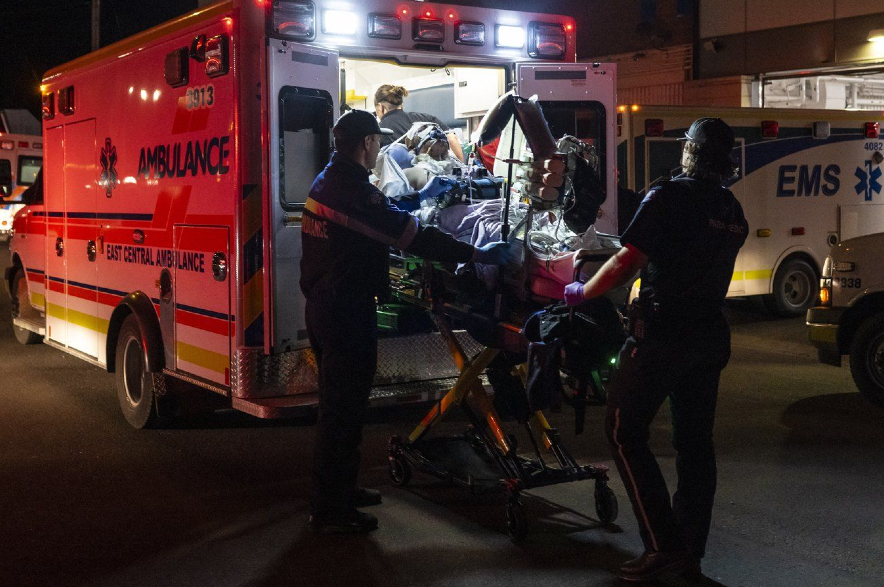
Burn victims from last week’s deadly fire in Wainwright face a difficult road to recovery. Four people died in the fast-moving fire, and 39 were hospitalized, officials said. As of Oct. 22, officials say 27 victims remain in hospital, including 13 in critical condition..
Dr. Mark Jeschke, director of the Burn Program at Hamilton Health Sciences Centre, talked to Evan Braythid week, and described recovery from serious burns as a long process that could take months or years.
Read more:
The following interview has been edited for length and clarity.
“A burn patient is the sickest patient in the hospital,” Jeschke said. “All your organs are affected, and that is the challenge we as care providers face.
He said if a “at least 20 per cent” of a patient’s body is burned that is defined as critical and it’s extremely important that victims receive specialized care.
“Burn care has evolved, and it used to be much more rudimentary and not as focused on pain and mental health as we do nowadays.”
Despite modern treatments, he added that burn patients experience significant anxiety and pain.
Acute Care Alberta CEO Dr. Sayeh Zielke has said victims would receive specialist treatment at dedicated burn centres in Edmonton and Calgary.
“Ontario has sent 19 specialized burn nurses and five OR nurses to supplement our own staffing contingent,” Zielke said.
Jeschke pointed out that victims are supported by a team of dedicated professionals.
“They’re phenomenal. They keep the patients alive,” he said.
“It’s physical therapists, nurses and psychologists dedicated completely to the recovery and survival of burn patients, and obviously to try to restore quality of life.”
Donated blood and plasma are also essential to the recovery process, as is skin tissue.
“We get the skin via the tissue bank,” Jeschke explained. “We obtain the skin from people who donated their skin after they passed.”
Ultimately, Jeschke said the process doesn’t end when a victim’s wounds are covered and they leave the hospital.
“Recovery is a long way, but it is not impossible to do. This is where the families are so crucial to support the loved ones along this way,” he said.
“They need them to motivate them to keep their heads up and say, ‘Look, let’s keep going,’ because there is no giving up.”
Read more: