

Sarah Mills: Left-lane hoggers are everywhere
Passing lanes allow a faster driver to pass another vehicle. But Sarah Mills says it seems the left-lane hoggers have es...
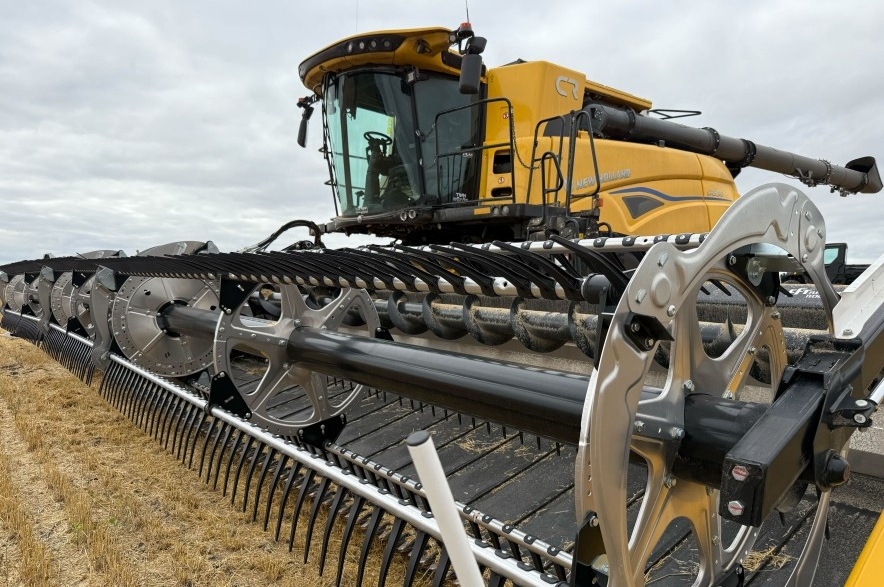
Saskatchewan’s 2026 harvest is nearly complete.
According to the latest crop report from the Saskatchewan Ministry of Agriculture, which covered the week ending on Monday, harvest is 97 per cent complete across the province, up from 93 per cent last week, thanks to some favourable weather.
Read more:
“Harvest entered the final stretch, with only a small number of acres left to be combined,” the agriculture ministry said in its report. “Producers continue to take advantage of available harvest opportunities to bring in the remaining crops and wrap up harvest activities for the season.”
Harvest is 99 per cent complete in the province’s southwest and west-central regions, the ministry said, while the northern regions are sitting at 97 per cent complete. Harvest is sitting at 96 per cent completion in the east-central region, while the southeast is at 95 per cent.
All of Saskatchewan’s chickpea, fall rye, mustard, triticale and winter wheat crops are now in the bin, the provincial government reported, while barley, durum, field peas, lentils and spring wheat are all sitting at 99 per cent complete.
The final push to get the crops in the bin was helped by very limited precipitation in the province over the past week. Some areas only saw trace amounts of rain, the ministry said, while the Foam Lake area got 12 millimetres.
“With the growing season ending, the precipitation resulted in little change to provincial topsoil moisture conditions,” the agriculture ministry noted.
Provincially, topsoil moisture in cropland was rated as four per cent surplus, 84 per cent adequate, 11 per cent short and one per cent very short. In hayland, topsoil moisture levels were three per cent surplus, 82 per cent adequate, 14 per cent short and one per cent very short. In pastures, moisture was rated as one per cent surplus, 74 per cent adequate, 22 per cent short and three per cent very short.
The most common sources of crop damage during the week ending on Monday were wind and frost, the agriculture ministry said.
With harvest winding down for the year, the ministry said farmers are turning their attention to fall field work and preparing for the winter months. Grain farmers are busy applying herbicide and fertilizer, harrowing their fields and servicing equipment, while livestock farmers are hauling bales, moving animals home for the season and marketing their animals.
“Livestock producers report generally adequate winter feed supplies across the province,” the ministry said.
“Increased precipitation during the growing season supported forage production and contributed to the availability of feed supplies heading into the winter months.”
For hay, winter feed supplies were rated as 20 per cent surplus, 79 per cent adequate and one per cent short. Grainfeed was sitting at 15 per cent surplus, 84 per cent adequate and one per cent short. For silage, supplies were sitting at 11 per cent surplus and 89 per cent adequate, while straw supplies were rated at 20 per cent surplus, 79 per cent adequate and one per cent short. Feed grain supplies were at 23 per cent surplus and 77 per cent adequate.
The ministry said it will not publish a crop report next week, saying the final crop report of the 2026 season will be released on Nov. 5.
A full version of the crop report can be found on the agriculture ministry’s website.