

Sarah Mills: Left-lane hoggers are everywhere
Passing lanes allow a faster driver to pass another vehicle. But Sarah Mills says it seems the left-lane hoggers have es...
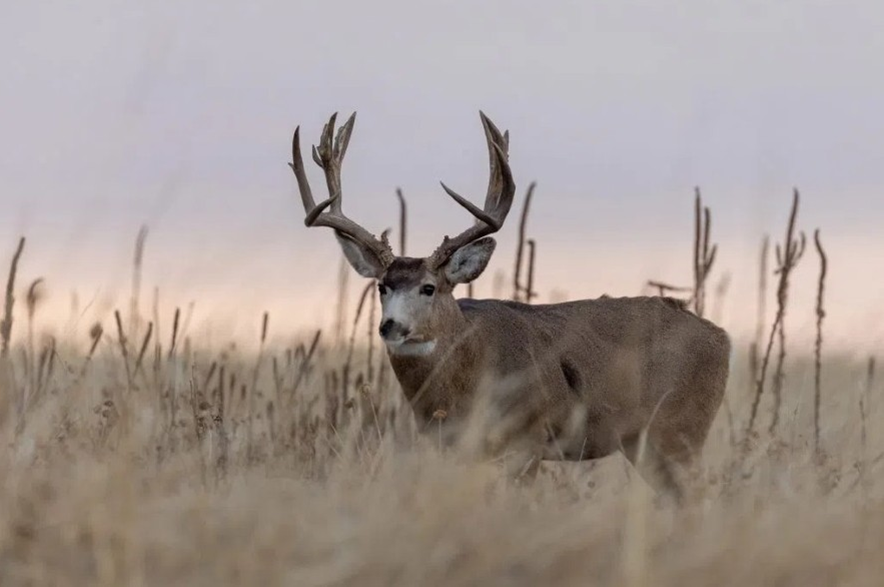
Saskatchewan’s chronic wasting disease testing program won’t see changes during the 2026-27 hunting season.
While the provincial government previously said it planned to eliminate the testing service, Premier Scott Moe later said the government would reconsider the decision.
Read more:
On Thursday, the province announced that testing will go ahead as usual this hunting season, with mandatory testing in certain areas of the province and voluntary testing offered to hunters elsewhere. The government said it received feedback from hunters who emphasized the value and importance of the testing program.
“We heard clearly from hunters that access to CWD testing matters to them and their families,” Darlene Rowden, Saskatchewan’s environment minister, said in a statement.
“Returning to the previous testing approach will provide hunters with information to support their decisions and maintain important surveillance information to support wildlife management.”
Chronic wasting disease affects the brains and nervous systems of deer, elk and moose. Health Canada recommends against consuming meat from animals known to be infected, despite there being no recorded cases of the disease in humans.
The Government of Saskatchewan said under the renewed testing program, hunters can submit samples to the environment ministry for testing on a voluntary basis, while mandatory testing requirements will stay in place in certain wildlife management zones. The ministry will also test samples it previously accepted from hunters in voluntary testing areas.
“The revised approach will allow the ministry to continue collecting information about the prevalence and distribution of CWD, support wildlife health monitoring and provide individual hunters with the status of submitted samples,” the environment ministry added.
Testing and sample-submission information can be found on the provincial government’s website, and the ministry said hunters will be notified of the updated requirements by the end of the month.
Speaking with reporters at the Legislature this afternoon, Darlene Rowden, environment minister, said the province made a mistake.
“Listen, I’m recognizing that we made a mistake. Sometimes decisions get made with not all the right voices there,” she said.
She admitted that hunters, conservation officers, the Saskatchewan Wildlife Federation and other stakeholders were not consulted before the initial decision was made and announced last week.
And the province heard swiftly from all of those groups.
“Well, OK. So, different — many MLAs. I don’t know how many, but different rural MLAs were telling me that there were calls or emails to their offices. Mine was included,” she said, but did not provide a number.
Rowden said while the voluntary CWD testing program will continue this year, its future remains uncertain.
“The coming seasons are all going to greatly be impacted by the conversations we have with hunters, and Saskatchewan Wildlife (Federation), and stakeholders that we affect,” Rowden continued.
Trent Wotherspoon, the NDP critic, gave a thumbs-up to those who spoke out against ending voluntary testing.
“The fact that they (government) made this announcement to scrap this program without any consultation with the hunters of Saskatchewan…without any understanding of the consequences…this was a really bush league, short-sighted choice of this government,” he said.
He also said he’s “sure glad” the decision was reversed.
Currently, only one lab, at the University of Saskatchewan, tests deer, moose, and elk heads for CWD, and results can take several weeks.
–with files from 980 CJME’s Gillian Massie & Lisa Schick and 650 CKOM’s Lara Fominoff