
Sarah Mills: There are always things for which we should be grateful
Sarah Mills says that even in tough times, we all have things we should be grateful for over the Thanksgiving weekend.
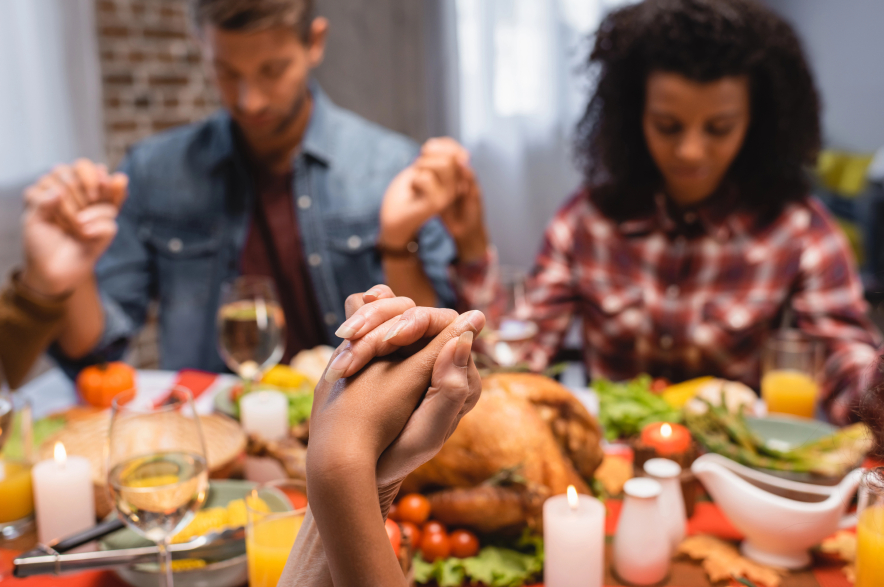
EDMONTON — Some families and friends across Alberta are set to gather for a Thanksgiving meal this weekend with the hope that the only thing that gets roasted is the turkey.
Sarah Batchelor says politics will be off the dinner table at her home in Airdrie, a city north of Calgary, so her loved ones don’t end up arguing with one another over the Oct. 19 vote on separation.
Read more:
“At the end of the day, when we sit down, we’re not that far apart on a lot of the concerns,” says Batchelor, a music teacher who plans to vote to stay in Canada.
“We’re just very divided on where the blame should be placed.”
In a central Alberta town, Kathy Bradshaw says she plans to be more careful with her words as the vote nears.
“It’s a little tense,” says Bradshaw, a 64-year-old resident of Sylvan Lake, who has already voted to remain in Canada.
Albertans are set to vote in person in nine days on 10 questions. The 10th and most debated question will ask whether they want to stay in Canada or have a second, binding referendum on leaving Confederation.
The debate has become personal and ugly in some workplaces and among some families and friends.
Bradshaw says there has been more tension lately in her office.
“I love my work and I love my colleagues, so I sense their discomfort when it comes up,” she says.
Some of her co-workers, who she has been working with for decades, plan to vote to leave.
“People say to me, and this I find the most ridiculous, ‘I don’t want to separate, but I want to send Ottawa a message,'” she says.
“And I keep saying to them, ‘If they know the gun is fake, why do you think the teller is going to hand over the money.'”
In Edmonton, Sheree Zielke, 71, says she has been feeling similar tension, but with her neighbour.
Zielke says she wants to see an independent Alberta, unlike the family she has lived next to for decades.
“(We) don’t talk as much, let’s put it that way. There’s no arguments.”
Batchelor says the debates have been overwhelming.
“I’m feeling more dysregulated just because of the extra stress and having to navigate those conversations carefully at (my work) and even within my home.”
Since Alberta Premier Danielle Smith ordered the vote in May, disputes have also erupted across small towns.
A rodeo parade in the town of Sundre, northwest of Calgary, was cancelled in June amid threats and abuse after parade organizers rejected a float festooned with Alberta flags they feared would be viewed as a political statement.
A pro-separation billboard in the southern town of Taber also garnered attention that same month.
Separatist Cory Morgan, who paid for the billboard, refused to take it down despite an order from the town claiming it was a public nuisance.
Smith has said she supports Alberta staying a part of Canada and plans to vote that way in the referendum. She has also said that hundreds of thousands have signed petitions for and against separation, and it’s time to put the issue to rest.
Critics, pointing to long-standing opinion polls indicating massive support for Alberta staying in Canada, have accused Smith of calling the vote to appease separatists hardliners in her party.
Lara Descartes, a family studies professor at Ontario’s Western University, has some advice for Albertans nervous about tension over the separation debate with loved ones peaking in the coming days.
“Lower your expectations,” she says. “Don’t expect it to be perfect.”
She says differences are normal.
“People are their own individuals with their own histories and beliefs. Some of them may never mesh with our own, but it’s part of life,” she says.
“Accepting this can let us take responsibility for our own emotional state.”
Archbishop of Edmonton Stephen Hero is one of five Catholic bishops in the province who recently penned a letter to parishioners calling on them to cast a vote, and think carefully about the potential impact of it on vulnerable people.
The Oct. 1 letter alluded to the questions on immigration, including whether the government should have more authority to impose limitations and financial guardrails around some newcomers.
The letter said Catholics may reach different conclusions about what is in the interest of the common good, but “whatever the outcome, our responsibilities to one another will endure.”
In a recent interview, Hero acknowledged that the referendum has been polarizing, within families, workplaces or even in churches.
So, he said the call is to be respectful of each other’s decisions and to listen to each other carefully.
He said: “(To) love one another, and not let it divide us, whatever happens.”
— with files from Lisa Johnson
Read more: