
Murray Wood: When words fail, stuffed animals can say a lot
Murray Wood says people in Foam Lake and communities across Saskatchewan are putting stuffed animals outside to remember...
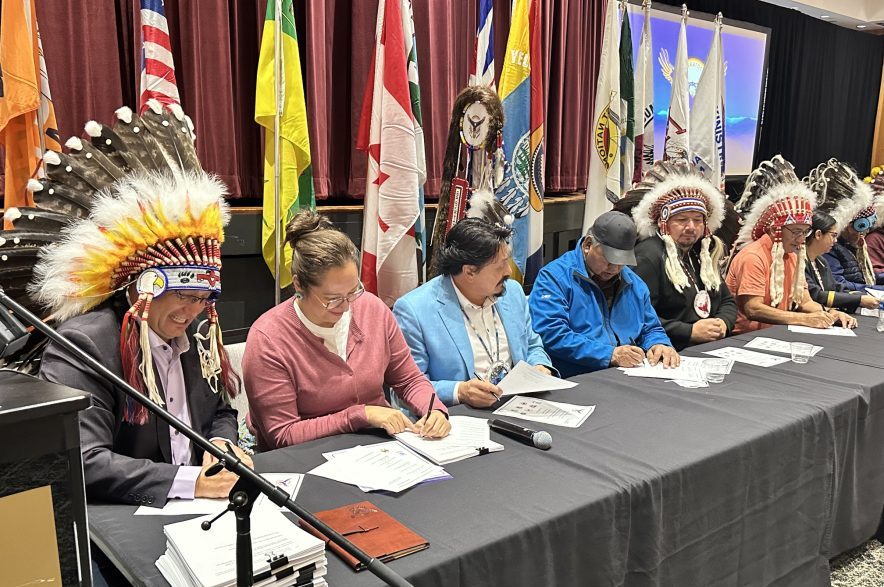
The federal government has committed $269 million in funding over the next seven years as a step toward supporting children, families and young adults through a new child welfare agreement with First Nations in Saskatchewan.
The seven member nations of the Saskatoon Tribal Council (STC) – Kinistin Saulteaux Nation, Mistawasis Nêhiyawak First Nation, Muskeg Lake Cree Nation, Muskoday First Nation, One Arrow First Nation, Whitecap Dakota First Nation and Yellow Quill First Nation – signed the regional agreement Wednesday, alongside STC chief Mark Arcand and federal Minister of Indigenous Services, Mandy Gull-Masty.
Read more:
Since 2018, the Saskatoon Tribal Council has been working under what it calls its progressive model for child welfare, focusing on prevention efforts that keep children out of the Child and Family Services system and on keeping children connected with their families, culture and communities.
That model formed the basis for this regional agreement, a step toward long-term reform of the First Nations Child and Family Services Program in Canada. Gull-Masty said work is being done across Canada to advance similar regional agreements.
The minister said the purpose of the $269 million in federal funding is to turn First Nations priorities into action for children from their communities.
“That funding is going to give nations the stability and flexibility they need to make decisions about where resources should go and how to best deliver them,” Gull-Masty said at Dakota Dunes on Wednesday morning.
She said the funding will support prevention services “so families can get help earlier before challenges become crises and before families are separated.”
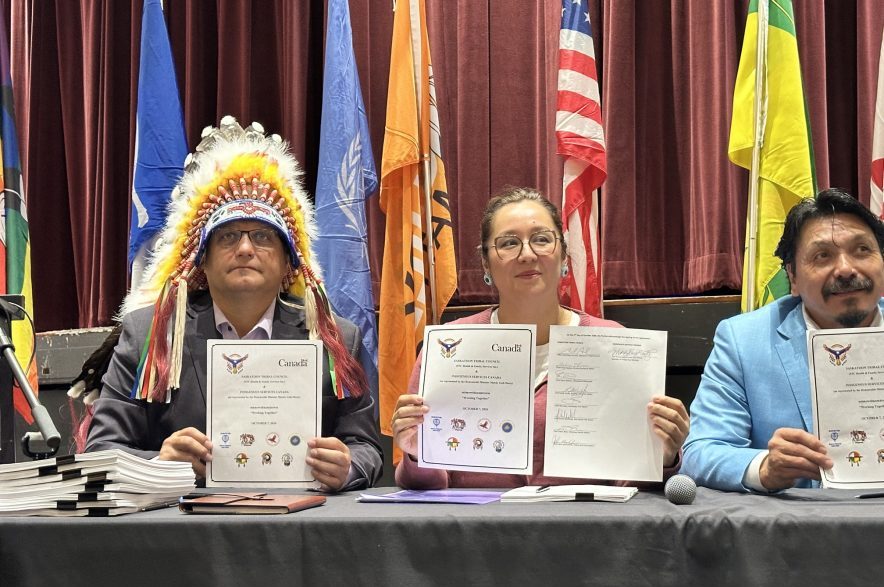
Saskatoon Tribal Council chief Mark Arcand, Minister of Indigenous Services Canada Mandy Gull-Masty and Whitecap Dakota Nation chief Darcy Bear hold up signed regional agreements at Dakota Dunes on Oct. 7, 2026. (Libby Gray/650 CKOM)
It will also provide housing supports to meet the basic needs of families, First Nations representative services to give communities a direct role in supporting children and families navigating the system, and buildings and spaces needed to deliver services, including through new construction, repairs and renovations.
Support for children aging out of care and young adults formerly in care will also be provided to aid the transition to adulthood.
“We want to ensure that if those needs left unmet are supported, when it could potentially result in children being placed in care,” Gull-Masty explained.
“This is what reform looks like, giving First Nations not only the authority, but the resources and flexibility to support families earlier, respond to their priorities, and strengthen those very families, and help children remain connected to their community and their identity.”
“I can stand up in front of all of us and all of our people in front of Canada because the outcomes and the results that these programs are showing for our families is undisputable,” said Arcand, speaking of the positive results their child welfare model has generated. “Government recognizes that when they approached us.”
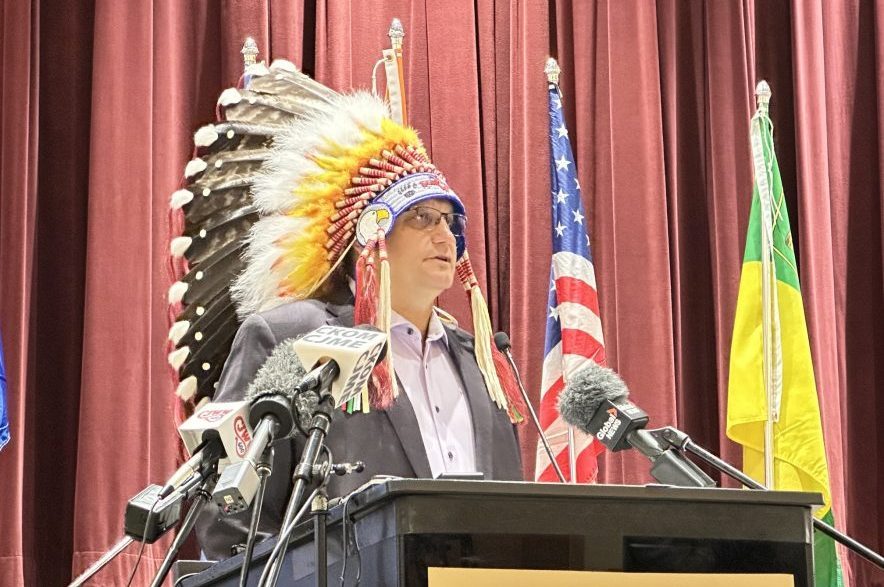
Saskatoon Tribal Council chief Mark Arcand speaks at Dakota Dunes on Oct. 7, 2026, speaking about the new regional agreement on First Nations child welfare. (Libby Gray/650 CKOM)
Arcand emphasized the need for unity and teamwork to ensure this child welfare model is successful for Indigenous children and families.
“We’re proud of the fact that our outcomes and our results are being looked at and saying you are doing good work as the nations, your prevention program is working, the agency is working good. We’re working together.”
“The progressive model and the agreement that we’re signing today is another step to help communities to get to that stage where you never lost jurisdiction,” Arcand explained. “You never gave up the right to your children, and when we think about the day-to-day operations of the funding that we receive, we look at it as an opportunity to make a difference in children’s lives and families’ lives.”
Gull-Masty added that this agreement is what self-determination looks like to her.
“This is the first step in something that we are going to do that is going to have a lasting impact on generations of First Nations children and their families.”
The minister said regional agreements provide an option that is not one-size-fits-all for communities to best tailor solutions to their cultural, circumstantial and language needs while recognizing the authority of First Nations themselves being best positioned to help their own children and families.
“They provide flexibility to shape services around those realities and put them firmly in the lead,” Gull-Masty said, noting that the Saskatoon Tribal Council has already demonstrated leadership in that space with the success of its “leading” progressive model.
“With today’s agreement, we are building on that work,” the minister stated.