

Murray Wood: No collector plate for you!
Murray Wood is puzzled and annoyed by all of the "collector" licence plates on vehicles that will never be def...
That wasp nest near your home might not look like it did back in the day.
Shawn Sherwood from Poulin’s Pest Control said on The Greg Morgan Morning Show that the phone is ringing off the hook from people dealing with wasps in Regina.
He said most wasp nests are usually found now in cracks, crevices and underground.
Read more:
The following questions and answers have been edited for length and clarity.
GREG MORGAN: Are the wasps backing off yet?
SHAWN SHERWOOD: No, they’re every day’s biggest concern, and the nests are ginormous now. There are thousands and thousands of them (wasps) giving people grief. But either get them treated now or wait a couple, three more weeks; once it’s negative numbers, they’re done.
Are wasp nests more prominent in that cocoon-like thing that we get to see in pictures, or are they going into cracks of homes and buildings more so?
SHERWOOD: Most of the time now, we’re seeing them in cracks and crevices and underground. Probably 80% of them. Those paper nests seem to be slowly becoming a thing of the past.
Why are those spots more common for nests now?
SHERWOOD: I’m not really sure. I think probably what we’re seeing here is that the juvenile queens are used to living underground because that’s where they’ve been raised, and so that’s become their learned behavior when they come out in the spring, and that’s what they’re looking for. I think it’s just evolution that we’re watching.
Is your phone ringing constantly off the hook with people saying they have a wasp problem?
SHERWOOD: Yes sir it is and we have people coming in with cases of powder disappearing off the shelves for the do-it-yourselfers.
Do you put the powder in the crack or wherever the nest is and the wasps transport it back and forth to the queen?
SHERWOOD: Absolutely, and I mean the sprays are good for the hanging nests, but the hanging nests are disappearing. We’re not seeing them very often.
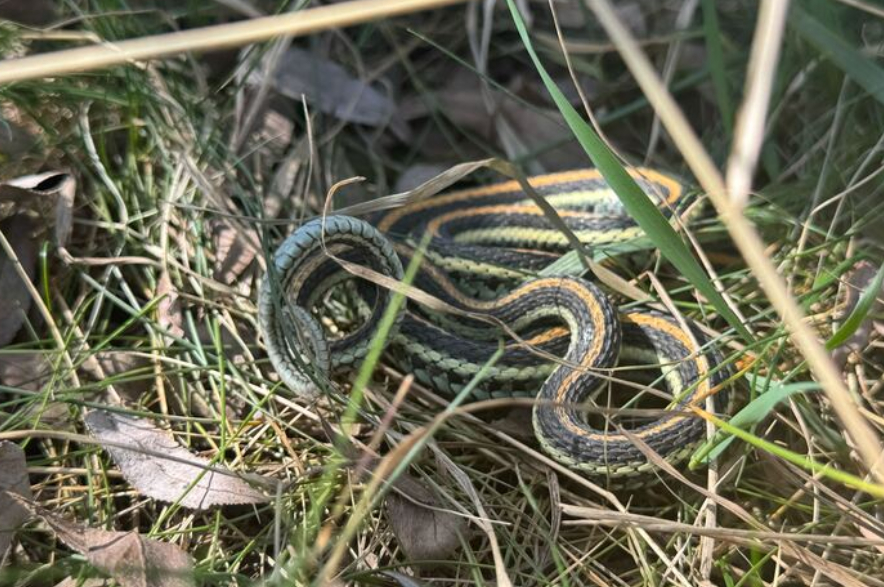
Garter snakes seem to be invading Saskatchewan quite heavily. Is that something that has grown in numbers over the years in our province?
SHERWOOD: We’re starting to see a little bit of a resurgence in the garter snake populations. It used to be a thing that everybody wanted to get rid of them, but we’ve become a little more educated, and people are now realizing just how beneficial they are.
How are garter snakes beneficial?
SHERWOOD: Let’s look at their diets: they eat grasshoppers, they eat bugs, they eat worms, they eat small frogs and toads, they eat lizards, they eat mice and moles; I mean, they’re my competition out there in the summer.
Are garter snakes protected by any wildlife act at all?
SHERWOOD: Not that I’m aware of. The downside with garter snakes, I mean, we don’t usually go after them because they’re so beneficial. But there are so many licensed products to use against them, so what you’ve really got going for you is manual removal.
What can property owners do, at least to stop them from becoming a problem inside?
SHERWOOD: They’re really not going to go inside. They’re coming in the spring when they come out of their dens. They travel hundreds and hundreds and hundreds of miles over the course of a summer. But every fall, once they determine it’s time, they all come back to the same den, and they’re going to hang out outside right now for a little while because it’s still warm during the day, but eventually they’re heading into that birth den and they’re going to spend the winter there. So they don’t bite; they don’t cause you any problems. They may freak a few people out, but just leave them alone and let them do what they do. They’re harmless.