

Murray Wood: Who's hot... and who's not
Every Friday, Murray Wood takes a look back at the week's news and decides who's hot... and who's not. This week's list ...
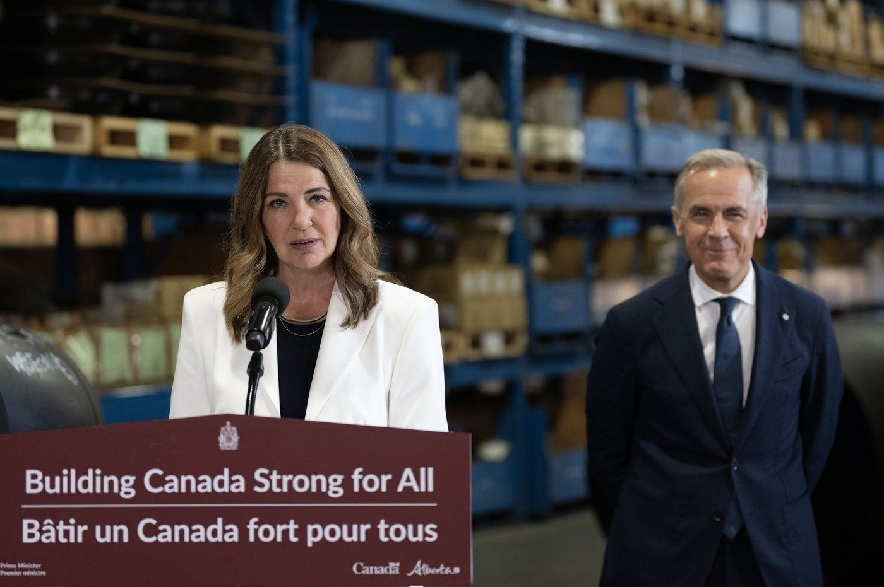
A proposed pipeline project is starting to take shape, and one expert says it could have a major impact on Canada’s economy and foreign policy.
Pacific Link, a million-barrel-per-day oil sands pipeline to the West Coast, is the first to receive a national-interest designation under Ottawa’s Building Canada Act. The federal legislation, which was enacted in June of 2025, aims to fast-track the approval process for major projects deemed to be in Canada’s national interest.
Read more:
Heather Exner-Pirot, the director of energy, natural resources and environment at the Macdonald-Laurier Institute, joined The Evan Bray Show on Friday to explain how the project could unfold.
“This is the first project they’ve designated in the national interest, which will speed things up and, I think, bypass a lot of the headaches that TMX faced just a few years ago,” Exner-Pirot said.
While most of the federal government’s announcement on Thursday was long expected, Exner-Pirot said there was some new information shared as well.
“The things that we did learn yesterday, one is there will be an equity option for Indigenous nations along the route, up to 10 per cent, and the other one was that they do intend to have an open season on the pipeline in spring 2027,” she said. “That’s coming up pretty quickly. An open season is when shippers or oil producers will make binding commitments to that pipeline.”
The goal is to have conditions finalized by next September, with operations beginning in 2032 or 2033.
Exner-Pirot said it’s a reasonable time frame that shouldn’t fall behind schedule.
“It’s possible technically and logistically to do it in that timeline. I think this designation matters symbolically, and the timeline matters because our customers are in Asia and they’re dealing with a crisis right now,” she said.
“And if they don’t think Canadian oil is coming in a reasonable amount of time, then they do have to start looking elsewhere, so I think this is (Prime Minister Mark) Carney saying to Korea and Japan and Taiwan and India that this is not going to be the usual Canadian quagmire. This is not going to go years over budget. It’s not going to go through legal delays. We are going to get this oil to you when we say we’re going to get this oil to you.”
But, Exner-Pirot added, the first challenge will be filling the pipeline.
“It takes a lot of time to produce an additional million barrels of oil, and we know that we already had the South Bow Bridger pipeline going to the United States, the TMX expansion already happening, and Enbridge Mainline expansion. There’s a lot of pipe that’s going to need to be filled,” Exner-Pirot said.
But despite the potential challenges ahead, she said this is a project that’s been a long time coming.
“This is too obviously in Canadian self interest, for foreign policy reasons, for economic reasons, for confederation reasons, and you have, frankly, the almost bottomless budget of Alberta and Canada willing to be dedicated to this,” Exner-Pirot said.
“We always needed another West Coast oil pipeline to Canada. It was always inevitable, and finally the stars are aligning to make it happen.”