

Murray Wood: Who's hot... and who's not
Every Friday, Murray Wood takes a look back at the week's news and decides who's hot... and who's not. This week's list ...
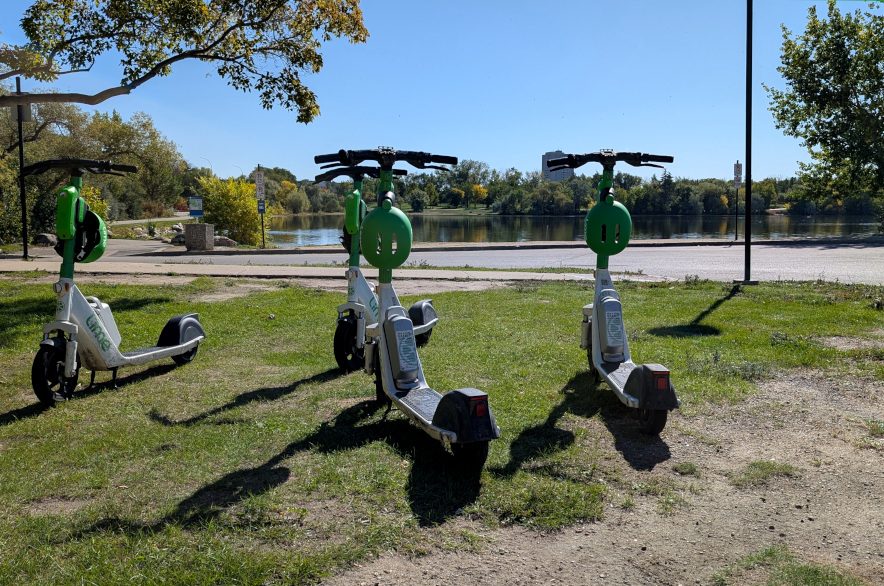
On a quiet day, you might be able to hear the whirring before they glide past; in noisy rush hour traffic, likely not – but e-scooters and e-bikes are no longer a rare sight in many Saskatchewan cities.
The rentable e-scooters have been around for a couple of seasons now in Regina and Saskatoon, but the privately owned versions, along with e-bikes, have become more popular. And at the same time, concerns and complaints about them have risen.
This week, the worst happened when a man died after a crash involving an e-bike in Regina.
The Regina Police Service has seen an increase in calls to its traffic complaint line about the small electric vehicles. Constable Mike Seel said earlier in the summer that, over the preceding few months, at least a quarter of the complaints that came in to the traffic complaint line were about younger children driving their scooters on the road.
This is happening in part, according to Seel, because people are buying e-scooters or e-bikes without knowing that there are laws about them in Saskatchewan.
“A lot of times it’s people buying them online because they don’t look at the instruction manual, see how powerful it is, what it’s actually equipped to be,” he explained.
When an incident involves young kids, Seel said officers will try to let them know the rules.
“A lot of times, it can just be a good education tool to pull the kids over, have a chat with them, get them to call their parents … get the parents to come pick it up, and educate the kids and the parents about why they can’t be driving on the road,” said Seel.
In a statement, the Saskatoon Police Service said its officers have similar experiences.
“It is commonly found that those using these modes of transportation are not fully educated on how or where they can be used and, as such, education rather than enforcement is determined to be the most appropriate outcome,” read the statement.
Beyond education, both cities have bylaws around e-scooter and e-bike use that can result in fines, and Seel said it could even go as far as a criminal charge. He said there was an incident where a group of kids riding e-dirt bikes wouldn’t stop for police and had to be chased by the police plane.
But Seel also said the result of not following the regulations can be worse.
“Sometimes these kids aren’t following the rules of the road, so if they don’t stop for a red light and someone’s not paying attention, and a kid gets hit by, let’s say, a truck going through an intersection on a red light, that’s going to end up with either a fatality or very serious injuries,” he explained.
Saskatchewan has a set of rules for public roads in the whole province, and municipalities can add their own on top of that.
When it comes to e-scooters, a rider has to be at least 16 years of age, wear a helmet, drive solo and not tow anything behind them. They can only drive at a maximum speed of 24 km/hr and must follow the rules of the road.
There are also technical rules for e-scooters, like the wattage can only be up to 500, the maximum weight can only be 45 kg, and it needs to have brakes that will stop it within nine metres at full speed.
E-bike riders can only be as young as 14 years of age, must wear a helmet, and can’t be driven faster than 32 km/hr with the electric motor.
The power rating for e-bikes can only be up to 500W as well; anything more powerful is considered a motorcycle and would then fall under all those licensing and equipment requirements.
In Regina, the local bylaws further restrict the speed for e-scooters to 15 km/hr on pathways. Both e-bikes and e-scooters are allowed on roads, bike lanes and multi-use pathways but are not allowed on sidewalks.
Saskatoon’s municipal bylaws are similar, but also include a possible fine for parking e-scooters outside designated areas.
Looking at e-bike and e-scooter regulations across the country, it’s a patchwork among provinces and even within provinces themselves.
Some, like the Northwest Territories, Yukon, Nunavut, and Newfoundland and Labrador, don’t have specific regulations province-wide.
Most provinces that have regulations have pegged the speed limit for e-scooters around 24 or 25 km/hr, and have set the age minimums to between 14 and 16 years. This fall, Nova Scotia is implementing a law to set a minimum age for e-scooter use at 14.
Provinces like B.C. are still testing things out, running a multi-year pilot project in specific areas of the province to test things out.
And other provinces have allowed the use but have left it up to municipalities to work out the finer details. Ottawa, for example, has come up with rules nearly identical to Saskatchewan’s, though it only requires anyone under 18 to wear a helmet.
Those who sell e-scooters and e-bikes in store say they’ll let buyers know the rules.
Bert Seidel is the sales manager at Western Cycle Source of Sports in Regina. He said all the e-bikes he sells are street legal for Saskatchewan.
He’s been getting more parents in this year looking for e-bikes for their kids, and he’ll give them a lesson on the regulations, particularly the age limit.
“When parents ask, I’ll be frank about it, it’s like, yep, (under 14) they can ride the bike obviously on the acreage, on the farm, but on public roads they wouldn’t be allowed to,” he said.
E-scooters are more often sold at bigger chain stores like SportChek, Canadian Tire and Walmart. Salespeople at those stores said the specs on their e-scooters match Saskatchewan’s regulations, and one or two said they would help customers understand the rules but wouldn’t do anything like check the age if a teen came in to buy one.
However, Constable Mike Seel with the Regina Police Service said more people are buying their e-bikes and e-scooters online, and those retailers wouldn’t necessarily know what the regulations are for Saskatchewan.
He said the onus is on the person buying and using the device to make sure it’s legal.
Despite an increase in use, concerns, and police complaints, the appetite for more regulation seems to be low.
Seel wasn’t sure if more rules were needed.
“They could make as many regulations (as they want), but it’s up to the people to decide whether they wanted to follow the rules or not,” he said.
City councillors in Regina and Saskatoon varied as to whether they’d heard many complaints about the vehicles, but nearly all said that having kids outside, having fun and playing with them was a good thing.
In Regina, Victoria Flores said she hadn’t heard much about them from people in her ward, and Clark Bezo said he’s only really heard about a need for some kind of illumination device to make them easier to see at night.
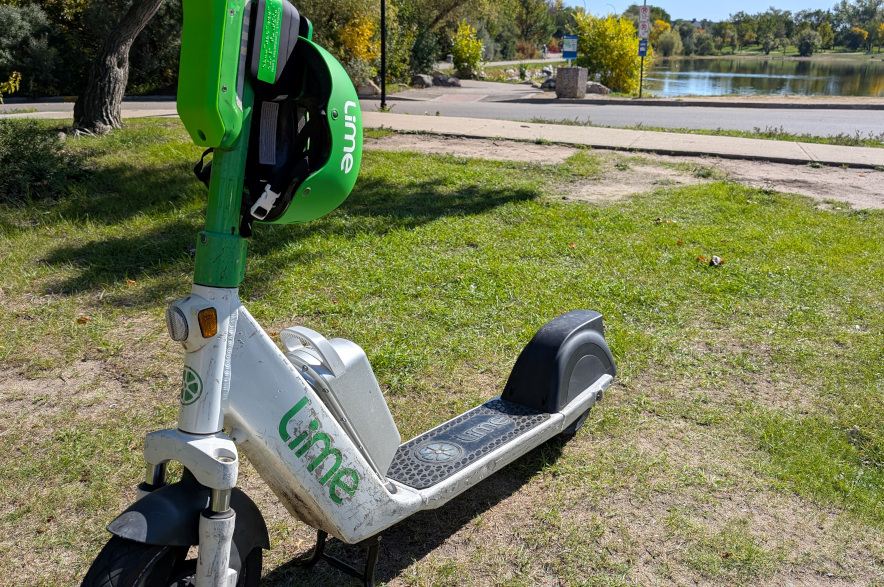
Speaking right as the contract shifted to Lime, Councillor David Froh was particularly frustrated with the rentable e-scooters being left in piles on sidewalks and in the street, to the point he was considering writing a notice of motion to council about it.
 In Saskatoon, councillor Kathryn MacDonald said she’d heard more about the e-scooters from people in her ward when the rental contract was first brought out – though she pointed out that just because she’s not hearing concerns, doesn’t mean there aren’t any.
On the other hand, Bev Dubois said she’s heard a lot about the e-bikes and e-scooters.
“I hear about underage children using the scooters, speeding along the parkway pathways, and narrowly missing striking (pedestrians), and folks without helmets, parents riding on a scooter with a child on the scooter as well, and neither have helmets,” she explained.
However, none of the councillors were champing at the bit to write new bylaws. Nearly all of them said making sure people knew about the existing rules would be a better first step.
Both Dubois and Bezo said pushing for more enforcement could put too much on already-stretched police forces.
“The police have a fairly heavy workload to begin with … going out on patrol on a Friday night, knowing that we have some issues downtown or anywhere else in Regina, is an e-bike or an e-scooter going to be on the top of the agenda?” said Bezo.
The Saskatoon Police Service was one of the few that seemed to see more regulation in a positive light – in its statement it said it would welcome “any amendments to the relevant laws or bylaws that support the safe usage of electronic transportation.”
It’s unclear whether the provincial government is considering any changes to its regulations — a request for information wasn’t returned by publication time.