Evan Bray: Fall is the my pick of the seasons
It isn't quite fall yet - the season officially changes next week - but Evan Bray says fall is his favourite season, wit...
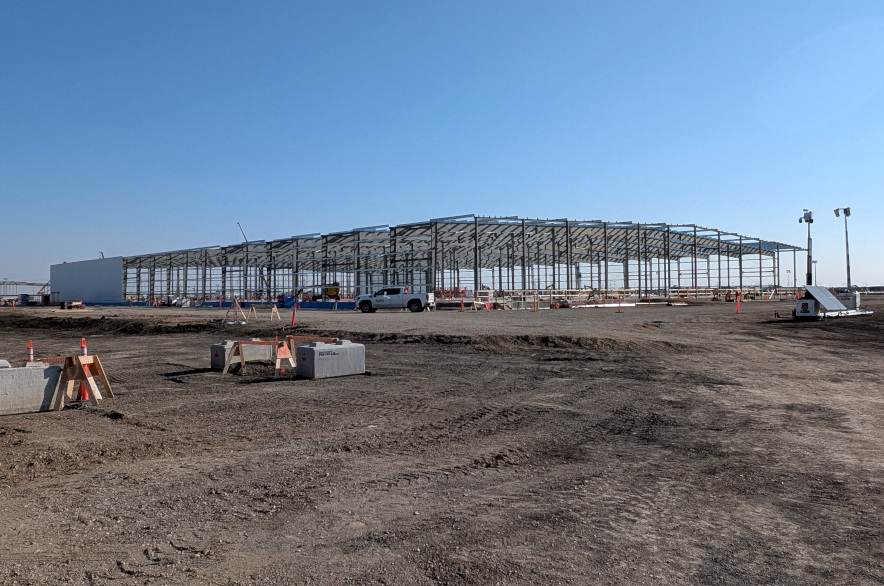
At least one rural landowner living near where the Bell AI data centre is being built says he learned about the centre’s massive expansion this week just like everyone else.
Doug McKell spoke to The Evan Bray Show Thursday morning. He said the expansion of the project from 300 MW to 1.2 GW was a surprise to him and a group of others in the area.
He and the others were frustrated when the project first came up because they hadn’t been consulted at all, but he said that situation has since changed.
“It’s been an interesting summer. I mean, they’ve been going full bore,” said McKell about the construction on the centre.
He said it’s the roads in the area that have seen the biggest impact so far.
“Of course, they’re grid roads right now, and all the traffic that’s been on there is really pounding them down pretty good,” he explained.
But he said Bell has hired people and has been pretty good at maintaining the roads and putting down dust control. He said any time there’s been an issue, Bell has gotten right on it and fixed it.
He said Bell has committed to improving the roads in the area once the initial phase is finished and then again after it’s finished in four to five years.
McKell explained that Bell has already been going out and doing baseline testing for the water quality in the area as well as air quality, lighting and noise.
He said, since the announcement of the project expansion, he’s spoken with someone from Bell who assured him they’d be able to sit down and talk about necessary measurements and assessments again.
McKell and the other landowners entered into an agreement with Bell and the R.M. of Sherwood, and they’re prepared to ensure that it stays in place.
“What we expect is that the future council and the RM people will have our agreement that was established between us, the local residents, Bell and the RM, with respect to our original concerns – that that’ll be improved and expanded with this latest information,” he said.
At least one group in the area doesn’t have the answers it wants about the data centre, let alone the expansion.
‘No Data Centres on Treaty Land’ is a group that’s been organizing protests and letter-writing campaigns in opposition to the data centre; Taya Triffo is an organizer.
She said there was no community conversation or consultation when the original data centre plan was being put together, and there haven’t been any for the expansion either.
Triffo said the group looked to what had happened with data centres in the U.S., raising concerns about effects on the power grid, local water sources, lighting and noise. But she said they still don’t have sufficient answers, pointing to the lack of an environmental assessment.
“Just those really basic elements of due diligence, we see that there’s a continued lack of that, there’s a lack of consultation, there’s a lack of acknowledging treaty rights and how it’ll impact people’s ability to fish, hunt and gather in and around the area,” she said.
At this point, she said the public still needs to be made part of the conversation, but if that were to happen, the government would also have to acknowledge the ways it’s failed.
“It’s not just including people in the conversation, it’s also being accountable as a leader who’s bringing this scale of a project to our community,” Triffo explained.
And the announcement that the project is quadrupling adds more questions to those that aren’t answered for Triffo and her group. Instead of just wondering about the impact of 300 MW more demand on the province’s power grid, she explained they’re now concerned about the impact another 1.2 MW of power use will have on the environment and climate change.
Speaking on The Evan Bray show Thursday morning, Minister responsible for SaskPower Jeremy Harrison was asked about consultation possibly being a way to mitigate some people’s fears, and Harrison said he and Bell have been giving very good answers around the questions of power and water use, saying they’ve been very transparent.
“There are going to be those who just don’t want to hear the answer,” he said.
Triffo said she doesn’t trust the answers Bell and the government have been giving in public because they sound too much like marketing statements, rather than genuine answers.
Harrison believes that some people are worried about AI in general, and that has manifested as concerns about other things.
“I think there is legitimate concern around that amongst some folks. The reality, though, that AI isn’t going anywhere. AI is an important part of our lives and economy right now. It’s going to become an increasingly important part of our economy,” he said.
The minister did explain that while the original project did have one, the power generation component of the project expansion will have to go through an environmental assessment.
Triffo said ‘No Data Centres on Treaty Land’ will continue to hold its campaigns and protests, including one set for the R.M. of Sherwood next week.