

Evan Bray: What would 'associate' EU membership mean for Canada?
There's been a lot of talk about Canada possibly becoming an "associate member" of the European Union. Evan Br...
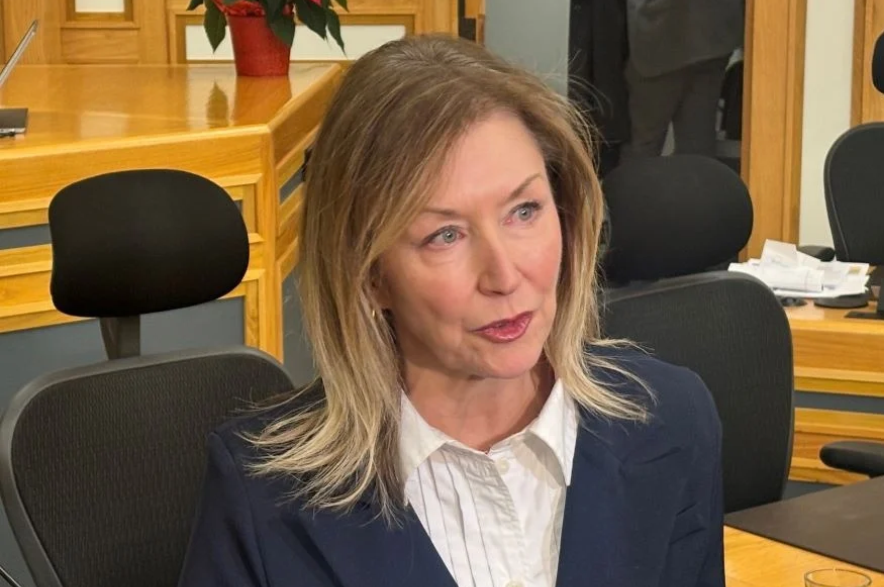
Cynthia Block, Saskatoon Mayor, joined The Evan Bray Show on Thursday to discuss the Canadian Country Music Awards in town, the long-anticipated opening of University Bridge after about five months of construction, and a new petition aiming to gather 30,000 signatures to force a referendum on whether to proceed with developing a Downtown Event and Entertainment District (DEED).
Read more:
This transcript has been edited for length and clarity.
EVAN BRAY: There is some excitement in the community right now around these CCMAs. How good is something like this for Saskatoon?
CYNTHIA BLOCK: I mean, obviously, there’s jobs. The hotels are full. The restaurants are full. The electricity in our downtown is palpable, and you couldn’t get a parking spot on a Monday afternoon. This is great news for the city, but it really allows us to showcase Saskatoon. We have Saskatchewan artists that are going to be promoted throughout our city during this week, and obviously at the award shows. And I think that the bigger piece for me is being able to showcase what Saskatoon is to the world, whether it’s River Landing and the Remai Modern and our beautiful foodie district. And you know, I’m going to miss too many things, and people will get mad at me. But we have so many things to offer, and I’m hearing this from people that are visiting saying we can’t believe what a great city you guys have created.

Sparse traffic on Saskatoon’s University Bridge about an hour after it reopened on Sept. 4, 2026. (Mia Holowaychuk/650 CKOM)
Can you speak to the complications of construction in a city that has so many bridges? And number two: the planning that goes into understanding route disruptions to try and minimize the impact as much as possible?
BLOCK: I mean the bridges are I think both a blessing and a curse. Yes, they are complicated, and we all get very used to the bridges that we want to take. And once we adjust, usually it works out pretty good because we have so many bridges that I mean I would normally take the University Bridge where I live, but I switched to Broadway and it actually worked pretty good. Yeah, coming home sometimes took a little bit longer, but it wasn’t really all that bad. I think one of the places, though, that we really had some learning to do was the re-activation. Like it’s one thing to shut it down, and people need to find alternative routes. And I think the cancer agency is a really important one. Whenever we close down or reopen a bridge that’s adjacent to any business, but in particular, something that involves emergency services or people that require medical attention, we don’t make those decisions in isolation. We do them directly with the Saskatchewan Health Authority to make sure that we are doing the best we can. Did we get it right on the re-opening? We did not, and I can see the signs up now where we’re directing people to go to the cancer centre like long before the traffic gets really crazy, so I’m hoping that those pieces are sorted out for folks right now. And I just want to say a huge thank you to everyone for being patient as we are really transforming College Drive right now as we create a modern public transportation system.
Let’s talk about this DEED petition. So they’ve started collecting signatures. We know they’ve got to collect 30,000 signatures in 90 days in order to to trigger a referendum vote on the DEED. So just your thoughts on where it’s at. The last time I had you on the show, I asked, “would you ever consider initiating this process yourself?” You said at this point no. Is that still the same?
BLOCK: Yes, and I think that to me it was still unclear based on the framing of the referendum question, what the issue is? Do you just love it in the North End where there are no businesses to be able to be supported by it, or is it you don’t want it downtown, or is it a cost issue? And one of the things I keep trying to remind everyone is that it isn’t invest in new infrastructure or not. It’s invest in new infrastructure or invest in old infrastructure that will never allow Saskatoon to compete at the level that it has been used to with similar cities that are used to attracting things like the World Juniors. We would not be a candidate the way it is today.
Why is that? What’s changed that would take us out of the fray?
BLOCK: Well, there’s several things, but the aging infrastructure of the building itself. At SaskTel Centre, the pieces that people see, we’ve done a good job of making sure that this is still a very welcoming place for everyone. And the re-investments and the things that need to happen in aging infrastructure are happening, but they’re accelerating. We’ve known that now for a decade that over the course of a decade or so we need to make sure that we are looking at new infrastructure for a variety of reasons, not just because it’s aging and that we don’t want to fix it. It’s that the location will never give us what we need in terms of downtown revitalization, as almost every other city in North America has experienced. That moving your main event centre outside of the downtown really hurts your downtown, and bringing it back really helps businesses to thrive and the event industry to thrive. But I think the other important thing about this is that one day when SaskTel Centre moves downtown, this is not going to have an impact on taxpayer dollars. That has been very well laid out by City Council, but I think that a lot of folks, and you know what, including me, I’ve been on council for 10 years, and I think it’s reasonable that over the course of that time, we’ve been having this sit on a shelf, looking for funding for this project, so that we don’t have to impact property tax. And up until recently, there wasn’t much to say about that, and so I think that we have short memories on that stuff, and perhaps for a lot of folks, they’re just learning about this today and wondering, well, how much is this going to cost, and what is this going to mean? So we have reporting back from our administration that is coming to City Council that will help to frame that up, so that at least we’re all dealing with the same facts.

An artist’s rendering of the Downtown Event and Entertainment District in Saskatoon. The Saskatchewan government said it is prepared to match the federal government’s contributions to three major event centre projects, including the downtown arena in Saskatoon, up to a maximum of a third of the eligible project costs. (City of Saskatoon/Submitted)
When you talk about funding, the notion that we’ve heard the province say (is) if the feds come in with some funding, we will match it. There is a large group of people that would like to see some private sector investment in this. Is that what Muskeg Lake Cree Nation is bringing?
BLOCK: Evan, it’s probably too early, but I would say this: I don’t think the conversation would have even begun if there wasn’t considerable opportunity in that regard. And yes, we are very much always looking for private investment into these kinds of infrastructure pieces. I think they benefit a lot of folks for a lot of reasons that are sort of independent of regular civic infrastructure. But I think the reason I say that the Downtown Event and Entertainment District, not just the arena, but that whole ecosystem, will rejuvenate our downtown and allow opportunity for us to continue to be competitive and to attract more residential and commercial development to the area —I think it’s important to understand what we miss if we don’t. We become less competitive. We will have a harder time getting air service. We’ll have a harder time for people having a reason to come to our city, and we will continue to do things like drive to Calgary and Edmonton for things that we could be doing here at home.
There’s a question here that I’ve actually heard asked before: Would the city ever consider a state-of-the-art convention centre downtown without the arena? Like, is it an all-or-nothing discussion?
BLOCK: I mean, it doesn’t have to be, but I think I would invite your listeners to consider what that means. The reason that this project was approved was because of the many other factors that are in play when you bring those two big facilities together. Now, just imagine the Country Music Week. We have the CCMAs here, and we have a big gala, and we have a big award show. Imagine if you could combine some of that activity and include a big public plaza in the centre. Part of it is going to be sheltered, and you can get people that don’t have tickets who are totally involved in the big show on Saturday night, and people can go into an event inside TCU at the exact same time, and how those two synergies would play off of one another. And never mind about how it would completely impact local hotels and beverage establishments and restaurants. To me (it) just makes so much sense to create a district where it does so much more than one thing and is really greater than the sum of its parts.
I know that you have a vote next week on the First Avenue BRT (Bus Rapid Transit). I’m also hearing that all of the assessments have been done on the system have to do with regular traffic, not the increased traffic flow or BRT load that would come with an event in the downtown area. So, where are we on that, and what will next week’s vote ultimately decide?
BLOCK: So, the vote is to decide what the design looks like, and there were some concerns raised by the Business Improvement District, and so we sent our administration away to come back to answer all of those questions, and that includes emergency vehicles, loading, making sure there’s enough parking for everyone. Understanding we’ll always have an option to add parking because we have to build a new parkade. Those are the pieces that are going to be decided. And I can’t remember the second part of your question.
What is being decided, and then in the question is, was there any assessment of (how) a major event downtown—what that’s going to do to the flow?
BLOCK: That has been asked and answered a few times now, and I can’t remember if it comes back in the report for next week. But absolutely, I think that if you look at how modern public transportation runs in other cities, for example, Edmonton, and I’ve just personally experienced that they do a terrific job of adding to the load or decreasing the load depending on what’s going on. So when big events happen, you absolutely put more busses out, just like we do right now, taking folks to SaskTel Centre in the North End.
The encampment strategy here in Saskatoon is noticeably different (than Regina). Is it working? Are you satisfied that, number one, encampments are not allowed to be established, and number two, people who need a place to stay are being connected with those services?
BLOCK: Until everyone at least has the opportunity to be safely housed every night, I am not going to be satisfied. And it’s not lost on me that we have so many people working so hard to try to address this issue, and a lot of really compassionate folks who care deeply that we are moving in the right direction. We know that encampments are dangerous. It increases crime. It increases the ability for gangs to find them. It increases the ability for drug dealers to find them. The amount of risk to human life and well-being is well documented. So for that reason, it’s our policy not to allow encampments. But unless we have a place for people to go, that’s a real struggle. And so I’m grateful that in our city we have more shelter capacity. We have another shelter that’s coming online soon, and in the meantime we have drop-in centres that the province has agreed to fund, so that 24/7, 365 days a year, there are places for people to be. But, we have a lot of work to do.
There was a homelessness rally in front of City Hall on the weekend, and I’ve seen a couple of texts asking why wasn’t the mayor or city council or representatives from the city homeless committee there. Your thoughts on that?
BLOCK: Well, to my knowledge, we were not invited to that event. I know that a lot of the folks that showed up wanted to come in and protest. I agree that we must do better, but it’s tough, right? Like we are a municipality, and the tools that we have are fire and police, and we have to work closely with our provincial counterparts to make this successful. And I continue to work earnestly in the community to help lift a better capital campaign, so that we can leverage the work from other orders of government. I can’t say much more than that at this point, but I’m really grateful for the people that are at the table.