Evan Bray: Diversifying trade doesn't mean abandoning U.S. relationship
Evan Bray says there's nothing wrong with Canada looking for new trade partnerships, but the idea of joining the Europea...
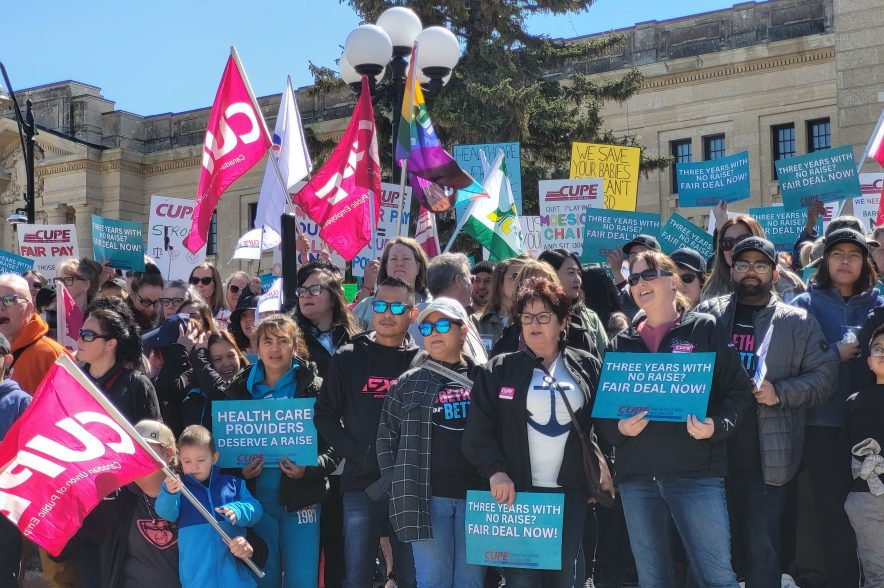
Thousands of CUPE health-care workers have voted in favour of job action in what the union is calling Saskatchewan’s largest strike vote.
According to the Canadian Union of Public Employees, 13,358 members cast their ballots this month, with more than 99 per cent in favour of a strike mandate.
Read more:
The union said the 14,000 health-care workers represented by CUPE 5430 have been without a contract since 2023, and have gone more than 4.5 years without a wage increase.
“It’s shameful how long the Minister of Health has allowed our members to go without a wage increase or the respect they deserve,” Bashir Jalloh, CUPE 5430’s president, said in a statement.
“These incredible strike vote results send that minister and his government a message that our members are done waiting, are united, and ready to fight for a fair contract.”
The union called the latest offer from the Saskatchewan Association of Health Organizations “inadequate,” saying it would increase contract staffing and move workers further from their homes, leave them making less than other health workers in western Canada and does not “catch CUPE members up after years of wage erosion” when compared to the rising cost of living.
The union said between 2012 and 2025 the cost of living in the province rose by 33.7 per cent, compared to a general wage increase of 14.32 per cent for CUPE 5430 workers.
Jalloh said the results of the vote were announced at the North Battleford office of Saskatchewan Health Minister Jeremy Cockrill in order to put him “on notice.”
“This strike mandate is a message that CUPE 5430 members are done waiting and are willing to do whatever it takes to get the deal they deserve,” Jalloh said.
Mark Hancock, CUPE’s national president, said the vote was about fair wages, safe staffing and respect for workers.
“This government cannot solve a recruitment and retention crisis without respecting and fairly compensating the people on the frontlines. They cannot build a stronger health care system by burning out the people holding it together,” Hancock said in a statement.
Cockrill said the health ministry is grateful for the efforts of health-care workers across the province, adding that he expects a resolution to be reached at the bargaining table.
“We’re encouraged by the progress made at the bargaining table between SAHO and union partners. Our government remains optimistic that we will be able to reach an agreement that works for health care workers, patients, employers, and communities,” Cockrill said in a statement.
“Strike votes are a part of the collective bargaining process; however, we remain optimistic that productive discussions at the bargaining table will continue.”
Cockrill said the ministry and the health-care unions share the same goals.
“We want to get a deal done so that Saskatchewan health care workers focus on what they do best – providing high-quality care to patients,” the minister said.
“The best place to achieve that outcome is at the bargaining table.”