Murray Wood: It's getting better all the time
Even if it seems - as the rejoinder in the Beatles' song observed - 'it couldn't get much worse,' Murray Wood suggests w...

The clock is ticking, the negotiating rooms are getting busier and somewhere in the middle of it all sits a simple question: What is Canada willing to give up to get a deal with Washington?
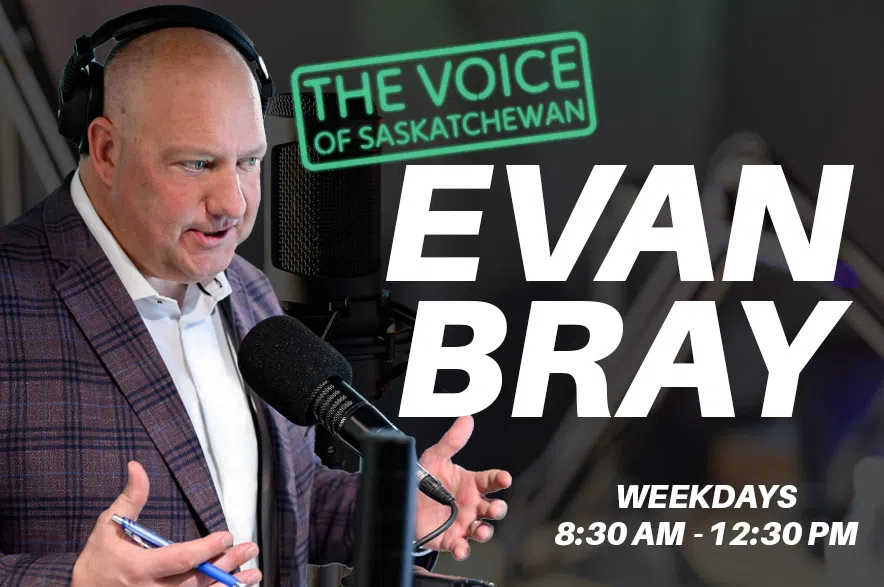
Ralph Goodale, a former federal cabinet minister and member of Prime Minister Mark Carney’s Council on Canada-U.S. Relations, joined The Evan Bray Show on Wednesday to discuss the looming Aug. 19 deadline on President Donald Trump’s 50 per cent tariff threat and what Canada needs to do in order to secure the best deal.
Read more:
This interview has been edited for length and clarity.
EVAN BRAY: Do you feel like we’re going to get a deal before August 19?
RALPH GOODALE: It is possible, but I wouldn’t at this stage get overly excited about it, because we know this relationship with President Trump is is very awkward. He’s mercurial. He changes his mind. He likes dramatic interventions that upset the apple cart and put everything back to square one, so you never know for sure. And quite frankly, if we did get a deal signed, sealed and delivered, how long would it last?
The Canadian side is working very diligently. The trade negotiators that we have involved in this process are superb at their work. They’ve done their homework. They know what they’re doing. So if anybody can find a pathway through this ridiculous nonsense, they’re the ones that that can do it. But the good sign is that, as the prime minister said about a month ago, this process is going to intensify, and indeed it has. And not only the technical negotiators, but Minister (Dominic) LeBlanc, chief negotiator Janice Charette, ambassador (Mark) Wiseman. They have all been at this now intensely for the last several weeks, and the contact with the Americans is literally on a daily basis, which it wasn’t before. So they may have made the decision now that they want to actually seriously negotiate. Canada has been ready to do that for a year and a half. They have now put their their best people at the table, and we’ll see if there’s a path forward.

As Canada and the United States push toward a trade deal, former federal minister Ralph Goodale says the challenges are securing certainty and making sure Canada gets enough in return. (Lisa Schick/980 CJME)
Are we negotiating a free trade deal, or are we just simply negotiating a new trade deal?
GOODALE: I suspect it’s more toward the latter. Mr. Trump has made it clear that he believes intensely in tariffs. He also has demonstrated that he will change his mind on a moment’s notice. So, certainty is the thing that you want to get from a trade agreement, that you know what the rules are, that they are extensive, and last into the future. You can rely on those rules and business can do business with confidence and make long-term investments and so forth. That has to be our objective, to get the largest degree of access to the U.S. market on the freest possible terms, and with as much certainty for the long term as we can get. That is, obviously, a very significant value to Canada. Whether we can achieve that or not will depend on what the Americans are prepared to do to provide that kind of market access.
Can you give us a sense how involved this work has been on this council that you’re sitting on? I’ve got a couple of sources that are telling me it’s been fairly intense.
GOODALE: The meetings initially were taking place about once a month, but during the course of the summer that accelerated, and we’ve now really dropped the practice of trying to get 25 people together in a meeting room in Ottawa. It’s now virtually all the time online, and I must say these are senior business executives, major union leaders, representatives of different corporations and sectors of the economy, together with four or five of us that used to be in political life, and that is a difficult group to get together on a moment’s notice. But every time a meeting has been called, sometimes with only 24 hours’ notice, virtually the entire team is there. So this is a group that is taking this work seriously and trying to provide the minister and the government and, ultimately, the prime minister with the best latest information from our intelligence sources on both sides of the border and the most useful strategic advice.
I get a sense of frustration with the U.S. commitment to getting a deal. Am I misreading that, Mr. Goodale? And is that the sense you’re getting when you’re sitting in these council meetings with the rest of these leaders?
GOODALE: This is a really unprecedented set of circumstances. If you think back through the trading relationship between Canada and the United States – or really Canada and any other country in the world – you would not find a set of circumstances like the ones we are now facing, where behind all of the hard work and sometimes the bluster of the cross-the-table negotiations, you have a player on the other side that has made it abundantly clear that they do not respect Canadian sovereignty, and that their objective ultimately is to weaken Canada to the point where maybe the U.S. can just take over. So when you’re dealing with that kind of of threat, almost an existential threat to the existence of the country and the well-being of Canadians and the proper functioning of the Canadian economy, I think there’s some emotion that works its way into the process. The key, though, is not to let that overtake sound judgment and intelligent decision making. What we have said to the Americans is that the threat of those 50 per cent new tariffs that are supposed to come into effect on August 19 has to be taken away.