Murray Wood: Fish, biscuits and scenery drawing Americans to Saskatchewan
Murray Wood says Saskatchewan's north is a big draw to American anglers, for some obvious reasons.

The ever-evolving conflict between the United States and Iran has led to a lot of unpredictability when it comes to what consumers will be paying at the gas pumps.
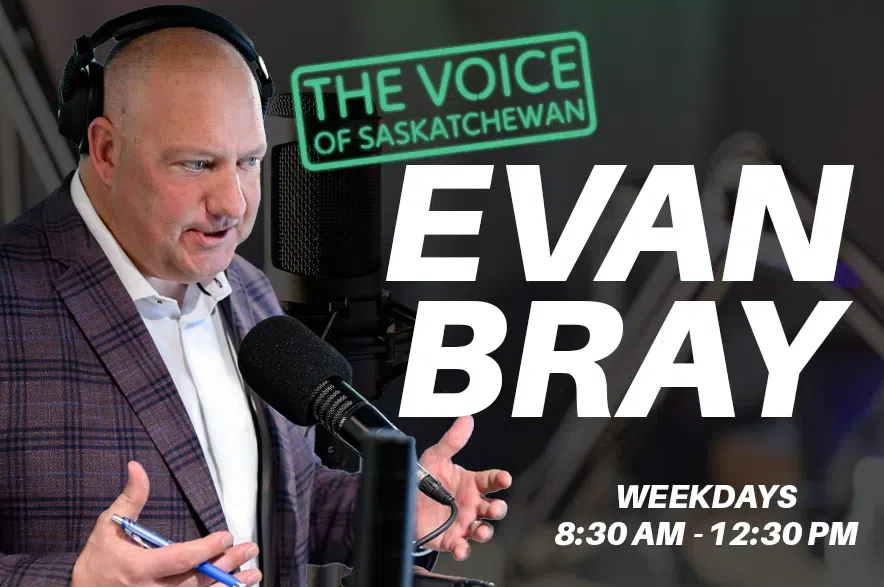
Roger McKnight, chief petroleum analyst at EN-PRO, joined The Evan Bray Show on Monday, to speak with guest host Tamara Cherry about the impact the latest developments in Middle East will have on drivers filling up in Saskatchewan.
Read more:
The following questions and answers have been edited for length and clarity.
TAMARA CHERRY: Forget the memorandum of understanding Iran and the United States signed in recent weeks, because they appear to potentially be heading back toward war again. With Iran vowing revenge for the killing of its leader, and now breaking news, the United States renewing its blockade of shipping to and from Iran, means more uncertainty for the global oil markets. Watching what is happening in the headlines over this weekend, how are you looking at this in terms of gas prices?
ROGER MCKNIGHT: Well, it’s a revolving door that you’re going in and you’re going out. The ceasefire is on, prices come down. The ceasefire is off, prices go up. So right now it’s off, so prices are going to go up. How long this goes on for? I’m really having a tough time reading President Trump’s mind. I don’t think he understands the memorandum of understanding, because I certainly don’t. So I empathize with the consumer, because they’re asking questions that really nobody has any answer to. I watch the stock market, I watch the New York Harbor futures prices. They change every day. They change by a different amount depending if the war is on, the war is off, and whatever anybody else is saying. And we’re running up to the U.S. midterms in November. God knows what’s going to happen between now and then, because in all honesty, global inventories are very, very low, and this is not a good sign. When your inventories are low, your prices are going to have to go up, and there’s no way you can replace some of these inventories right now because everybody’s been going to the corner store, going to the strategic petroleum reserves. They’ve been drawing down on that, and that’s been keeping prices down, but that’s going to come to a crashing end.
I want to talk about the midterms in a minute, but let’s talk first about what’s been happening in recent days. It’s been several days now of these strikes going back and forth again between Iran and the United States. With that ceasefire ending, how quickly do we feel the impact of that when it when it comes to the pumps here? Are we already seeing gas prices going up? Can we expect them to be going up higher and higher over the next day or two?
McKnight: It’s 48 hours, basically, from the time the New York Harbor prices come out, the closing prices, which is about four Eastern time. There’s 24 hours for the wholesale prices to react to that, and then there’s a 24-hour delay until it hits the pump. So all in all, from the from the end of day today, it’ll be two days before you see it at the pump. That’s pretty quick, by the way.
And how much of a change is that? How drastic of a price shift can happen in that 48 hours?
McKnight: I’m seeing diesel price alone going up five cents in about two days. Gasoline prices up about two cents so far, but we’re still in the morning time here. Wait until late in the afternoon. That could all change. That’s a problem I have. People ask questions like exactly the questions you ask, but really it’s dynamic. It’s not a static situation. And when the dynamic is in the mind of the president of the United States, that’s really hard to figure out.
Let’s talk about the midterm elections coming up in November in the United States. Again, Saskatchewan listeners may think, “How is this relevant to me?” just as they may think “How is the war, or the hostilities, we’ll call them, between the U.S. and Iran relevant to me?” but the midterms can have a huge impact on gas prices, and you would think that President Trump would be wanting to do whatever he can to keep the price of oil low heading into the midterms. But again, we can’t get into his mind. What should we be thinking about in these months ahead, or what do you expect to see in terms of politics?
McKnight: Well, Trump certainly doesn’t want to see high gasoline prices. That’s acid in the eye of any politician, because it’s in your face. It’s not like electricity or natural gas. People say, “Well, I can’t do anything about that,” but I can certainly squawk if I see the price at the pump going to, say, $2 a litre or whatever it is per gallon. I can certainly squawk about that. And the way I can squawk is with my voting power, and that is his problem. He’s running out of of options. He’s releasing product from the Strategic Petroleum Reserve in the United States. Well, that’s now at 44 per cent capacity. You can’t get much lower than that. He’s talking about lowering taxes. Well, that’s a temporary measure too, because everybody knows if you’re not paying me now, you’re going to pay me later. And so the tax game is running out of strength, so I don’t know what else he can do. This war is artificially increasing prices, and unless that strait is permanently opened, with all confidence opened, then prices are going to just bounce all over the place. This week they’re going up, next they could go down. That’s not a very good political platform to stand on.
Gas prices, as you mentioned a moment ago, they go up very quickly when something happens in the Middle East. They don’t go down that quickly, though. Or do they? Why do they go up so quickly but take so long to come down, or feel like they take so long?
McKnight: They don’t really take that long to come down. There’s inventory switches that have to be done and this sort of thing. But the media, no disrespect, jump on the fact that prices go up real quick and then don’t come down as as fast. They they do come down, but not not as quickly.
We’re talking about what is happening in Iran this week. We’re talking about the midterm elections. What about here at home in Canada? Do you expect to see our politicians reacting to these global gas prices even further?
McKnight: How can they?
Well, exactly. It’s very volatile.
McKnight: We’ve already got rid of the excise tax. That’s 10 cents a litre for gasoline and four cents a litre for diesel. And that runs out on Labour Day. I can almost guarantee if this war, or dispute, keeps going on, that will be extended into into January, 2027, because politically it’s almost impossible for any politician to increase prices in these volatile times.
How high do you think gas can get if these hostilities continue? Can they just go up and up and up? Do you think there is a ceiling? What can drivers expect for the rest of the summer?
McKnight: I think there’s a point where the consumer says, “The heck with it. I’m not going to get in the car. I’ll just leave it in the driveway.” When it was threatening to hit $2 a litre in parts of the country, that was really what started the demand destruction. The only way you’re going to get prices down is if the price is so high that the consumer doesn’t want to do this, and you don’t want to play this game anymore, and that’s the way it’ll come down. But unfortunately, in North America, the car rules our world. People will drive anywhere for anything, and gasoline is the essential commodity. Diesel is going to be the real problem coming this fall, because U.S. diesel inventories are 12 per cent below their five-year average, and I swear to God, diesel is the big, big problem not only in North America, but globally. And when diesel prices are going to spike, and they are going to spike, it’ll drag up gasoline in the fall, right before the midterms.
And that really will impact our grocery prices, all the cost of goods that we rely on, with all those diesel trucks driving around, right?
McKnight: Yeah, gasoline gets all the publicity, but diesel is the workhorse. You start cranking up diesel prices, that increases inflation, it decreases demand, and we’re all in a bit of a problem.
You just mentioned a moment ago that prices can start to come down once people sit back and say: “Enough is enough. I’m not driving if it’s this expensive.” I wonder, you as the chief petroleum analyst at EN-PRO, what is your ceiling? When do you change your driving habits? Or maybe you’re driving an electric vehicle right now, but how do the gas prices impact your day-to-day driving around?
McKnight: Well, I’m very selective. We will go to the grocery store, we will watch the prices there. But we have to go, I mean, it’s an essential commodity. You can’t just stop it all of a sudden and go with the alternative. What’s the alternative? Public transport? I don’t think so.
I guess it depends where you’re living, right?
McKnight: That’s right. And even if you’re living in a location that is serviced by public transit, it’s very unreliable and it’s very, very expensive. I’d just as soon get in my car and get this job over with within five minutes, not five hours.
Do you do fewer road trips when the gas prices are going up like this?
McKnight: No. I’ve learned my lesson over the many years I’ve been doing this this prediction situation. I tend to stay closer to home.
Thank you so much, as always, for your time and your insights in this decidedly unpredictable world we’re living in right now.
McKnight: It’s a grey world.