
Sarah Mills: There are always things for which we should be grateful
Sarah Mills says that even in tough times, we all have things we should be grateful for over the Thanksgiving weekend.

Consequences for impaired driving could arrive well before a court date, with the province proposing speedier, more immediate penalties.
The Government of Saskatchewan is putting roadside punishment at the centre of a new approach aimed at keeping dangerous drivers off the road and making streets safer for everyone.
Read more:
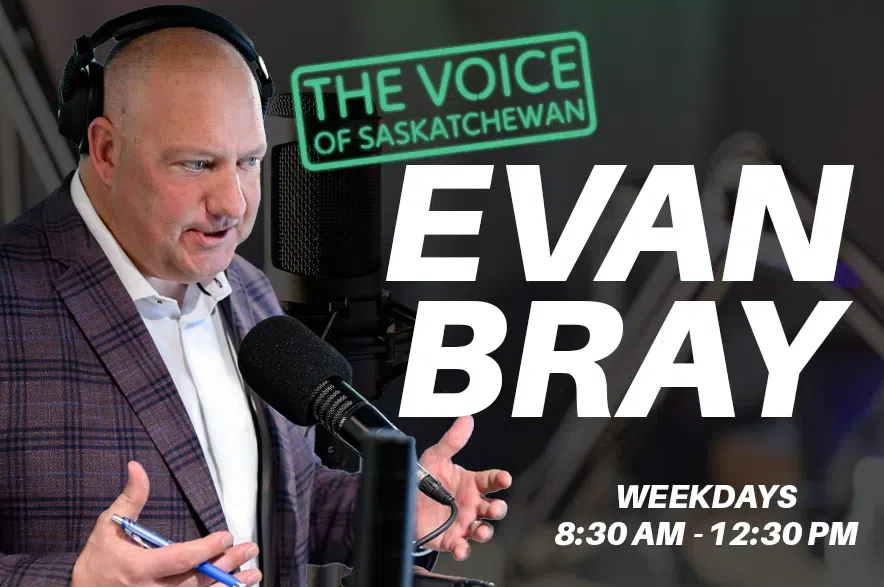
Tim McLeod, Saskatchewan’s Minister of Justice, joined the Evan Bray Show to discuss the proposed penalty system.
Listen to the full interview or read the transcript:
This interview has been edited for length and clarity.
EVAN BRAY: What was the realization to make these changes in Saskatchewan?
TIM MCLEOD: The provincial government has been taking a series of steps to create safer communities across Saskatchewan, whether that’s adding more police officers, more prosecutors, more judges, changing legislation to create safer communities, getting street weapons off of the streets, and really trying to tackle the drug problem. This was another extension of that, to create safer streets and safer communities. We know that impaired driving rates in Saskatchewan are among the highest in the nation and we really want to reduce those numbers and create safer streets for our community.
What is it about these changes that you like?
MCLEOD: The introduction of an administrative penalty, or a ticket, allows officers the option to either charge criminally (or not) and they will still have to charge criminally if there’s been an accident, injury (or) if there’s a child in the vehicle. However, if it’s a first time offence and one of those aggravating factors isn’t there, the officer will have the opportunity to issue a ticket, and that ticket will carry with it a 30 day driver’s license suspension, (and) a 30 day impound of your vehicle. When you get your driver’s license back, you will have a mandatory ignition interlock, so you’ll have the blow device on your steering wheel that you need to blow into to start the vehicle, as well as $1,000 fine, plus a 30 per cent victim surcharge for the first offence, and a $2,000 fine for any subsequent offences after that. These penalties are issued immediately, and we believe that the immediacy and severity of the fines will help reduce impaired driving rates across the province.
What do you think this brings to the province when it comes to impaired driving enforcement?
MCLEOD: It does a couple of things. The immediacy of the penalty is a greater deterrent across the country. We’ve seen other provinces move to this approach and it has reduced incidents of fatalities and injuries as a result of impaired driving. The deterrent factor is the number one priority, but secondarily to that, we have police officers who are often tied up for four, eight, 12 hours on an impaired charge criminally with the paperwork and necessity of trial and testifying, that sort of thing. With an administrative penalty, the officer can issue the penalties at the roadside immediately and then carry on to the next call, which allows our police officers to really have more time on the front lines.
Did you look at the impact that similar administrative charges in other jurisdictions have had?
MCLEOD: Yes, and we’ve seen significant decreases in impaired driving fatalities in Ontario. Incidents of impaired driving after dark, these percentages are north of 2030, 40 per cent reductions in incidents, impaired driving incidents. That’s really what we’re looking for here, is to prevent this type of offence from ever happening.
You received a lot of support (for this). Did you have a sense that that support was going to be there before this was announced?
MCLEOD: MADD Canada has been very vocal about wanting these changes. They see the benefit and I give a lot of credit to some of my predecessors – Minister Joe Hargrave, when he was the minister for SGI, was a huge advocate for this. Minister Ken Cheveldayoff is a huge proponent, really close connections with families who have been tragically impacted. The Van der Vorst family, the Kirk family, the Stevenson family – tragedies as a result of impaired driving have been big advocates for this type of change.
How confident are you that this will help us move the needle a bit, in a positive way?
MCLEOD: We’re really focused on doing what we can and I don’t know that there’s any quick fix or any single magic bullet, as they say, but I do think that everything that we can do to create safer streets and safer communities is helpful, and this is one further step that we can take. Again, that the immediacy and the severity of these punishments will be a greater deterrent.