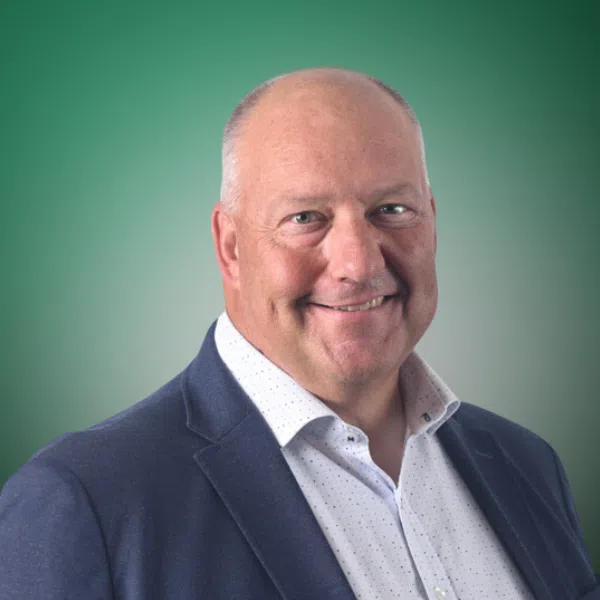

Murray Wood: Who's hot... and who's not
Every Friday, Murray Wood takes a look back at the week's news and decides who's hot... and who's not. This week's list ...

Mixed results from a pilot project that provided free transit to students at a Regina high school have some city councillors trying to find a way to extend the service without breaking the bank.
A report presented to Wednesday’s executive committee meeting explained students at F.W. Johnson Collegiate were given free transit passes valid from September to December of 2025, through the Regina Transit Umo app.
Read more:
The number of trips by students during the pilot was three times what it was after the pilot ended.
However, numbers provided to the city by the Regina School Division did not show a significant change in attendance.
“It is possible that the location of which the pilot took place was a factor in how the attendance only slightly increased during the pilot,” the report read, “whereas the locations and demographics of other Regina high schools may have a stronger need for free public transportation to help increase student attendance.”
School board trustee Sarah Cummings Truszkowski appeared before the committee to argue in favour of extending the free fare program.
“Fare-free transit for students helps much more than just getting kids to school; it could lead them to lifelong success,” she said.
Each year, she explained, the school division buys between 10,000 and 12,000 individual bus tickets at a cost of roughly $40,000. She argued that forcing young people to request help creates a barrier.
Cummings Truszkowski read a letter from Johnson’s principal, which said requests for tickets have gone up since the pilot program ended.
The letter also appeared to dispute the attendance figures in the report. In response to a question from Councillor Mark Burton, Cummings Truszkowki cited the principal as saying there have been “noticeable improvements in student attendance.”
“I can’t speak for the principal, but I think that he probably sees kids who maybe are not attending, but when there’s free transit, they are in class,” she said.
She also speculated that students who used the free transit may have shifted from a different mode of transportation.
In its report, the administration said it would be prohibitively expensive to provide free transit to students at all Regina high schools.
For the $49,000 pilot, F.W. Johnson was chosen because it was felt the buses on those routes had the capacity to accommodate the extra ridership, and, in fact, there were no operational issues.
However, implementing a fare-free program for all Regina high school students is estimated to cost $2.26 million to operate, plus a one time capital cost of $16.8 million to buy 12 additional buses. Lost revenue under such a program would be just over $2 million.
The figures left councillors trying to find a middle ground or more information to help reach one.
“I personally am not asking for a $20 million investment,” Cummings Truszkowki said. “I’m just here to say that Fair Free Transit for kids helps, and it would make a big difference.”
One option would be targeting the schools at most in need. Cummings Truszkowki said no free bus tickets were handed out at Campbell Collegiate in February, but many tickets are given out at Johnson, Scott, Sheldon-Williams, Thom, Martin and Balfour.
Councillor David Froh said he would support an expansion that was done in close collaboration with the school boards.
“Yes, we’ve raised taxes, and of course, transit is one of those ways where we lessen the financial burden for families that are having a hard time right at a cost during a cost of living crisis,” he said.
The administration also said greater transit usage would likely improve traffic congestion around the schools, but that data wasn’t collected during the pilot project.
It also didn’t calculate what it would add to property taxes to conduct a city-wide rollout. Given that council is operating under a strategic direction to keep this year’s increase under 5.81 per cent, it would require significant cuts elsewhere.

Regina Public Schools trustee Sarah Cummings Truszkowski argued for some form of fare-free transit for high school students to continue. (Geoff Smith/980 CJME)
Deputy city manager of city operations Kurtis Doney suggested council bring forward a motion to provide some figures of the cost of implementing free transit fares for different high schools.
“We could bring forward to the budget process the cost of implementing this for each school, because it’ll be different,” Doney said. “Some schools – most schools – will require additional buses.”
Councillor George Tsiklis was skeptical of the impact such a program would actually make, suggesting income-tested programs like affordable passes would be more effective.
“The evidence that I’ve seen from other Canadian cities that have tried fare-free for kids shows mixed results” he said. “Ridership has gone up, but a lot of it is kids who are already riding, so the long-term benefits are often weaker than promised.”
Tsiklis added he might make a request at the June 10 council meeting for a more detailed report.
Councillor Jason Mancinelli proposed a general fee-free area of the city as a way of improving outcomes for entire families in need.
“Families could move throughout the whole area for millions of dollars invested, and people could plan to move somewhere where they could get their best basic needs met easier without the added transportation costs, so they could get a leg up,” he said. “I think that those are the long-term movements that bring people to transit use and get people out of vehicles and change congestion.”
Mayor Chad Bachynski suggested trying to brainstorm a solution during a committee meeting was not the best approach, and that some time should be taken to find a collaborative solution.
“I think it would be important for us to take the time to make a proper plan and get some more information, and actually ask, probably, the provincial government if they would like to step in, if that’s something that they’d be interested in as well,” Bachynski told reporters.
He also said four months might not have been long enough to get detailed data on the connection between free transit and school attendance.
“It’s something we probably have to do a bit more deep of a dive to understand and essentially check as many boxes as we can in terms of the benefits if we’re going to start making capital investments and operational investments,” he said.